
When it comes to sheet metal fabrication—from design to final delivery—the process is far more intricate than it might seem. It’s not just a simple matter of “cutting a plate and bending it into shape”; instead, it involves multiple critical steps like material property evaluation, structural unfolding, machining path planning, and selecting forming/joining methods. Every stage impacts the final product’s dimensional accuracy, strength, appearance, and cost.
While the exact workflow varies slightly for different types of sheet metal parts (tailored to their structure and function), most follow these core steps:
1. Material Selection & Process Review
As soon as we receive an order, we collaborate closely with the customer to confirm the sheet metal material type, thickness, and other key technical requirements. This step is make-or-break: materials like stainless steel, aluminum alloy, carbon steel, and galvanized sheet differ significantly in strength, corrosion resistance, weight, and workability—each suited to specific use cases.
Once materials are finalized, we conduct structural unfolding and process reviews of the customer’s drawings. This includes assessing bend allowances, hole deformation risks, welding area layout, assembly interference, and surface treatment compatibility. The goal? Ensure the design isn’t just feasible on paper, but manufacturable in practice. Thorough communication and evaluation here prevent costly rework and quality issues later, laying a solid foundation for the entire production process.
2. Blanking
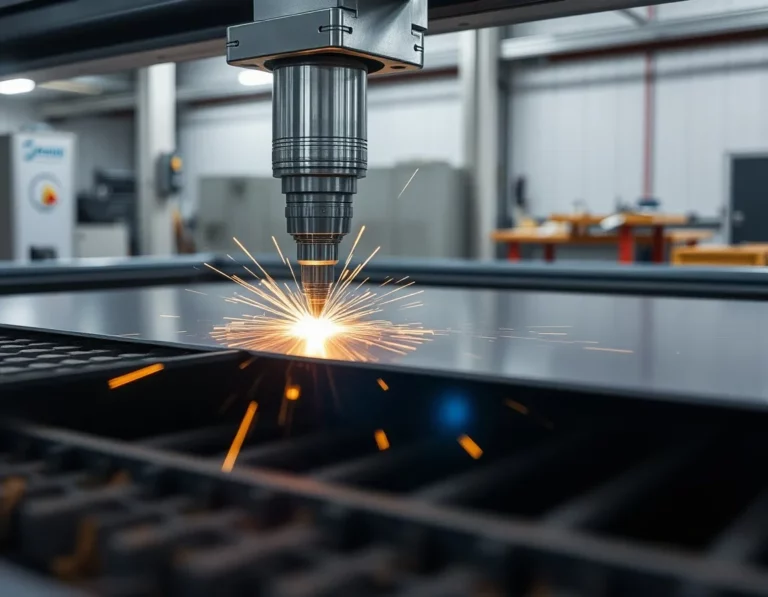
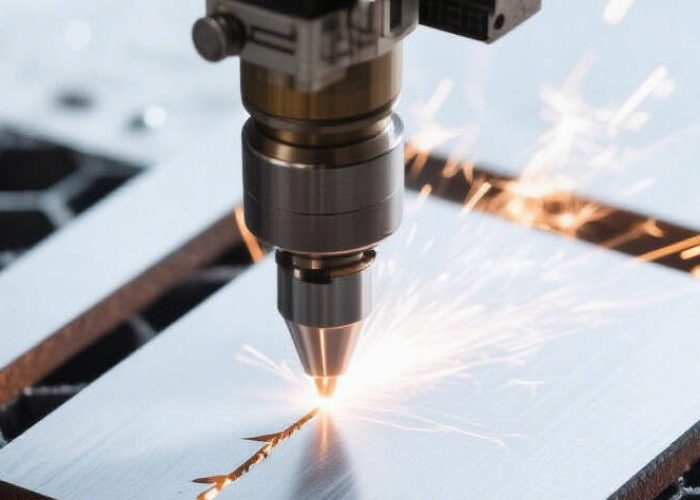
Next comes blanking: precision cutting of raw materials to transform large sheets into appropriately sized blanks. We use high-efficiency, accurate equipment for this—think shears, plasma cutters, laser cutters, and wire EDM machines.
During blanking, we also machine key features like holes, contours, and slots. This creates precise reference points for subsequent bending, clinching, or welding. Accurate, high-quality blanking boosts downstream efficiency, reduces dimensional errors, and minimizes material waste—making it a cornerstone of sheet metal manufacturing.
3. Deburring & Polishing
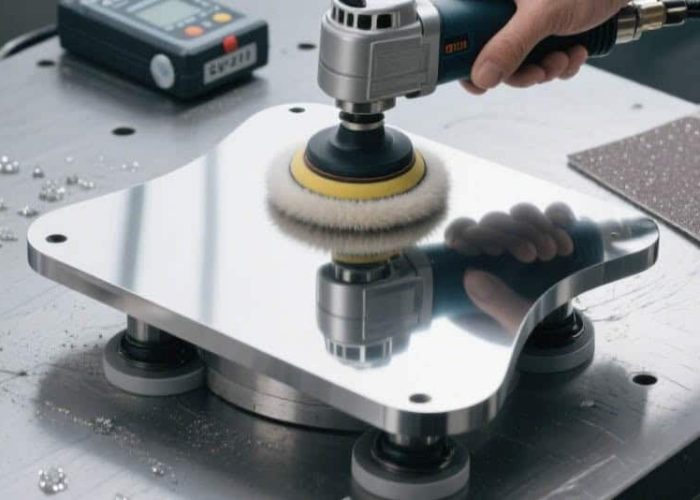
After blanking, sheet metal edges often have burrs or irregularities. These don’t just compromise the accuracy of later forming and joining—they also pose scratch and assembly interference risks. So, based on the material and cutting method, we use mechanical polishing or automated deburring to smooth edges, ensuring they’re flat and free of sharpness.
In fact, we proactively mitigate burr risks during the design review phase: we prioritize edge contact areas, identify potential high-frequency touchpoints early, and route burr-prone surfaces to internal or hard-to-reach locations. While deburring and polishing may seem basic, they directly influence forming stability, assembly reliability, and the final product’s feel—making them non-negotiable for precision sheet metal work.
4. Forming (Bending / Drawing / Molding)
After edge treatment, parts move to forming—transforming from flat sheets to 3D structures. The exact method depends on design and functional needs:
- For parts requiring angles, flanges, or fixed-angle structures: We use bending machines with upper/lower dies for cold forming.
- For parts with continuous curves, complex shell radii, or integral concave/convex features: Stretching or compression molding is more suitable.
Before forming, operators calibrate bend allowances or molding pressure based on the material’s springback coefficient and unfolded dimensions. This ensures consistent angles, aligned lines, reliable structures, and adequate assembly margins.
Notably, some sheet metal parts don’t require forming—they stay flat as functional references or connection carriers. So, forming is always demand-driven, not a one-size-fits-all step.
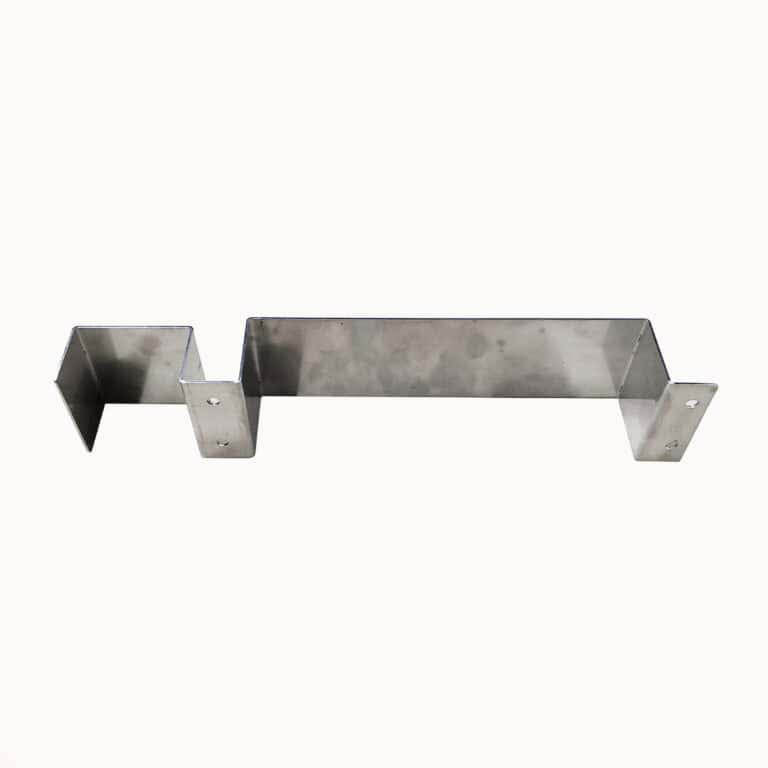
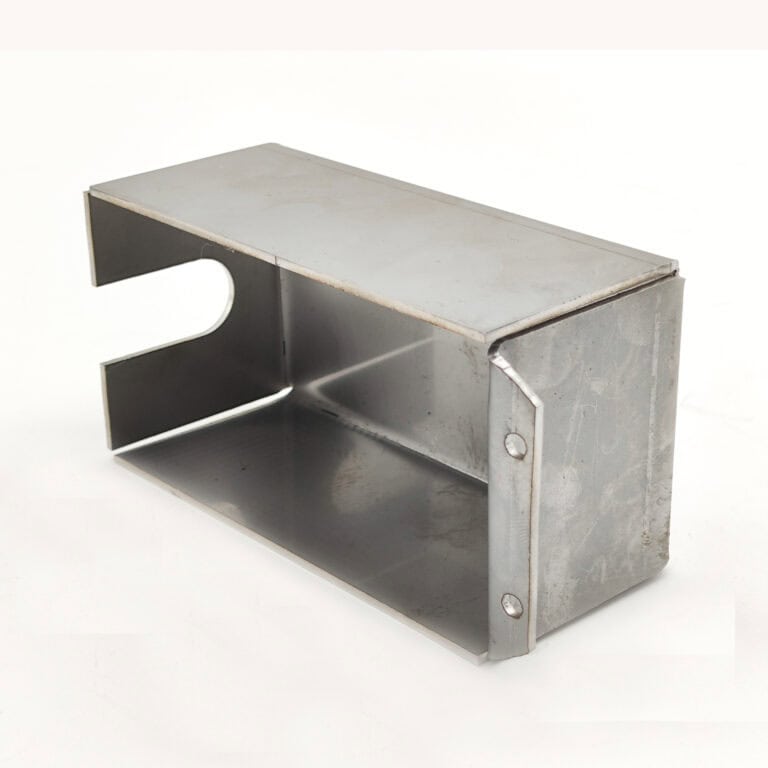
5. Fastening & Joining (Clinching / Tapping / Riveting / Welding)
Once formed, parts enter the joining phase. Unlike fixed 3D products, sheet metal parts often work with other components to deliver functionality—so we choose joining methods tailored to the design:
- For detachable or mechanical fasteners (no welding required): Clinching, tapping, or mechanical riveting are ideal. These use cold sheet deformation or threaded references to achieve secure fastening, positioning, and alignment—while maintaining consistent repeatable assembly.
- For high-stress applications, sealed structures, or integral frames: Welding (or spot welding) is used. Localized fusion creates a continuous, stable force transfer and structural closure.
Here, accuracy in meeting connection references matters more than the method itself—it dictates assembly stability, force continuity, and final structural consistency.
6. Weld Seam Treatment & Finishing
When welding is used, completing the weld isn’t the end of the process. Localized high temperatures and mechanical stress can leave weld seams with bulges, oxidation, or surface irregularities—all of which harm appearance and the adhesion/flatness of subsequent surface treatments.
So, we perform post-weld finishing: seam leveling, local grinding, structural correction, and oxidation removal. This ensures smooth seam transitions, flat surfaces, and a stable adhesion base for later surface treatments.
7. Surface Treatment
After basic machining, sheet metal parts undergo surface treatment. This step enhances both aesthetics and performance—boosting corrosion resistance and durability to extend service life. Common methods include painting, powder coating, electroplating, anodizing, wire drawing, and sandblasting.
We select the best option based on the product’s operating environment and customer needs:
- Aluminum parts often use anodizing for enhanced oxidation resistance.
- Products prioritizing appearance may use wire drawing or spraying for a polished look.
8. Inspection & Assembly
Post-surface treatment, parts move to inspection or assembly—depending on their type:
- For flat sheet metal parts used as functional carriers: Inspection focuses on dimensional accuracy, hole alignment, and edge consistency. We use vernier calipers, projectors, or hole gauges for sampling or full inspection to ensure the unfolded design matches the finished product.
- For chassis, cabinets, or assembled structures: After inspecting key features, we perform component assembly or partial pre-assembly as needed. This guarantees stable fastener references, continuous force transfer, and precise component alignment.
Summary
From material selection to surface treatment, every step of sheet metal manufacturing—from concept to completion—demands technical expertise and attention to detail. Each phase must be executed with precision to deliver products that meet customer needs and stand the test of time.
In this complex workflow, three elements are non-negotiable: precision equipment, years of industry experience, and strict quality control. Together, they ensure the high-quality sheet metal parts our clients rely on.
This is the complete process behind our CNC-machined sheet metal fabrication products.