Home / All / Practical Guide: Common Metal Surface Finish Varieties

Table of Contents

Practical Guide: Common Metal Surface Finish Varieties

Discover the ins and outs of manufacturing’s go-to metal surface finishing techniques (electroplating, anodizing, spraying, etc.)—their strengths, compatible materials and how to choose the right one.
Shelly Yao
Shelly Yao

Introduction

There is a wide variety of surface finishing methods commonly used in manufacturing. Different materials and application scenarios often call for specific processes. Electroplating, spraying, anodizing, electroless plating, laser processing, polishing, electrochemical polishing, black oxide coating, phosphating, PVD, electrophoresis, and sandblasting are all common ways to enhance part performance and appearance. This article will briefly cover the core functions, suitable materials, and typical applications of these processes, helping you gain a more systematic understanding of how to select the right surface finishing method.

I. Why Do Parts Need Surface Finishing?
Even with high machining precision, untreated part surfaces often have issues such as roughness, microcracks, oxide layers, micropores, and scratches. Over time, they become more susceptible to environmental factors, friction, or stress. Proper surface finishing can improve a part’s corrosion resistance, hardness, and wear resistance while enhancing its appearance (color and texture) and cleanability.
 
In industries like electronics, medical devices, automotive, and aerospace, many parts also require surface finishing to boost conductivity, solderability, hygiene standards, or coating adhesion—meeting more demanding operational requirements. In other words, surface finishing is not just about making parts “look better”; it’s about making them “last longer, perform more reliably, and operate more safely.”
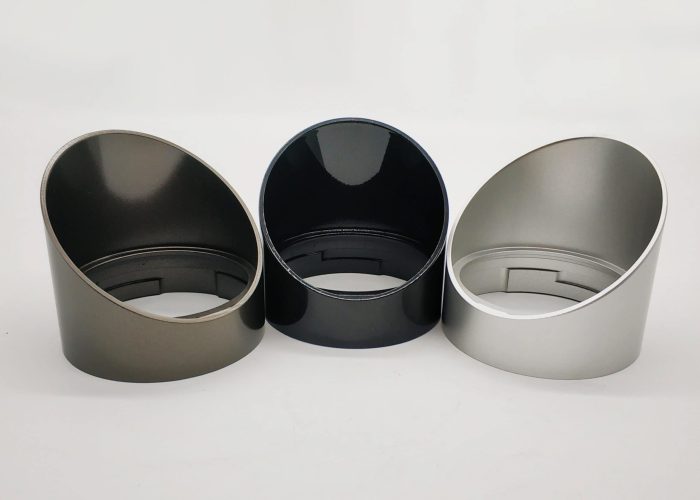
Short garden light shield manufactured by CNC turning and milling, made from aluminum alloy (6061 or 6063), finished with powder coating (electrostatic powder painting) or anodizing in three colors: matte dark gunmetal, glossy black, and pearl silver (fine sand texture powder coating or anodized silver), designed for outdoor and garden equipment.

Ⅱ. Common Metal Surface Finishing Processes

Different surface finishing methods vary in principle, suitable materials, and performance enhancement focus. This chapter will introduce the core functions, application scenarios, and characteristics of the most common and widely used processes.

Electroplating

  • Core functions: Corrosion resistance, oxidation resistance, improved appearance.
  • Suitable materials: Ferrous metals, aluminum alloys, copper and its alloys, and other metal parts.
  • Common applications: Enhancing corrosion resistance, improving conductivity, decorative purposes.
  • Common coating types: Chrome plating, zinc plating, nickel plating, gold plating, silver plating, tin plating, etc.
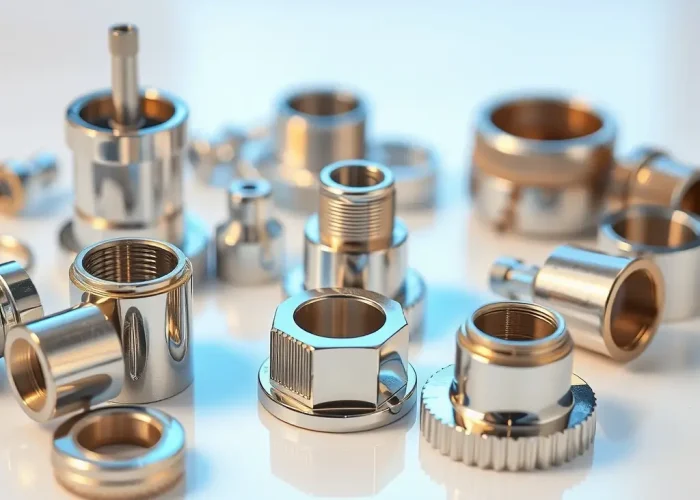
Electroplating deposits a thin metal film on the surface of metal parts through electrochemical reactions. It significantly improves corrosion resistance, surface smoothness, and electrical properties without changing the part’s dimensions or structure. For common materials like steel and copper alloys, electroplating technology is highly mature. You can choose different coatings (e.g., chrome, nickel, zinc, gold, or silver) to achieve multiple goals—from corrosion protection and decorative finishing to improved conductivity. For example, nickel and chrome plating add hardness and a metallic luster, zinc plating is widely used for corrosion protection of steel structures, and gold, silver, or tin plating are common in connectors and electronic components to enhance conductivity and solderability.
Professional electroplating services in the mechanical processing industry, providing decorative and protective coatings for metal parts.

Spraying

  • Core functions: Corrosion resistance, oxidation resistance, scratch resistance, covering surface defects, improved appearance.
  • Suitable materials: Ferrous metals, aluminum alloys, stainless steel, sheet metal parts, and other metal components.
  • Common applications: Enhancing corrosion/wear resistance, improving color and texture, reducing maintenance needs.
  • Common forms: Powder Coating, Spray Painting, E-coating (Electrophoretic Coating).
 
Spraying forms a protective layer on metal surfaces using paint or powder, significantly boosting corrosion resistance, wear resistance, and aesthetic appeal (color and texture). Compared to plating, spraying offers strong coverage, a wide range of color options, and excellent fingerprint and chemical resistance. It’s widely used for sheet metal parts, aluminum profiles, structural components, and exterior parts requiring decorative finishing. Industrial spraying mainly includes powder coating (electrostatic powder spraying) and spray painting: powder coating is ideal for surfaces needing high coverage and weather resistance, while spray painting is better suited for fine finishes and thin coatings.
 
Pre-treatment is critical for achieving a stable, durable, and peel-resistant spray finish. During machining, metal parts inevitably accumulate oil, iron filings, oxide scale, or minor rust. Direct spraying without pre-treatment results in poor coating adhesion—paint may peel off with a light scratch and fail the cross-cut test. Therefore, before formal spraying, a series of cleaning and pre-treatment steps are typically required based on the material, including degreasing, pickling, alkaline cleaning, water rinsing, neutralization, rust removal, and phosphating.

Anodizing

  • Core functions: Enhanced corrosion resistance, improved surface hardness, enhanced appearance (color and texture).
  • Suitable materials: Aluminum and aluminum alloys (most common); occasionally used for magnesium and titanium.
  • Common applications: Decorative coloring, improved wear resistance, enhanced oxidation resistance, better coating adhesion.
  • Common types: Standard Anodizing (Type II), Hard Anodizing (Type III).
Anodizing uses an electrolytic process to form a dense oxide film on aluminum surfaces, significantly improving corrosion resistance, surface hardness, and appearance. Unlike metal plating, the anodized layer is “part of the material’s own structure,” offering superior adhesion and durability—making it extremely widely used in aluminum part finishing. The most common process is sulfuric acid DC anodizing, which is cost-effective, produces stable film properties, and delivers natural coloration, making it suitable for both exterior and structural parts.
 
The oxide film formed by sulfuric acid anodizing is inherently colorless and transparent with high light transmittance, allowing it to be dyed in black, gold, red, blue, and other colors—one of the reasons aluminum exterior parts offer such a wide range of color options. Film transparency varies with material composition: higher-purity aluminum produces clearer films; alloys with high Si, Fe, or Mn content may result in slightly darker films; Mg has little impact on transparency. This explains why 6061 aluminum typically achieves a clearer, more uniform anodized finish than aluminum-silicon alloys.
 
For engineering structural parts requiring improved wear resistance or hardness, Hard Anodizing (Type III) is used. It produces thicker, more wear-resistant films, making it suitable for drone components, sports equipment, mechanical fasteners, and other applications demanding high durability.
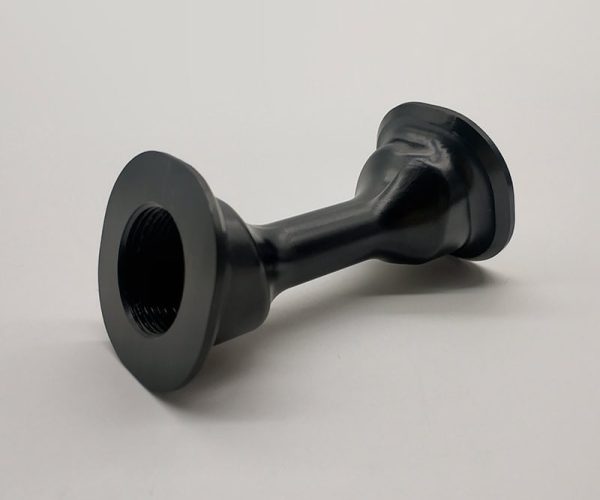
Marine sailboat adapter manufactured through CNC milling, partial turning (with possible EDM), crafted from aluminum alloy (6061 or 7075) and finished with black anodizing for enhanced durability.
CNC-milled stern mast device made from aluminum alloy (6061 or 7075), finished with natural anodizing, designed for marine applications.

Electroless Plating

  • Core functions: Corrosion resistance, improved hardness, enhanced wear resistance.
  • Suitable materials: A wide range of metals, especially those difficult to electroplate directly (e.g., aluminum alloys, carbon steel, stainless steel).
  • Common applications: Depositing a metal layer via chemical reduction without external electric current.
Electroless plating deposits a metal coating on material surfaces through chemical reduction reactions—no external electric current or anode shape is required. This makes it ideal for parts with complex geometries, multiple holes, or those incompatible with traditional electroplating. The most common type is electroless nickel plating (Ni-P), which offers excellent corrosion resistance, hardness, and wear resistance, along with exceptional coating thickness uniformity. It can form consistent protective layers in grooves, inner holes, blind holes, and other areas difficult to reach with electroplating. For this reason, it’s widely used in electronics, electrical connectors, precision automotive parts, valves, and mold components requiring high durability.
 
Electroless nickel plating is particularly effective for materials prone to oxidation or difficult to electroplate (e.g., aluminum, carbon steel). It not only significantly improves the base material’s corrosion resistance but also enhances surface hardness, giving softer metals better wear resistance—even replacing hard chrome in some applications. Since it’s not affected by current distribution, its coverage in complex internal structures is far superior to traditional electroplating, making it suitable for internal coatings, precision hole protection, and sealed structure reinforcement.

Laser Processing

  • Core functions: Surface hardening, improved wear resistance, modified roughness, enhanced adhesion.
  • Suitable materials: Steel, cast iron, titanium alloys, aluminum alloys, metal composites; some processes also apply to ceramics.
  • Common applications: Modifying metal surface properties (hardening, repair, enhanced coating adhesion, microstructural processing, smoothing).
  • Common processes: Laser Hardening, Laser Texturing (Structuring), Laser Cladding, Laser Polishing.
 
Laser surface processing uses high-energy laser beams to modify metal surface properties by altering the surface’s microstructure in a very short time. It improves hardness, wear resistance, adhesion, or surface quality. Compared to traditional heat treatment or mechanical processing, laser technology offers advantages such as a small heat-affected zone, minimal deformation, high precision, and adaptability to complex shapes. It’s widely used in automotive, mold making, aerospace, and high-precision manufacturing. Typical processes include:
 
  • Laser Hardening: Enhances surface hardness and wear resistance by rapidly heating and cooling the metal surface, causing phase transformation to form a high-hardness martensitic layer. Compared to traditional bulk hardening, it has a smaller heat-affected zone, making it suitable for high-stress components like camshafts and bending tools—significantly extending service life and reducing deformation risk.
  • Laser Texturing: Modifies surface roughness or creates microstructures by forming regularly arranged micro-geometries with short-pulse lasers. It improves lubricity, adhesion, or friction control and is increasingly replacing traditional methods like sandblasting and chemical etching in mold making, pre-adhesion treatment, and low-friction structure processing. As a non-contact method, it’s more environmentally friendly, repeatable, and precise, with no additional wear or residue.
  • Laser Cladding: Melts and deposits alloy powder or cermet materials on metal surfaces to repair worn areas, strengthen critical regions, or add functional layers. The cladding layer is dense with high bonding strength, making it suitable for mold repair, turbine blade reinforcement, and wear protection of bearings and hydraulic components—significantly improving corrosion resistance and reducing replacement costs for new parts.
  • Laser Polishing: Achieves a smoother surface by locally remelting and resolidifying the material, filling in micro-protrusions. It’s suitable for hard materials or complex curved surfaces difficult to polish mechanically (e.g., ceramic mirrors, mold cavities, turbine blades), significantly reducing surface roughness and improving smoothness in a short time.
 
Overall, laser surface processing is a high-end method for enhancing part performance in modern manufacturing, offering high precision, low thermal deformation, and versatile functionality. Whether for hardening, repair, texturing, or smoothing, laser processes deliver surface quality that traditional methods struggle to achieve—with greater efficiency and consistency.

Polishing

  • Core functions: Improved surface smoothness, reduced roughness, removal of scratches and machining marks, enhanced appearance.
  • Suitable materials: Metals, plastics, glass, and other materials.
  • Common applications: Decorative parts, mirror finishes, precision molds, optical components, consumer electronics exterior parts.
  • Common methods: Mechanical Polishing, Chemical Polishing, Electrochemical Polishing (selected based on material and precision requirements).
 
Polishing reduces surface roughness and improves smoothness through mechanical or chemical means. It eliminates machining marks, repairs minor scratches, and gives parts a flatter, brighter appearance. Suitable for metals, plastics, glass, and other materials, it’s a key step in achieving mirror finishes and high-quality aesthetics. It’s widely used in decorative parts, mold cavities, optical devices, and electronic products requiring detailed surface quality.
 
In industrial production, polishing methods are selected based on material properties and performance requirements:
 
  • Mechanical Polishing: The most common method, using abrasive wheels, sandpaper, or oilstones to remove micro-protrusions—suitable for most metal exterior parts.
  • Chemical/Electrochemical Polishing: Used for parts with complex shapes or high smoothness requirements. Chemical dissolution removes protrusions first, achieving a more uniform, refined surface.
 
Additionally, some industries use ultrasonic polishing, fluid polishing, or magnetic polishing to improve efficiency and consistency for complex curved surfaces or microstructures.

Electrochemical Polishing

  • Core functions: Improved surface smoothness, reduced roughness, enhanced corrosion resistance.
  • Suitable parts: Metal parts, especially stainless steel, chromium-nickel alloys, and other materials difficult to polish mechanically.
  • Common applications: Medical devices, food processing equipment, laboratory instruments, and other fields requiring high hygiene, cleanability, and corrosion resistance.

Electrochemical polishing is a precision smoothing process that uses electrolysis to refine metal surfaces. It’s widely used for precision finishing of stainless steel and high-alloy materials. Unlike mechanical polishing, which relies on friction to remove roughness peaks, electrochemical polishing controls anodic dissolution to preferentially remove micro-protrusions—creating a smoother, brighter surface while significantly improving corrosion resistance and cleanability. Since no contact tools are used, the surface has no mechanical stress or machining marks, making it ideal for parts with complex shapes, multiple inner holes, or strict hygiene requirements (e.g., medical devices, food processing equipment, and high-purity process components).
 
Compared to mechanical polishing, electrochemical polishing achieves more consistent smoothness over large areas or hard-to-reach locations. Polished surfaces are easier to clean and less prone to contamination—making it a common method for achieving “mirror finishes” and “hygienic-grade surfaces” on stainless steel. However, it focuses on micro-smoothing: larger scratches, machining marks, or structural defects must first be removed mechanically during pre-treatment. Uniform, stable results are only possible if the base surface quality meets standards.
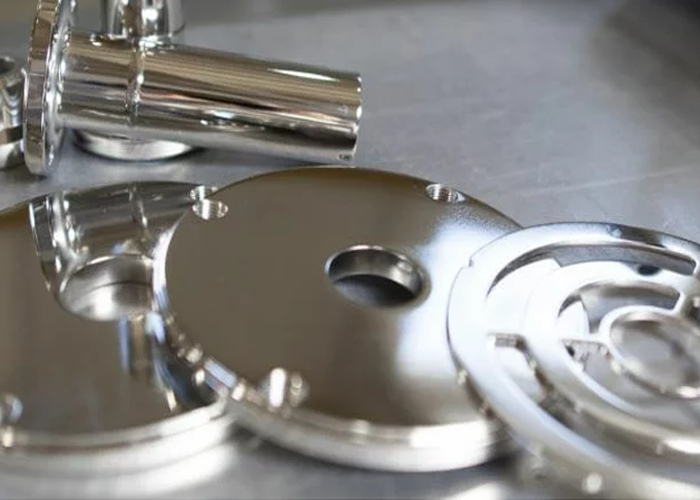
High - precision manufacturing service for medical devices in the mechanical processing industry, producing reliable medical equipment for healthcare applications.

Conclusion

No single surface finishing method is suitable for all materials and scenarios. Different processes overlap in functionality but also have unique advantages. Selection requires considering material properties, structural complexity, operating environment, appearance requirements, and cost constraints. Understanding the characteristics of each process helps businesses make more informed technical decisions, improving product quality and performance.
 
If you’re selecting the right surface finishing method for your parts, or need to evaluate processing techniques and costs simultaneously, we can provide professional advice and feasible solutions based on your material, structural drawings, and application scenarios.
Facebook
Twitter
LinkedIn

Choose Keywin for Quality

At Keywin, we pride ourselves on our precision and dedication to quality in CNC machining. Our expert team ensures every project meets the highest standards.
Stay Updated
Subscribe to our newsletter for the latest updates on our services and industry insights.
Stay Updated
Subscribe to our newsletter for the latest updates on our services and industry insights.
© 2024 Keywin. All rights reserved. Empowering your ideas with precision and quality.