Introduction
In the global push for lighter, faster, and stronger vehicles, die casting has emerged as a key metal forming technology in modern automotive manufacturing. As the shift toward electric vehicles (EVs), lightweight architecture, and highly integrated structural designs accelerates, traditional casting and machining methods are increasingly challenged by limitations in efficiency, mechanical strength, and cost control.
Die casting, by contrast, offers a powerful combination of high material density, excellent dimensional consistency, and scalable mass production capabilities. These advantages are redefining how critical structural components are manufactured—especially in the EV sector.
According to market forecasts, the global automotive die casting market is expected to reach nearly USD 85 billion by 2030. Lightweight metals, particularly aluminum alloys, continue to dominate due to their superior strength-to-weight ratios and processability. Die-cast parts such as motor housings, battery trays, and controller enclosures are now standard in EV platforms, enabling OEMs to achieve optimal trade-offs between structural integrity, thermal performance, and system integration.
This article answers the fundamental question—What is Auto Die Casting?—through a detailed exploration of the die casting process, common automotive applications, and material options such as aluminum, magnesium, and zinc. Whether you’re a design engineer optimizing for structural weight reduction or a procurement professional sourcing reliable die-cast components, this guide offers practical, technical insights to support your next project.
Ⅰ. What Is Auto Die Casting?
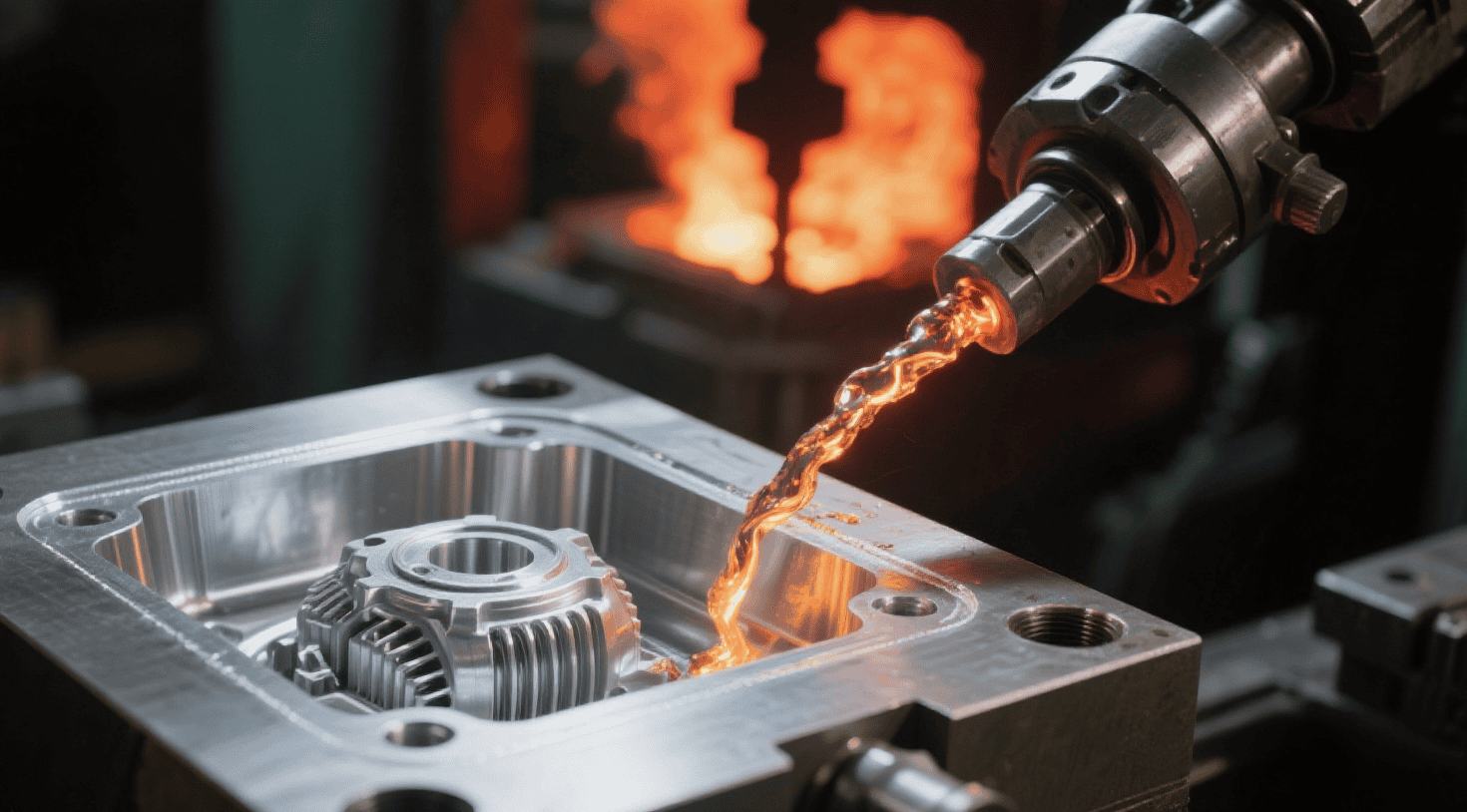
Auto die casting is a high-pressure metal forming process widely used in the mass production of automotive components. It involves injecting molten metal alloys into precision-engineered steel molds (dies) under high pressure, where the material rapidly cools and solidifies into parts with high structural density, tight dimensional tolerances, and excellent surface finishes.
Unlike traditional gravity casting, die casting relies on specialized die casting machines and high-precision tooling to achieve fast cycle times and high repeatability. This makes it one of the core technologies enabling lightweight design and efficient large-scale manufacturing in today’s automotive industry.
Depending on the injection method and the melting point of the alloy used, die casting processes are generally classified into two main types: hot chamber die casting and cold chamber die casting. These two methods differ significantly in terms of machine design, compatible materials, and typical applications, as shown in the table below:
| Category | Hot Chamber Die Casting | Cold Chamber Die Casting |
|---|---|---|
Suitable Metals |
Low melting point alloys (e.g., zinc, magnesium) |
High melting point alloys (e.g., aluminum, copper) |
Molten Metal Handling |
Metal is held in an integrated chamber, connected directly to the injection mechanism |
Metal is ladled manually or by robot from an external holding furnace |
Cycle Speed |
Faster cycle time, ideal for small-to-medium complex parts |
Slightly slower, suitable for medium-to-large structural components |
Process Features |
High automation, fast cycle rates, longer mold life |
Higher injection pressure, better suited for high-strength and large-format components |
Typical Applications |
Electronic housings, small brackets, 3C device frames |
Engine housings, battery trays, e-drive enclosures—widely used in automotive structures |
Regardless of whether hot chamber or cold chamber die casting is used, the fundamental process steps are largely the same and include the following key stages:
- Mold Preparation: High-strength steel molds are preheated to a specified temperature and coated with a release agent to ensure smooth part ejection and consistent forming.
Metal Melting: Metal alloys such as aluminum, magnesium, or zinc are heated in a furnace to a molten state, typically maintained between 660°C and 700°C for aluminum alloys.
Injection Molding (High-Pressure Injection): The molten metal is injected into the mold cavity at high velocity (30–60 m/s) by a piston under injection pressures ranging from 80 to 150 MPa. This ensures rapid cavity filling and dense, defect-free part formation.
Cooling and Solidification: With the mold closed, the molten metal cools rapidly to form the final shape. Cooling times usually range from 1 to 5 seconds depending on the part volume and wall thickness.
Mold Opening and Part Ejection: The mold opens and the cast part is ejected by mechanical arms or ejector pins.
Deburring and Post-Processing: The freshly cast parts undergo deburring, trimming, and cleaning. Complex components may also receive heat treatment or CNC machining to meet tight dimensional tolerances.
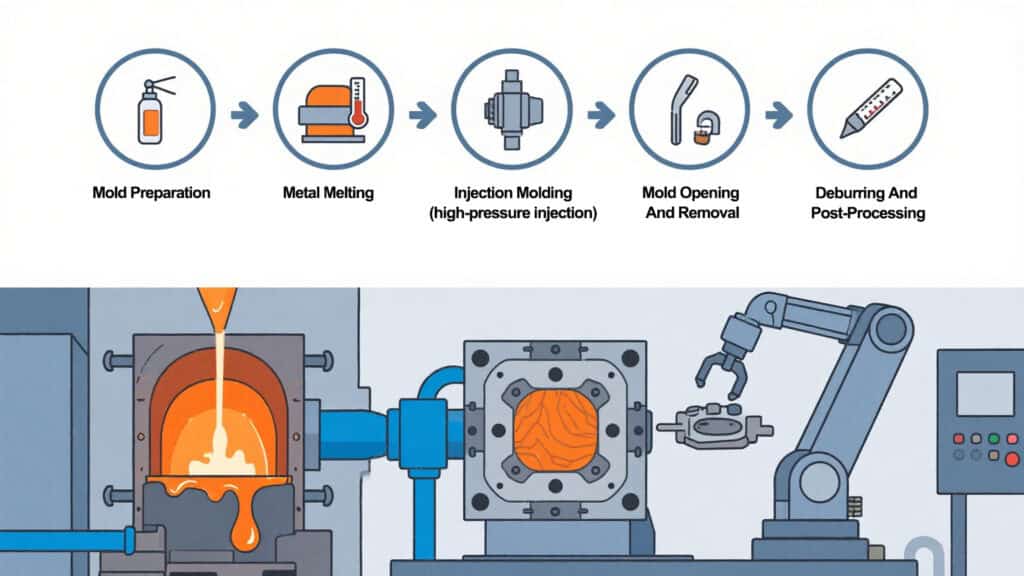
From high-pressure injection to rapid solidification, die casting’s integrated forming process significantly simplifies traditional multi-step manufacturing workflows. While dramatically increasing production efficiency, it also enhances part density, structural integrity, and consistency. Consequently, die casting is not only well-suited for medium to large volume automotive component manufacturing but is increasingly replacing conventional casting and machining solutions in key areas such as new energy vehicles, electric drive systems, and vehicle body structures.
Ⅱ. Core Advantages of Die Casting Technology in Automotive Manufacturing
As mentioned earlier, driven by trends in new energy vehicles (NEVs), electric drivetrains, and lightweight design, die casting is extensively used for producing key structural components such as motor housings, battery trays, and inverter enclosures. But what exactly makes die casting stand out? Below are five core advantages of die casting in automotive manufacturing, analyzed from the perspectives of technical performance and production adaptability:
1.High Integration Reduces Part Count and Assembly Complexity
Large-scale die casting enables the consolidation of multiple components—previously joined by welding or bolting—into a single integrated part. This can reduce part numbers by over 40%, significantly lowering assembly time and cumulative tolerance stack-up.
2. Excellent Dimensional Accuracy and Repeatability
Die casting molds can achieve dimensional tolerances as tight as ±0.05 mm, ideal for producing high-consistency parts in volume. This precision meets the strict fit and function requirements of powertrain systems, motor housings, and other critical components.
3. High Production Efficiency for Medium to Large Volumes
Compared to CNC machining or gravity casting, die casting offers fast cycle times of 10 to 60 seconds per part. This leads to substantial unit cost advantages in batch sizes exceeding 5,000 pieces.
4. Supports Lightweight Design to Reduce Vehicle Energy Consumption
Common die casting alloys like aluminum and magnesium combine high specific strength with low weight, enabling structural integrity while reducing overall mass—a crucial factor for addressing EV range concerns and tightening fuel economy regulations.
5. Superior Surface Quality Facilitates Downstream Processing and Assembly
Die cast parts feature dense microstructures and smooth surfaces, often ready for direct secondary operations such as machining, painting, or electrophoretic coating. This streamlines the manufacturing chain and improves overall process efficiency.
It is these combined advantages that make die casting an indispensable forming technology transitioning from traditional internal combustion engine vehicles to next-generation electric mobility. Ultimately, these benefits materialize in a wide range of structurally complex, performance-critical metal components.
Ⅲ. Common Types of Automotive Die Cast Components
In automotive manufacturing, die casting is primarily applied to metal components that feature complex geometries, demanding mechanical performance, and high production efficiency requirements. These parts are typically found in powertrain systems, chassis assemblies, and new energy electric drive systems, where stringent standards for dimensional accuracy, strength, and consistency apply. The following are typical categories of automotive die cast parts:
3.1 Powertrain and Drivetrain Components
Die cast parts are extensively used in conventional automotive powertrain systems, providing structural protection and sealing under high temperature, high pressure, and heavy load conditions. Common components include:
- Engine blocks and cylinder head covers
Turbocharger housings
Automatic and manual transmission housings
3.2 Chassis Structural Components
Within chassis systems, die casting offers high strength and dimensional consistency to withstand complex operating conditions such as high-speed vibrations and impact loads. Typical parts include:
Control arm brackets and steering knuckles—key suspension components
Subframe connecting structures
Pedal brackets and brake pump housings—support and transmission-related parts
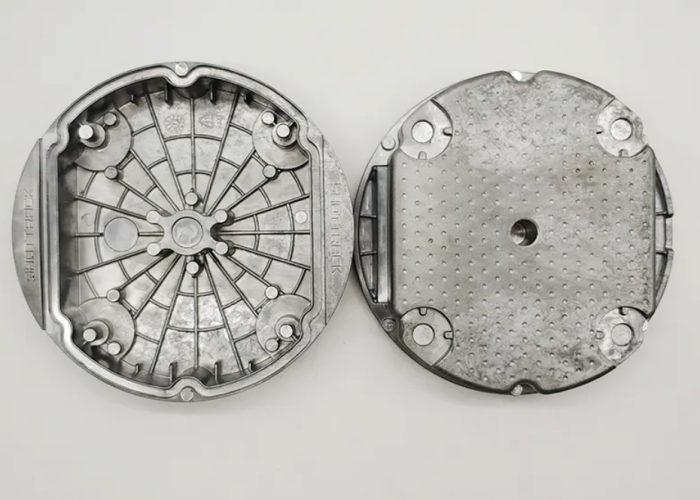
3.3 New Energy Vehicle (NEV) Electric Drive Systems
In the new energy vehicle sector, die casting technology covers almost the entire electric drive and thermal management systems, serving as a core enabler for electrification and lightweight design. Main applications include:
Motor housings and integrated e-drive enclosures
Controller structural parts (e.g., inverter and DC-DC converter housings)
Battery pack lower trays and charging port brackets
Thermal management modules and liquid cooling component housings
Whether in traditional powertrain systems or cutting-edge NEV electric drive platforms, die casting’s superior structural forming capabilities and manufacturing consistency make it the preferred production method for these critical components.
IV. Common Die Casting Materials and Their Advantages in Automotive Applications
In automotive manufacturing, die casting primarily uses aluminum, zinc, and magnesium alloys. Each material offers distinct advantages in terms of physical properties, process efficiency, and cost structure. These alloys are selected based on specific performance needs—whether for structural strength, dimensional accuracy, or lightweight design—and matched with the appropriate die casting process (e.g., aluminum die casting, zinc die casting, or magnesium die casting).
4.1 Aluminum Die Casting: The Mainstream Choice for Structural Strength and Thermal Performance
Aluminum die casting is the most widely used method in automotive manufacturing. Aluminum alloys offer an excellent balance of lightweight properties, mechanical strength, thermal conductivity, and corrosion resistance. These characteristics make aluminum ideal for medium-to-large components such as e-drive housings, engine cases, and battery trays in new energy vehicles.
Popular aluminum die casting alloys include ADC12, A380, and EN AC-46000, known for their ductility and post-processing compatibility. These alloys support downstream treatments like anodizing, electrophoretic coating, or powder coating, meeting both functional and aesthetic demands.
Key advantages of aluminum die casting include:
High strength-to-weight ratio: Density around 2.7 g/cm³—lightweight yet structurally strong, ideal for overall vehicle weight reduction.
Efficient forming: Excellent flow and cooling behavior allow high-speed casting of complex parts, suitable for production runs over 5,000 units.
Post-processing compatibility: Easily machined and finished for improved assembly precision and visual consistency.
Excellent corrosion resistance: Naturally forms a protective oxide layer and adapts well to coatings, ensuring durability in outdoor and high-voltage environments.
4.2 Zinc Die Casting: Precision and Surface Quality for Small Complex Parts
Zinc die casting is ideal for small components with intricate shapes and tight tolerances, such as door hardware, switch housings, trim covers, and fastening brackets. Zinc alloys deliver outstanding dimensional precision and surface finish, making them a popular choice for both interior and exterior automotive trim.
Common zinc alloys like Zamak 3 and Zamak 5 offer excellent castability, machining performance, and electroplating compatibility—ideal for decorative or functional surface treatments.
Key features of zinc die casting include:
Ultra-high precision: Excellent mold fidelity with dimensional tolerances within ±0.02 mm.
Complex detail replication: Capable of casting logos, thin-walled features, and fine textures without secondary operations.
Strong mechanical properties: Maintains strength and hardness even in low-temperature environments.
Energy efficiency and tool longevity: Low melting point (~400°C) enables lower energy consumption and extended mold life.
4.3 Magnesium Die Casting: Ultra-Lightweight and EMI Shielding Capabilities
Magnesium die casting is gaining traction in applications where extreme weight reduction is required, such as dashboard structures, electronic enclosures, and interior brackets. With a density of only ~1.8 g/cm³, magnesium offers up to 30–40% weight savings over aluminum. Additionally, its excellent electromagnetic shielding properties make it ideal for enclosing EV control systems.
Widely used magnesium alloys such as AZ91D and AM60B provide good fluidity and impact resistance, making them suitable for thin-wall, complex designs.
Key advantages of magnesium die casting include:
Exceptional lightweight: Among the lightest structural metals, unlocking significant weight reduction potential.
Vibration damping: Naturally absorbs vibrations, improving ride comfort and part durability.
Good castability: Ideal for high-integration designs with thin walls and complex geometry.
Sustainability: Fully recyclable and re-meltable, supporting environmentally responsible manufacturing.
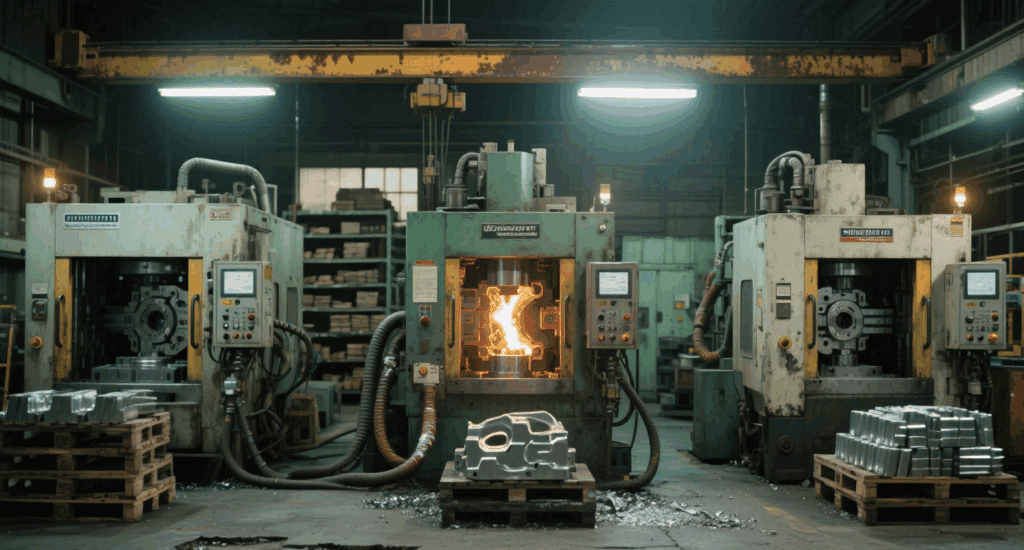
Material selection in die casting directly impacts part performance, cost-efficiency, and long-term reliability. At Keywin, we offer expert consulting on alloy selection, process design, and finishing options—helping clients optimize structural performance while controlling production costs across aluminum, zinc, and magnesium die casting projects.
V. Application Boundaries of Die Casting: Limitations Beyond the Advantages
While die casting offers significant benefits in terms of efficiency, precision, and weight reduction—making it a go-to method for automotive component manufacturing—it is not a one-size-fits-all solution. In real-world engineering scenarios, it’s essential to weigh several inherent limitations before selecting die casting as the manufacturing approach:
1. High Initial Tooling Cost
Die casting requires custom-built, high-precision molds that must undergo extensive machining and heat treatment. Depending on part complexity, mold development costs can range from $10,000 to $100,000 or more. For low-volume production or projects still undergoing frequent design iterations, these upfront investments can be difficult to amortize, leading to higher per-unit costs. As a result, die casting may not be suitable for rapid prototyping or small-batch trial runs.
2. Geometric Limitations—Especially for Deep Cavities and Internal Channels
Since die casting molds must allow for demolding and rely on split lines and core-pulling mechanisms, certain complex geometries pose manufacturing challenges. Deep internal cavities, through-channels, and non-linear surfaces are often difficult to cast in a single shot and may require post-casting CNC machining, increasing downstream costs.
For components such as cooling channels, thermal management modules, or electronic housings with intricate internal layouts, it is critical to evaluate whether the design is die-castable—or if alternative processes like gravity casting combined with precision machining might be more appropriate.
3. Material and Performance Limitations
Despite their excellent strength-to-weight ratios, aluminum, magnesium, and zinc alloys have material limitations that restrict their use in certain high-performance applications. Die casting may not be the best fit when:
Components require extreme high-temperature strength or superior fatigue resistance, such as engine internals or load-critical suspension joints.
Parts must offer weldability or extreme corrosion resistance, as needed in exhaust systems or water-intrusion-prone areas.
In such cases, forging, extrusion, or CNC machining may offer more suitable mechanical properties or design flexibility.
VI. Summary