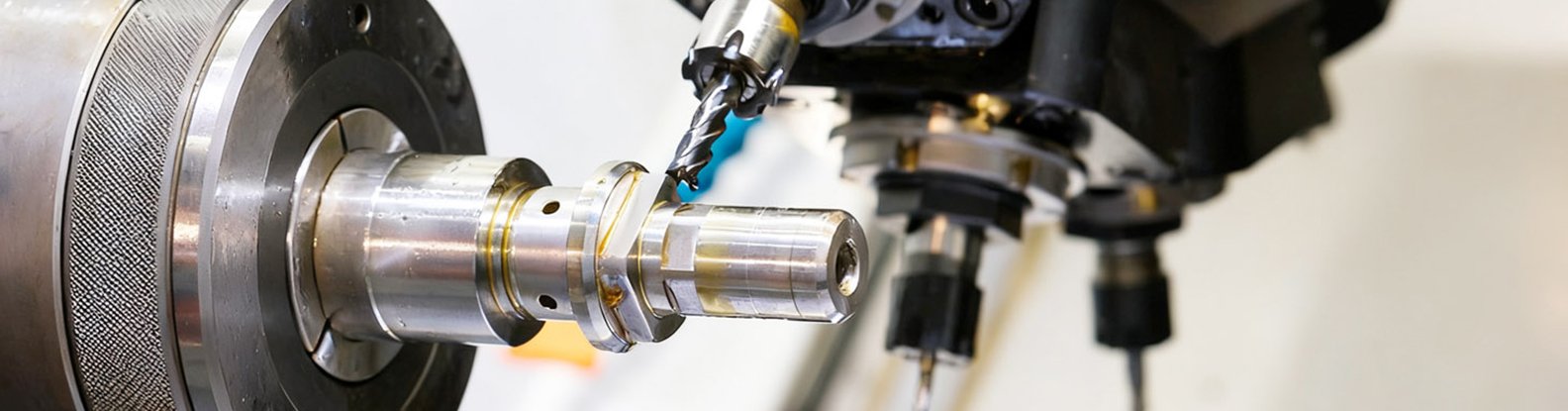
Introduction: CNC turning is a numerical control machining process centered on workpiece rotation, typically performed on a CNC lathe. By accurately controlling the rotational speed, tool trajectory, and feed parameters, it can machine rotary parts with high accuracy and consistency, which is one of the basic processes in modern precision manufacturing. This article will systematically explain CNC turning from the aspects of process principles, machining capabilities, applicable materials, and cost factors.
I. What is CNC Turning?
CNC turning is a manufacturing process where a lathe is controlled by a computer program to perform automatic cutting operations on rotating workpieces.
During the processing:
- The material rotates at high speed.
- The cutting tool moves steadily.
- The computer precisely controls every action.
Finally, high-precision and high-grade cylindrical, spherical and symmetrical parts are produced.
In simple terms: CNC turning is the process of using “robots” to carve metal.
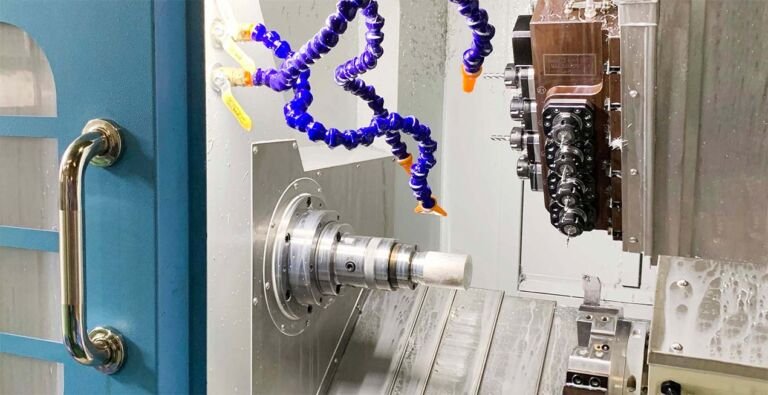
Ⅱ. How does CNC turning work (working principle)?
The workflow of CNC turning is very clear:
1.Designing parts
Engineers use CAD software to create 3D models.
2. Generate processing program
The CAM software converts the model into G-code that the machine tool can recognize.
3. Clamp the material
Fix the metal rod or plastic rod onto the spindle chuck.
4. Automatic processing
The machine rotates the material and the tool cuts according to the program.
5. Part formation
The processing is completed, with precise dimensions and a smooth surface.
Once the program is set up, the machine can operate stably for 24 hours.
Ⅲ.What operations can CNC turning perform?
A CNC lathe is like a “versatile worker”, capable of carrying out various processes:
External turning
Machining the outer cylindrical profile of a workpiece, for example turning a thick bar into a shaft with a standard diameter, like lathe-turning a log into a smooth, uniform cylinder.
Internal boring
Machining the internal hole structure of a part, for example creating a precise through-hole in a metal bar, like drilling and finishing an accurately fitted “internal channel” inside the workpiece.
Facing
Machining the end face of a part to ensure accurate mating during assembly, like finishing a flat, smooth “mating surface” on the end of the workpiece.
Grooving
Processing sealing groove, slot and other structures.This is often used for the installation position of O-rings, such as cutting custom-made “groove positioning” on the workpiece.
Parting-off (Cut-off)
Separating the finished part from the raw material, essentially “cutting it off” from the stock, like using precise scissors to cleanly separate the finished piece from a bar.
Threaded part
This involves machining a threaded structure on the surface of a part, enabling the part to be tightened and fixed, similar to engraving “tightening patterns” on the workpiece that can interlock with each other.
Drilling
Make a base hole on the end face / center of the part to prepare for subsequent boring and tapping operations. It is like marking out the initial “hole position foundation” for the workpiece.
Beveling
Polishing the edges and corners of parts, rounding off the ends of holes or creating slopes, to prevent sharp edges from causing cuts and also to facilitate assembly. It’s like rounding off the sharp corners of the workpiece to create smooth “transition edges”.
On the machining and milling combined equipment, various processes such as milling and tapping can also be carried out.
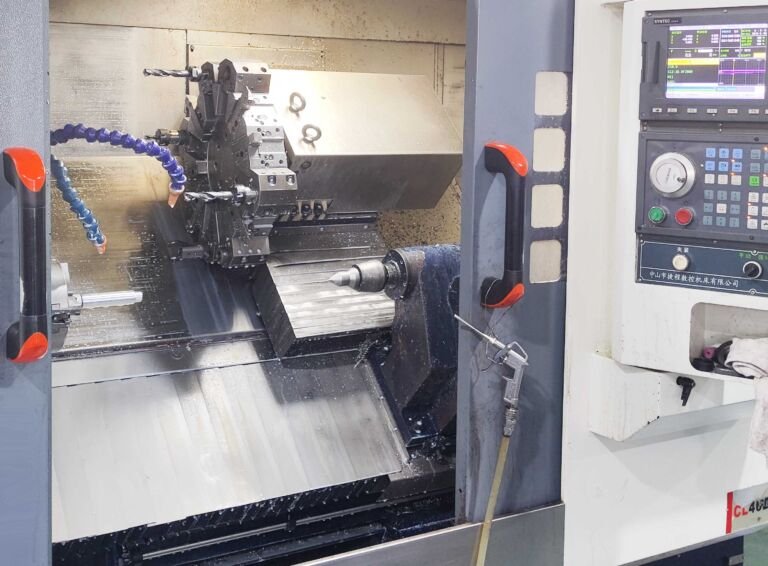
Ⅳ.What can be processed by CNC turning? (Application / Type of parts)
As long as your part “seems to be rotatable”, it is basically suitable for CNC turning.
Parts that rotate symmetrically around the central axis.
Typical components include:
Axial components:
Axial components are one of the most common types of parts in CNC turning. They are typically cylindrical and rotational structures. They are mainly used to transmit power or support rotating components, and are widely used in mechanical transmission systems and critical supporting structures.
Socket:
A socket is a hollow rotating part with a precisely machined inner hole and outer circle. It is commonly used in bearing bushings, mechanical positioning, and for the fitting and connection between different components.
Flange:
A flange is a disc-shaped component with a flange, usually featuring multiple mounting holes. It is mainly used for connecting, fixing and achieving coaxial positioning between equipment, pipelines or shaft systems.
Connectors:
Connectors are small rotating parts used in mechanical structures for configuration and connection. Their function is to achieve reliable fixation and combination between different components.
Pipe joint:
A pipe joint is a tubular rotary component with threads or conical surfaces. It is widely used in hydraulic, pneumatic and fluid systems for connecting and sealing between pipes.
Threaded parts:
Threaded parts are rotating components that have internal or external threads machined on their surfaces. They are mainly used for fastening, adjustment, or in threaded transmission structures in mechanical assemblies.
Locating pins:
Locating pins are small cylindrical or conical rotating parts with high precision. They are commonly used in tooling fixtures and precise assembly to achieve accurate positioning and limiting of components.
Medical device parts:
Medical device parts are usually small-sized and highly precise rotating components. They are mainly used as key functional components in surgical instruments and medical equipment.
Automobile transmission components:
Automobile transmission components include transmission shafts, gear blanks, and other rotating shaft-type parts. They are widely used in automobile gearboxes, chassis, and power transmission systems.
The parts processed by CNC machining are widely used in industries such as automobiles, aerospace, medical equipment, industrial machinery, and electronic communication systems.


Ⅴ. Common materials used in CNC turning
CNC turning can process almost all common engineering materials:
Metal materials
- Aluminum alloy: Lightweight, easy to process, with excellent surface quality, commonly used in electronic products and aviation components.
- Stainless steel: It has high strength and is resistant to corrosion. It is commonly used in medical, food, and chemical equipment.
- Carbon steel: Low cost, high strength, often used in mechanical structural components.
- Bronze: It has good processing properties and a beautiful appearance, and is often used in valves, joints, and electrical components.
- Copper: It has excellent electrical and thermal conductivity, good ductility, and is commonly used in conductive components, heat dissipation parts, and precision contacts.
- Titanium alloy: It has high strength, light weight and strong corrosion resistance, and is commonly used in aerospace, medical equipment and high-end equipment.
- High-temperature alloy: Resistant to high temperatures, with excellent creep resistance and high strength, commonly used in aircraft engines, gas turbines, and components operating under high-temperature conditions.
Plastic material
- ABS: Good toughness, easy to shape, high cost-effectiveness, often used for shell accessories, structural components, and toy products.
- POM: High hardness, resistant to wear and creep, commonly known as “steel-like material”, is often used in gears, bearings, and precision transmission components.
- Nylon: Resistant to wear and impact, self-lubricating, commonly used in pulleys, shaft sleeves, fasteners, and textile accessories.
- PTFE: Resistant to high and low temperatures, corrosion, and non-stickiness. Commonly known as Teflon, it is often used in seals, wear-resistant pads, and anti-corrosion components.
- PEEK: High temperature resistance, high strength, wear resistance, a high-end engineering plastic, commonly used in medical devices, aerospace, and core components of precision machinery.
Different materials require different tools to achieve efficient and stable processing.
Ⅵ. Advantages of CNC turning
Why are so many industries unable to do without CNC turning?
Because it has the following features:
√ High processing accuracy
√ Excellent surface finish
√ Strong product consistency
√ High degree of automation
√ High production efficiency
√ Extremely suitable for mass production
Once it starts operating, the machine is like an endless production line that never stops.
Ⅶ. The disadvantages of CNC turning
Of course, it also has some “weak points”:
× The equipment investment cost is relatively high
× Programming requires professional engineers
× It is not suitable for complex non-rotational body parts
× The cost of adjusting the machine for small batches is relatively high
For complex-shaped but non-circular parts, CNC milling processing is usually required.
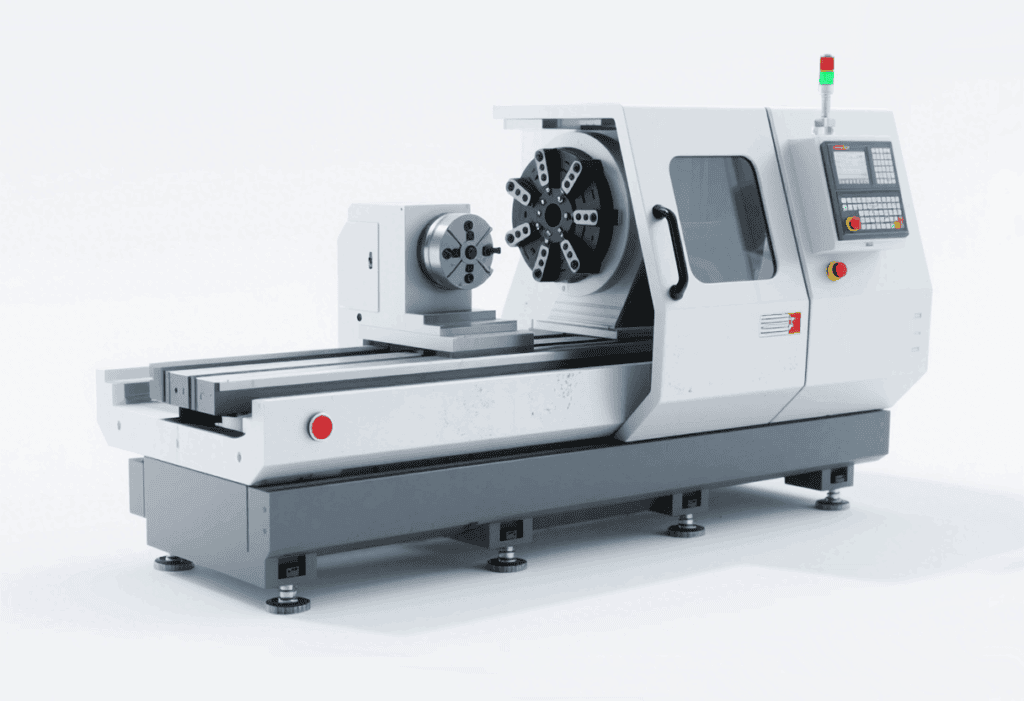
Ⅷ. Common equipment for CNC turning
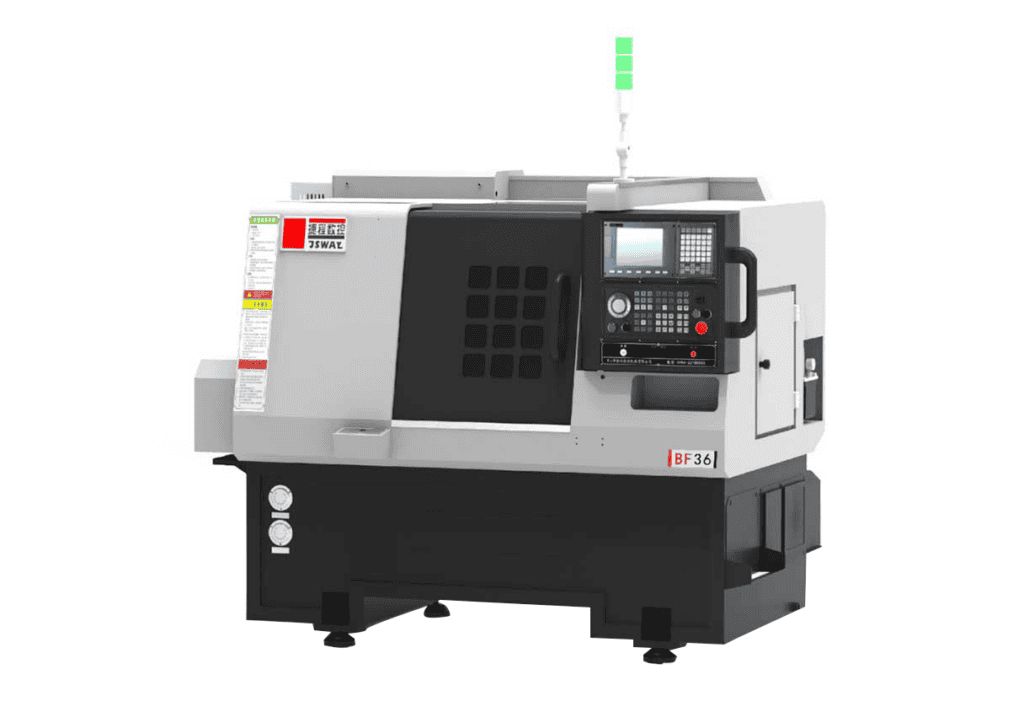
Common CNC turning equipment includes:
- Two-axis CNC lathe: A basic type of CNC turning equipment with a simple structure and intuitive operation, suitable for the basic processing of conventional rotating parts.
- Inclined bed CNC lathe: Excellent chip removal performance, high precision, strong rigidity, suitable for high-precision shafts / disc sleeve type batch processing.
- CNC turning center: Equipped with a power tool turret, it can complete turning, drilling, tapping and other processes in one setup, suitable for processing complex rotating parts with holes and slots.
- Cylindrical and turning combined machining center: Integrates both turning and milling functions. Through multi-axis linkage, it reduces the number of setups, and is mainly used for processing complex-shaped and high-precision irregular rotary parts.
- Automatic feeding CNC lathe: Equipped with an automatic feeding system for continuous processing, it is suitable for large-scale production of small-sized shafts, pin shafts, and other parts.
Common brands: Mazak, DMG MORI, Okuma, Doosan, Fanuc systems, etc.
Summary
So, what is CNC turning?
It is a highly precise, efficient and stable automated processing method, and it is the “pillar” of modern manufacturing industry.
From automotive parts to medical machinery, from industrial equipment to electronic products, CNC turning is quietly supporting the operation of this world.
If your part is round, cylindrical or threaded -then CNC turning is definitely your best choice.
When you are ready, send your drawings- we will quote you today!
FAQ
1. CNC turning vs CNC milling: What are the differences between them?
In fact, this is the most frequently asked question by the customers.
CNC turning can be understood as – the material is rotating while the tool is “carving”, suitable for processing rotary body parts (circular, shafts, symmetrical structures); while CNC milling can be interpreted as – the tool is rotating while the material is “being cut by the tool”, suitable for processing square, irregular, and complex three-dimensional structures.
In a nutshell: If your part is “circular” – choose CNC turning
If your part is “square” or “complex shape” – choose CNC milling
For high-end parts, they are processed through a combination of turning and milling.
2.What determines the cost of CNC turning?
This is one of the issues that the procurement department is most concerned about.
It should be noted that the cost of CNC turning is not fixed; it is determined jointly by several key factors:
Material: The cost of different materials varies significantly. The cost of aluminum alloy is relatively low, that of stainless steel is at a medium level, and the costs of high-performance materials such as titanium alloy and Inconel are higher.
Processing time: The simpler the part structure, the shorter the processing time and the lower the cost; the more complex the structure, the longer the processing time and the higher the cost.
Precision requirements: The cost of conventional tolerances is lower; high-precision tolerances require slower processing and additional inspections, resulting in higher costs.
Order quantity: Small batch orders have a higher unit cost; mass production can effectively reduce the unit price.
Overall, the cost of CNC turning depends on a combination of factors such as the material, the complexity of the structure, the precision requirements, and the order quantity. If you want to know the processing cost of a specific part, please feel free to contact us. Just provide us with the drawings and we will provide you with a quote.