Introduction
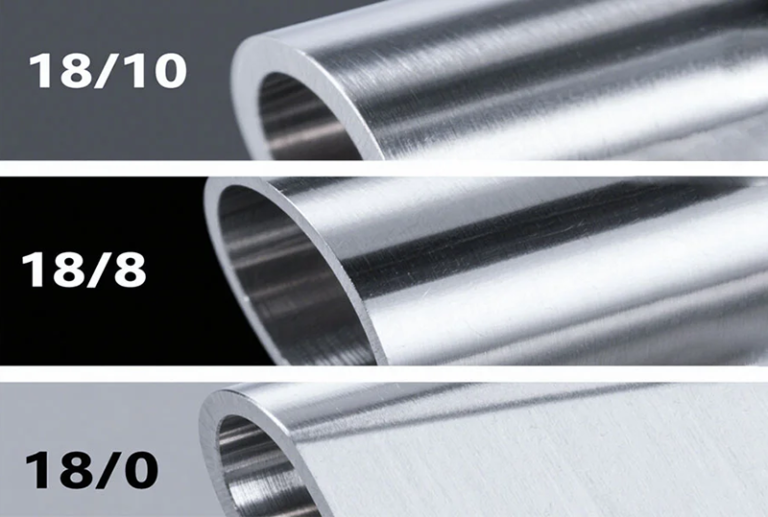
18/8, 18/10, and 18/0 stainless steel are commonly used materials in industrial manufacturing, widely adopted for their excellent overall properties. The key distinction among them lies in their varying nickel content, which directly influences their corrosion resistance and suitability for different applications. This article will analyze their compositional differences, performance characteristics, and optimal uses to help you better distinguish their appropriate scenarios.
Ⅰ. 18/8 Stainless steel
⑴ What is 18/8 stainless steel?
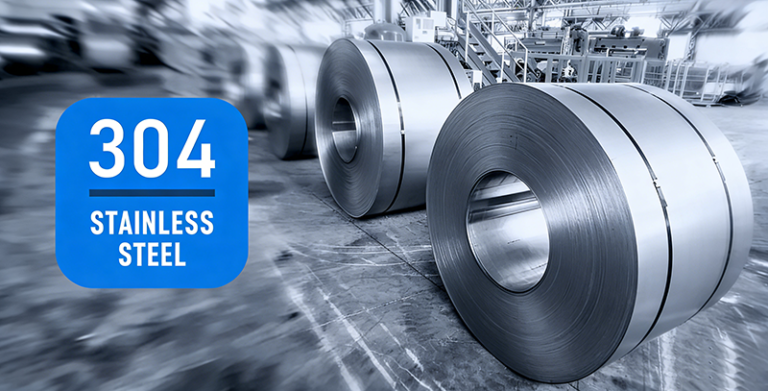
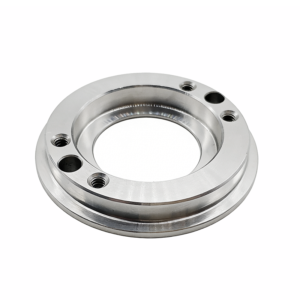
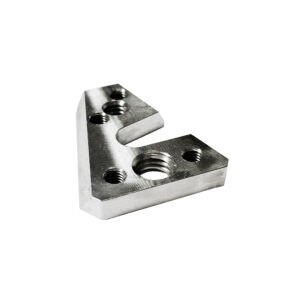
18/8 stainless steel, also known as AISI 304, is a widely used austenitic stainless steel material in industrial manufacturing. This material combines excellent corrosion resistance, good strength retention, and machinability, maintaining stable dimensional accuracy and surface quality during CNC machining. It is particularly suitable for processing general industrial parts, structural components, and mechanical parts requiring a certain level of corrosion resistance.
⑵ 18/8 Stainless Steel Composition
1) The core composition of 18/8 stainless steel consists of 18% chromium (Cr) and 8% nickel (Ni). It also contains ≤0.08% carbon (C), approximately 1% manganese (Mn), ≤1% silicon (Si), with the remainder being iron (Fe). Some grades contain trace amounts of molybdenum (Mo), phosphorus (P), and sulfur (S).
2) The 18% chromium forms a dense chromium oxide protective layer on the surface, granting stainless steel its “rust-resistant” and corrosion-resistant properties. The 8% nickel stabilizes the internal structure, enhances ductility and strength, and improves corrosion resistance in acidic environments.
⑶ What are the advantages of 18/8 stainless steel?
Strong corrosion resistance: Features a protective chromium oxide layer on its surface, making it resistant to rust and suitable for humid environments.
- Food-grade safety: Does not produce harmful substances, making it an ideal choice for kitchenware and medical instruments.
- Easy to machine, with relatively high toughness and excellent forming results, it is suitable for supporting various structural components and functional industrial parts.
- High-temperature resistance: Maintains strength and oxidation resistance up to 870°C (1,518°F), suitable for food processing and heat treatment industries.
- Cost-effective: 20-40% cheaper than 316 stainless steel while outperforming most 400-series alloys in common applications.
⑷ What are the disadvantages of 18/8 stainless steel?
Poor resistance to chloride ion corrosion; susceptible to corrosion when exposed to saltwater or seafood juices, making it unsuitable for marine environments.
- Low thermal conductivity 16 W/(m·K), leading to uneven heating when used as a single material. Adding aluminum or copper to enhance thermal conductivity increases costs.
- Requires cold working for hardening, as it cannot be heat-treated to achieve strength. This process reduces production efficiency.
Ⅱ. 18/10 Stainless Steel
⑴ What is 18/10 stainless steel?
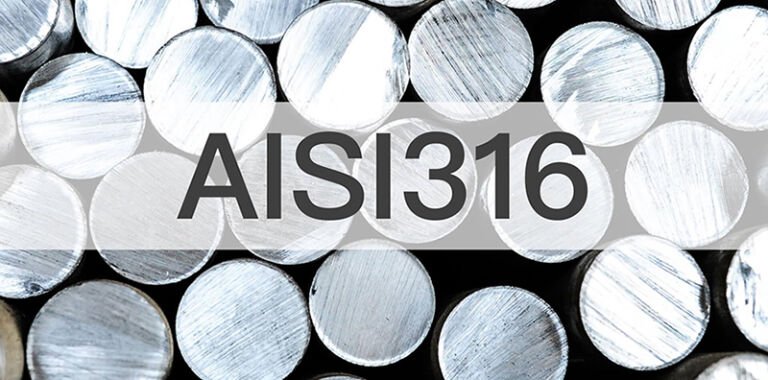
18/10 stainless steel typically corresponds to AISI 316, an austenitic stainless steel material that further enhances corrosion resistance over 18/8 stainless steel. Due to the addition of molybdenum, 316 stainless steel offers superior corrosion resistance, toughness, and high-temperature stability, making it suitable for CNC machined parts requiring high environmental adaptability and material stability.
⑵ 18/10 Stainless Steel Composition
1) The core composition of 18/10 stainless steel consists of 18% chromium (Cr) and 10% nickel (Ni), along with approximately 2% molybdenum (Mo). It also contains ≤0.08% carbon (C), ≤2% manganese (Mn), ≤1% silicon (Si), trace amounts of phosphorus (P) and sulfur (S), with the remainder being iron (Fe).
2) Unlike 18/8 stainless steel, 18/10 incorporates molybdenum (Mo). Molybdenum significantly enhances the steel’s resistance to chloride ion corrosion and improves its corrosion resistance in reducing acids and high-temperature environments.
⑶ What are the advantages of 18/10 stainless steel?
Superior corrosion resistance, particularly against chloride ion corrosion; can withstand prolonged exposure to saltwater and seafood environments without corrosion;
- High stability with increased nickel content, resistant to deformation and bending, maintaining structural integrity even at high temperatures;
- Exceptional durability and hardness, resistant to scratches and wear, retaining its lustrous finish over extended use.
⑷ What are the disadvantages of 18/10 stainless steel?
Relatively low corrosion resistance. Compared to the other two grades, it performs poorly in complex environments (salt, acid, alkali) and may rust with prolonged exposure.
- Poor toughness. The absence of nickel makes it prone to deformation and bending with extended use.
- Inferior surface finish. It has a dull, grayish appearance, and its polished texture lacks the smooth, bright white sheen of nickel-containing stainless steels.
Ⅲ. 18/0 Stainless Steel
⑴ What is 18/0 stainless steel?
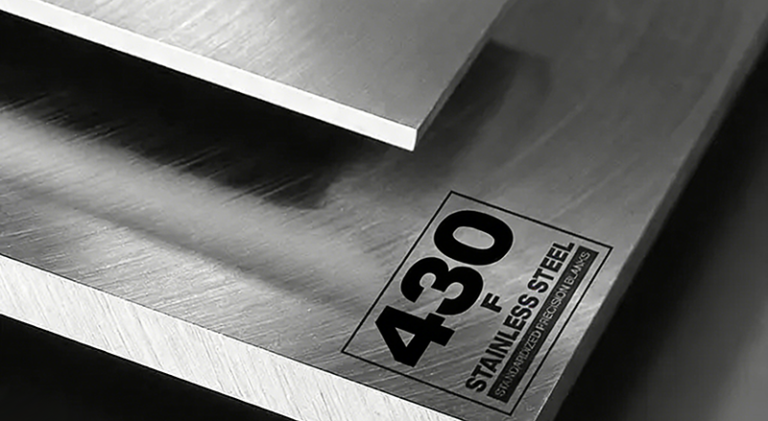
18/0 stainless steel is a common name for 430 stainless steel, belonging to the ferritic stainless steel family. 18/0 stainless steel exhibits slight magnetism but offers inferior corrosion resistance and toughness compared to 18/8 or 18/10 grades. Due to its cost advantage and excellent formability, 430 stainless steel is commonly used in industrial structural components, mechanical equipment housings, metal stamping parts, internal components of home appliances, and decorative industrial parts with low corrosion resistance requirements.
⑵ 18/0 Stainless Steel Composition
1) The core composition of 18/0 stainless steel consists of 18% chromium (Cr) and 0% nickel (Ni), with iron as the base. It also contains ≤0.12% carbon (C) and trace amounts of manganese (Mn) and silicon (Si).
2) With nickel content approaching 0%, rust prevention relies primarily on chromium, making it sufficient for everyday use.
⑶ What are the advantages of 18/0 stainless steel?
Low cost: Nickel is an expensive metal. Since 18/0 stainless steel contains no nickel, it is significantly cheaper than common 18/8 stainless steel.
- Magnetic properties: Contains iron in its crystal structure, making it attracted to magnets—a distinguishing feature from 18/8 stainless steel;
- Corrosion resistance: The 18% chromium content suffices for everyday environments and meets general industrial equipment requirements.
⑷ What are the disadvantages of 18/0 stainless steel?
Relatively low corrosion resistance. Compared to the other two grades, it performs poorly in complex environments (salt, acid, alkali) and may rust with prolonged exposure.
- Poor toughness. The absence of nickel makes it prone to deformation and bending with extended use.
- Inferior surface finish. It has a dull, grayish appearance, and its polished texture lacks the smooth, bright white sheen of nickel-containing stainless steels.
Ⅳ. How to Choose Between 18/8, 18/10, and 18/0 Stainless Steel?
Choose 18/8 Stainless Steel: High cost-effectiveness, everyday versatility
Features and applications: Offers excellent corrosion resistance and toughness at a competitive price point. As the most common food-grade stainless steel, it’s the top choice for most kitchenware and tableware. Also widely used in general hardware stampings, appliance housings, pipe fittings, etc. Avoid prolonged contact with high-salt or highly acidic foods to prevent corrosion.
- 18/10 Stainless Steel: Premium choice for demanding professional applications
Features and applications: Highest nickel content provides superior corrosion resistance. Higher cost makes it suitable for projects with ample budgets or requiring extended lifespan. Commonly used in medical instruments and chemical processing equipment.
- Choosing 18/0 Stainless Steel: Lowest Budget, Dry Conditions Only
Features and applications: Lowest cost, poor corrosion resistance, prone to rust with prolonged use. Suitable only for dry environments or short-term items like decorative hardware, non-load-bearing structural supports, or equipment housings in dry settings.
Ⅴ. Frequently Asked Questions (FAQ)
Q: Which types of stainless steel—18/8, 18/10, or 18/0—are magnetic?
A: 18/0 stainless steel has a ferritic structure and is distinctly magnetic. In contrast, 18/8 and 18/10 stainless steels are non-magnetic under normal conditions, exhibiting only a slight magnetic response after cold working.
Q: Which stainless steel grade—18/0, 18/8, or 18/10—offers superior corrosion resistance?
A: 18/10 stainless steel provides the best corrosion resistance due to its higher nickel and molybdenum content. 18/8 follows, meeting most corrosion-resistant requirements. 18/0 contains no nickel, resulting in significantly lower corrosion resistance than the other two grades. It is prone to rusting in humid environments.
Q: Is 18/0 stainless steel still safe to use after rusting?
A: If only minor surface rust appears on 18/0 stainless steel, it can be cleaned and used again. However, if deep corrosion or spreading rust spots occur, discontinue use immediately to prevent rust contamination of food and potential health hazards.