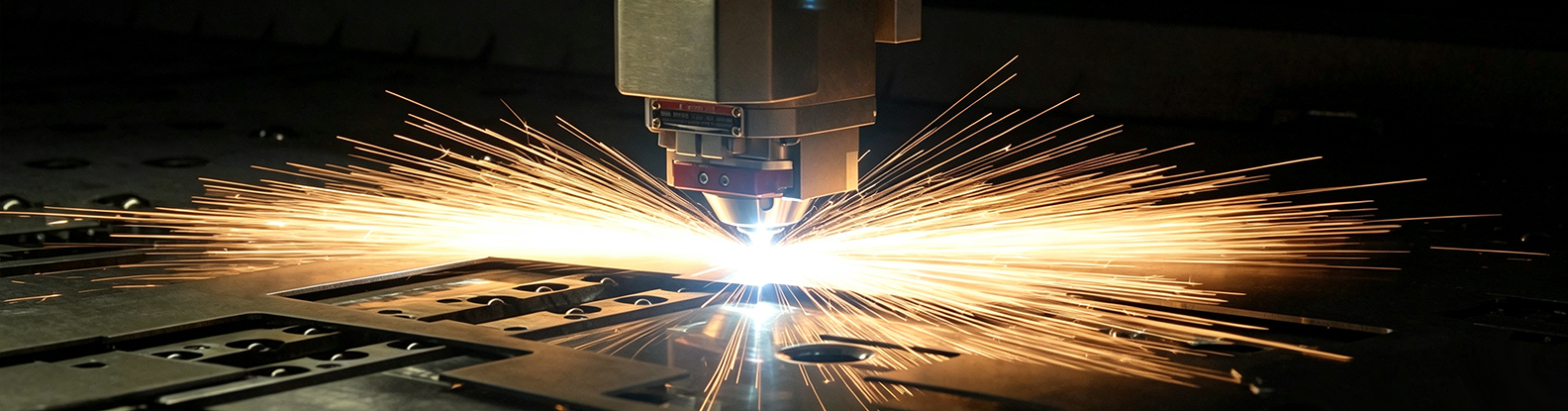
EDM (Electrical Discharge Machining) is a non-traditional precision machining process that removes conductive material using electrical pulse discharges. It generates high temperatures through electric sparks between an electrode and the workpiece, locally melting and vaporizing the material to gradually form the desired shape and dimensions. Because there is no mechanical contact or cutting force involved, EDM enables the stable machining of high-hardness materials and complex geometries, achieving micron-level tolerances and excellent surface quality.
This article provides a comprehensive overview of EDM—covering its working principles, primary types, applications, precision capabilities, cost factors, and design guidelines—and compares it with CNC machining to help engineers and procurement professionals quickly determine whether EDM is suitable for their projects.
Ⅰ. What is EDM Machining?
Unlike traditional machining processes such as turning, milling, and drilling, EDM removes material by converting electrical energy into thermal energy rather than relying on mechanical cutting tools; consequently, it is not limited by material hardness and is particularly well-suited for processing high-hardness alloys and complex, precision structures. However, because it relies on electrical discharge, EDM is applicable only to conductive materials, and its processing efficiency is generally lower than that of CNC machining. Therefore, in modern manufacturing, EDM is often combined with processes like CNC to produce high-precision parts that are difficult to manufacture using traditional methods.
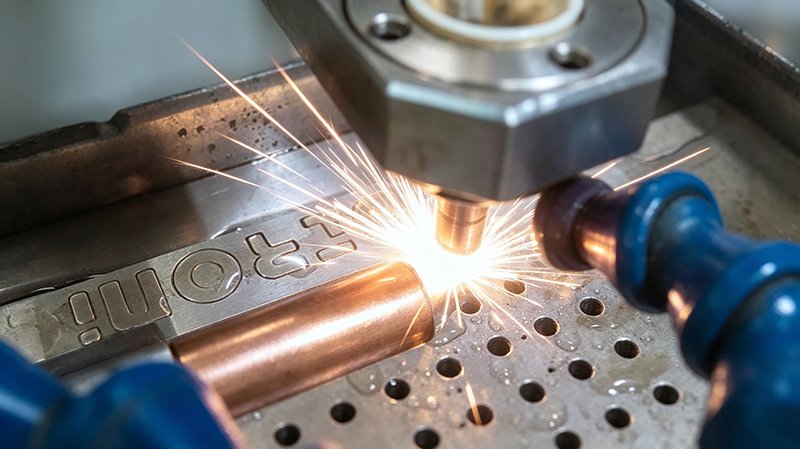
Electrical Discharge Machining delivers intricate contours on hard conductive metals without cutting force. Widely adopted in mold making and precision mechanical processing to produce tight-tolerance components for automation and machinery industries.
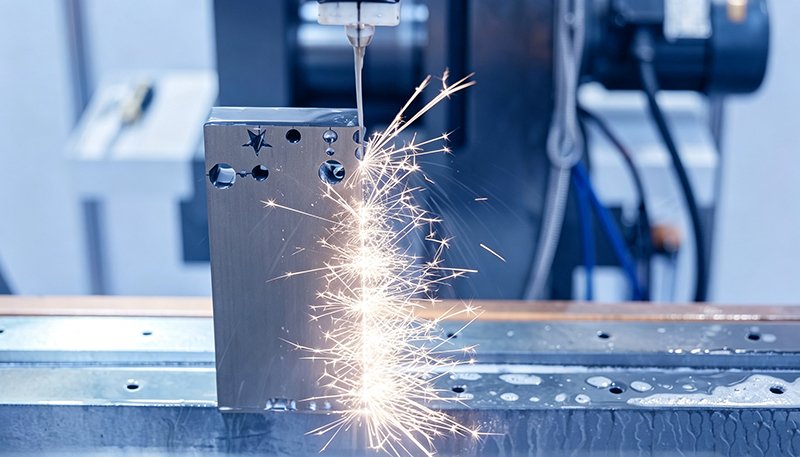
Ⅱ. How Does Electrical Discharge Machining Work?
The entire EDM process can generally be divided into the following steps:
Step 1: Position the Electrode
First, the electrode and the conductive workpiece are secured on the machine tool, maintaining a minute spark gap between them. Electrodes are typically made of conductive materials such as copper, graphite, or copper-tungsten; their shape determines the final machined profile (for sinker EDM) or the cutting path (for wire-cut EDM).
Step 2: Generate Electrical Discharges
When the pulsed power supply applies voltage, the dielectric fluid between the electrode and the workpiece breaks down, forming a stable discharge channel. Each electrical pulse generates instantaneous high heat, melting and vaporizing a minute amount of material from the workpiece surface, while the electrode itself undergoes slight wear.
Step 3: Remove Molten Material
After the discharge ends, the dielectric fluid rapidly regains its insulating properties and flushes away the molten and vaporized metal particles. It also dissipates the heat generated during machining—preventing defects caused by continuous discharge—and prepares the gap for the next discharge.
Step 4: Repeat the Process Until Completion
The machine tool uses a CNC system to continuously control electrode movement, repeating the discharge, cooling, and debris-removal cycles. Material is removed layer by layer until the workpiece meets the specified dimensions, tolerances, and surface quality requirements.
Ⅲ. EDM vs CNC Machining: When to Choose Each
EDM and CNC milling differ significantly in their machining principles and applicable operating conditions; neither is inherently superior to the other, and the optimal choice depends on factors such as workpiece material, structural complexity, machining allowance, and production volume. The following table clearly outlines the application scenarios, advantages, and limitations of both processes to facilitate quick comparison and selection.
| Comparison Dimension | EDM Machining | CNC Machining |
|---|---|---|
| Machining Principle | Removes material through electrical discharge pulses | Removes material through mechanical cutting with a tool |
| Material Hardness Limitations | No limitation based on hardness, as long as the material is electrically conductive | Harder materials generally cause faster tool wear |
| Machinable Features | Deep cavities, narrow slots, sharp corners, micro-holes, and complex cavities | External contours, flat surfaces, holes, threads, and other conventional features |
| Typical Tolerance | ±0.005 mm; up to ±0.001 mm for high-precision applications | ±0.01–0.05 mm |
| Surface Roughness | Ra 0.1–3.2 μm | Ra 0.8–3.2 μm |
| Machining Speed | Relatively slow, with longer cycle times for complex parts | Fast and highly efficient for batch production |
| Cutting Force | No mechanical cutting force | Mechanical cutting forces are present; thin-walled parts may deform |
| Suitable Production Volume | Single parts and small batches | Small to large production volumes |
| Cost Characteristics | Higher unit cost; suitable for high-precision and complex parts | Generally more cost-effective for larger production volumes |
Tips:
- For parts with simple geometry, high production volumes, and precision requirements of ±0.02 mm or looser → CNC is more cost-effective.
- For parts with complex internal cavities, micro-holes, or sharp corners; high material hardness; or tolerance requirements of ±0.01 mm or tighter → Prioritize EDM.
- Many projects employ a combination of methods: CNC handles the primary machining, while EDM is used for specific features that CNC cannot achieve.
Ⅳ. When Should You Use EDM Machining?
EDM is ideally suited for parts that are difficult or costly to produce using conventional machining methods. By utilizing non-contact electrical discharge to remove material, EDM can process hard, conductive materials and create complex geometries, micro-structures, and high-precision components. When a project demands tight dimensional tolerances, superior surface quality, or intricate features, EDM is often a more suitable choice than traditional CNC machining. Consider using EDM if your parts exhibit the following characteristics:
Complex Geometries
EDM is capable of machining features such as deep cavities, narrow slots, sharp corners, micro-holes, thin ribs, and complex 3D cavities—features that are often difficult to achieve in a single operation using conventional cutting tools. Consequently, it is widely used in the manufacture of precision molds, aerospace components, and medical device parts.
Hard Conductive Materials
Conventional cutting methods cause rapid tool wear when processing difficult-to-machine materials such as hardened steel, cemented carbide, titanium alloys, and Inconel; in contrast, EDM is virtually unaffected by material hardness. As long as the workpiece is electrically conductive, stable and high-precision machining results can be achieved.
Tight Tolerances and Fine Surface Finish
When parts require micron-level tolerances or low surface roughness, EDM achieves high dimensional accuracy and superior surface quality through the precise control of discharge energy and machining parameters, making it ideal for manufacturing high-precision components.
Thin-Walled or Delicate Parts
As there are no mechanical cutting forces during the process, EDM generates no crushing pressure or vibration; this effectively prevents the deformation or damage of thin-walled components, slender structures, and delicate, miniature parts.
Mold and Die Manufacturing
EDM is a core process in the manufacture of injection molds, die-casting molds, stamping dies, and precision tooling. It is capable of machining complex cavities, sharp angles, and intricate features, thereby enhancing mold accuracy and service life.
Ⅴ. What are the main types of EDM machining?
Based on processing methods and application scenarios, EDM is primarily categorized into three types: Wire EDM, Sinker EDM, and Hole Drilling EDM. While all three utilize electrical pulse discharges to remove material, they differ significantly in terms of operating principles, suitable components, and typical applications.
Wire EDM
Wire EDM employs a continuously moving thin metal wire (typically brass or zinc-coated wire) as the electrode to cut through conductive materials via electrical pulse discharges. Since the wire does not make direct contact with the workpiece, the process enables the machining of complex contours, narrow slots, and high-precision 2D shapes while maintaining superior dimensional accuracy and surface quality. Wire EDM is widely used in the production of stamping dies, precision molds, gears, aerospace components, and medical devices.
Wire EDM delivers ultra-precise cutting for hardened metals and intricate contours in mechanical manufacturing. Widely used to produce custom tooling and precision machinery components requiring exceptional dimensional accuracy.
Sinker EDM
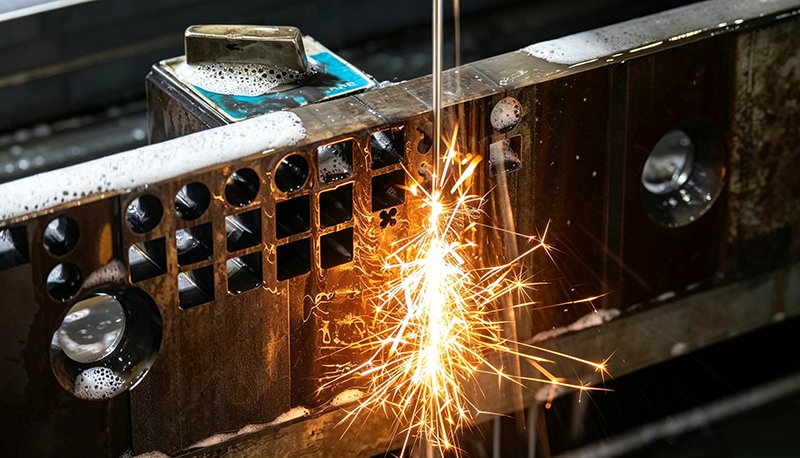
Sinker EDM—also known as cavity-type EDM or mold EDM—uses a pre-machined copper or graphite electrode as a tool to replicate the electrode’s shape onto the workpiece, thereby creating complex 3D cavities and internal structures. This process is particularly well-suited for features that are difficult to machine with conventional cutting tools, such as deep cavities, sharp corners, and complex curved surfaces; it is the most commonly used EDM method for manufacturing injection molds, die-casting molds, and precision tooling.
Sinker EDM enables intricate cavity and profile fabrication on hardened conductive metals. Widely used in mold production and precision machining, it delivers high surface finish without mechanical cutting force.
Hole-Drilling EDM
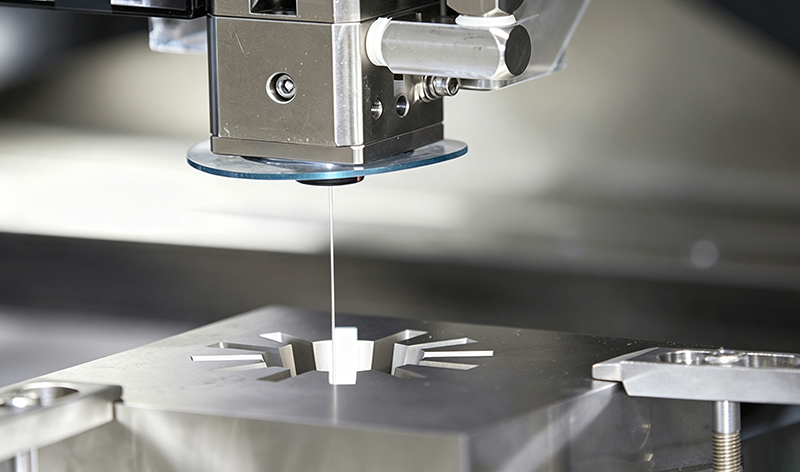
Hole-drilling EDM utilizes a slender, tubular electrode to rapidly machine micro-holes, deep holes, and holes with high aspect ratios into workpieces. As it operates without mechanical cutting forces, it is capable of producing high-precision holes of extremely small diameters in hard materials; consequently, it is widely used in the manufacture of cooling holes for aero-engines, fuel nozzles, medical devices, and precision electronic components.
Hole-Drilling EDM delivers ultra-fine micro-hole fabrication for mold and mechanical component production. It achieves accurate tiny holes on hard conductive metals that traditional drilling processes struggle to complete.
Comparison of Three EDM Methods
| Comparison Item | Wire EDM | Sinker EDM | Hole Drilling EDM |
|---|---|---|---|
| Machining Method | Continuous wire electrode discharge cutting | Uses a shaped electrode to replicate the desired cavity geometry | Uses a tubular electrode to drill holes through electrical discharge |
| Electrode Type | Brass wire, zinc-coated wire, and other metal wires | Copper or graphite electrodes | Tubular copper or brass electrodes |
| Main Features Machined | External profiles, narrow slots, and complex contours | Cavities, deep grooves, and complex 3D structures | Micro-holes, deep holes, and high-aspect-ratio holes |
| Typical Tolerance | ±0.002–0.005 mm | ±0.005–0.01 mm | Suitable for precision micro-hole machining |
| Key Advantages | High cutting accuracy; ideal for complex profiles | Capable of machining complex internal cavities | Excellent deep-hole machining capability and high processing speed |
| Typical Applications | Precision molds, stamping dies, and medical components | Injection molds, die-casting molds, and aerospace components | Turbine blade cooling holes, nozzles, and medical devices |
Tips:
- Need to cut complex external profiles or precision sheet-metal parts → Choose Wire EDM
- Need to machine complex cavities, deep grooves, or molds → Choose Sinker EDM
- Need to machine micro-holes, deep holes, or high-aspect-ratio holes → Choose Hole Drilling EDM
Ⅵ. What Materials Can be Processed Using EDM ?
EDM is primarily used to process conductive materials that possess high hardness and strength, or are otherwise difficult to machine using conventional cutting methods. Since the process does not rely on tool hardness but instead removes material layer by layer via electrical pulse discharges, it enables high-precision machining even for hard-to-machine materials such as hardened steel and cemented carbide.
- Tool Steel: Commonly used for injection molds, stamping dies, and precision tooling.
- Stainless Steel: Suitable for medical devices, mechanical parts, and precision components.
- Titanium: Used for aerospace components and medical implants.
- Tungsten Carbide: Used for wear-resistant parts and high-precision tools.
- Inconel: Suitable for aero-engines and high-temperature components.
- Copper / Brass / Aluminum: Used for electronic components, electrodes, and precision machining.
EDM Materials × Machining Methods: Recommendation Rating
| Material | Wire EDM | Sinker EDM | Hole Drilling EDM | Common Applications |
|---|---|---|---|---|
| Tool Steel / Hardened Steel | ★★★ | ★★★ | ★★ | Molds, tooling |
| Stainless Steel | ★★★ | ★★ | ★★ | Medical, mechanical components |
| Titanium Alloys | ★★ | ★★ | ★★★ | Aerospace, implants |
| Tungsten Carbide | ★★ | ★★★ | ★★ | Wear-resistant parts, cutting tools |
| Inconel | ★★ | ★★ | ★★★ | Aircraft engines |
| Copper / Brass / Aluminum | ★★★ | ★ | ★ | Electronics, precision components |
Ⅶ. What Tolerances Can EDM Achieve?
EDM can typically achieve tighter dimensional control than conventional CNC machining. Actual machining precision depends on equipment capabilities, material type, the machining method (Wire EDM or Sinker EDM), and whether finishing processes are employed.
| EDM Process Type | Typical Tolerance Range |
|---|---|
| Standard EDM | ±0.01 mm |
| Precision EDM | ±0.005 mm |
| High-Precision Wire EDM | ±0.002–0.005 mm |
| Ultra-Precision EDM | ±0.001 mm (1 μm) |
Wire EDM is generally suitable for high-precision contour cutting, while Sinker EDM is better suited for machining complex cavities and three-dimensional structures. Multiple finishing passes can further improve dimensional accuracy and surface finish. General reference ranges only. Actual capability must be confirmed based on the machine, material, geometry, part size, and inspection method.
Ⅷ. What Surface Finish Can EDM Achieve?
The surface quality in EDM is primarily determined by discharge energy. Higher discharge energy increases the material removal rate but results in a rougher surface, whereas lower discharge energy yields a smoother surface, albeit at a slower machining speed.
| EDM Process Stage | Typical Surface Roughness (Ra) |
|---|---|
| Rough EDM | Ra 3.2–6.3 μm |
| Semi-Finish EDM | Ra 1.6–3.2 μm |
| Finish EDM | Ra 0.4–1.6 μm |
| Fine EDM | Ra 0.1–0.4 μm |
Higher discharge energy results in a faster material removal rate but a rougher surface finish, whereas lower discharge energy yields a smoother surface but a slower machining process.
In summary, EDM is a vital machining technology for producing high-precision, complex components, capable of achieving machining accuracies in the range of ±0.005 mm or even ±0.001 mm and surface qualities as fine as Ra 0.1 μm. However, realizing these levels of accuracy and surface quality depends on the appropriate selection of electrodes, dielectric fluids, and machining parameters.
Ⅸ. EDM Electrodes & Dielectric Fluids
Electrodes and dielectric fluids are two key factors influencing EDM machining performance. The electrode is responsible for delivering electrical pulses and shaping the machined profile, while the dielectric fluid provides insulation, cooling, and debris removal. The proper selection of electrode materials and dielectric fluids not only enhances machining efficiency but also directly impacts machining accuracy, surface quality, electrode wear, and overall production costs.
Wire Electrodes
In wire-cut EDM, the electrode is a continuously moving metal wire. Different wires offer varying electrical conductivity, cutting speeds, and costs; therefore, the choice of wire depends on the specific machining requirements.
| Electrode Material | Characteristics | Machining Accuracy | Machining Speed | Cost | Typical Applications |
|---|---|---|---|---|---|
| Brass Wire | Stable conductivity and balanced overall performance | ★★★★ | ★★★★ | Low | General-purpose Wire EDM machining |
| Coated Brass Wire | Higher discharge efficiency and improved debris flushing capability | ★★★★★ | ★★★★★ | Medium | High-precision and high-efficiency machining |
| Zinc-Coated Wire | Stable discharge performance, faster cutting speed, and better surface finish | ★★★★★ | ★★★★★ | Medium to High | Precision molds and aerospace components |
| Molybdenum Wire | High strength and reusable in some machines | ★★★★ | ★★★ | Medium | Certain high-speed wire EDM machines |
Sinker Electrodes
Sinker EDM employs an electrode that matches the shape of the target cavity, reproducing the electrode’s profile onto the workpiece through electrical discharge. The choice of electrode material influences the machining speed, electrode wear rate, and final surface quality.
| Electrode Material | Characteristics | Machining Accuracy | Machining Speed | Electrode Wear | Typical Applications |
|---|---|---|---|---|---|
| Graphite | Easy to machine, lightweight, high-temperature resistance | ★★★★ | ★★★★★ | Low | Molds, large cavities, rough machining |
| Copper | High electrical conductivity, excellent surface finish | ★★★★★ | ★★★★ | Low | Precision molds, finishing operations |
| Copper Tungsten | High hardness, excellent wear resistance, dimensional stability | ★★★★★ | ★★★ | Very low | Micro-machining, aerospace, medical components |
| Tungsten | Extremely high melting point, excellent wear resistance | ★★★★★ | ★★ | Very low | Micro-hole drilling, ultra-precision machining |
Dielectric Fluid Types
Dielectric fluid fills the space between the electrode and the workpiece, playing vital roles in insulation, cooling, debris removal, and discharge stabilization during the machining process. Different types of dielectric fluids are suitable for different EDM processes.
| Dielectric Fluid | Key Characteristics | Common Process | Impact on Machining |
|---|---|---|---|
| Deionized Water | Excellent cooling performance and efficient debris flushing | Wire EDM | Increases cutting speed, reduces heat-affected zones, and is suitable for continuous cutting |
| EDM Oil | Stable discharge performance and good lubrication properties | Sinker EDM | Improves surface finish, reduces electrode wear, and is suitable for finishing operations |
| Hydrocarbon Oil | Excellent insulating properties and stable discharge control | High-precision Sinker EDM | Helps achieve lower surface roughness and higher dimensional accuracy |
Selection Recommendations
| Goal | Recommended Choice |
|---|---|
| Achieve higher machining accuracy | Copper electrodes or copper tungsten electrodes |
| Achieve faster machining speed | Graphite electrodes, zinc-coated wires, or coated brass wires |
| Achieve better surface finish | Copper electrodes + EDM-specific oil dielectric fluid |
| Reduce machining cost | Brass wire + graphite electrodes |
EDM machining costs
The cost of EDM machining primarily consists of the following components:
| Cost Factor | Description |
|---|---|
| Machine Time Cost | EDM is typically charged based on machining time and is usually the largest cost factor. Complex geometries, tight tolerances, and fine surface finish requirements can significantly increase machining time. |
| Electrode Cost | Sinker EDM requires custom-made electrodes. Complex cavities may require multiple electrodes for roughing and finishing. In Wire EDM, wire electrodes are consumable materials that must be continuously replaced during machining. |
| Programming and Setup Cost | Includes initial programming, machine setup, workpiece alignment, and trial runs. These fixed costs have a greater impact on small-batch production because they are distributed over fewer parts. |
| Post-processing Cost | Additional operations such as deburring, polishing, cleaning, and dimensional inspection may increase the total manufacturing cost. |
Cost Differences Among Three Types of EDM
| Factor | Wire EDM | Sinker EDM | Hot Drilling EDM |
|---|---|---|---|
| Consumable Cost | Low — uses standard wire electrodes with continuous feeding | High — requires customized electrodes, especially for complex cavities | Low — uses standard tubular electrodes for hole machining |
| Programming & Setup Complexity | Moderate — requires 2D/3D path programming | High — electrode design and multiple setups may be required | Low — mainly focuses on drilling parameters and positioning |
| Machining Speed | Medium — efficient for through-cuts and complex profiles | Slow — suitable for detailed cavity machining and fine finishing | Fast — optimized for small deep holes and start holes |
| Production Volume Suitability | One-off parts to medium-volume production | One-off parts to low-volume production | One-off parts to medium-volume production |
Methods to Reduce EDM Costs
Optimize the structure during the design phase to minimize unnecessary deep cavities and excessively high precision requirements.
Use EDM only for critical features, while machining the main structure via CNC.
Standardize electrode designs to reduce the number of custom electrodes.
Select the appropriate EDM method (Wire EDM is generally less costly than Sinker EDM).
Ⅹ. EDM Design Guidelines
To ensure the smooth machining of EDM parts, maintain high precision, and control manufacturing costs, engineers must fully consider the characteristics of the EDM process when creating design drawings and 3D models. Unlike traditional CNC machining, EDM relies on electrical discharge to remove material; consequently, while certain structural features may be theoretically achievable, they can increase machining time and electrode costs or compromise machining stability. The following design principles help reduce machining complexity, improve part quality, and lower overall manufacturing costs.
Design for Electrode Accessibility
EDM machining requires the electrode or wire to access the machining zone; therefore, designs should avoid features that are excessively deep or narrow and prevent effective debris evacuation.
Design recommendations:
- Ensure sufficient space in the machining zone for electrode entry and movement.
- Avoid deep, small cavities that could lead to unstable discharge.
- For deep cavity structures, consider adding openings or optimizing the cavity design.
Avoid Extremely Thin Features
Although EDM involves no mechanical cutting forces—allowing for the machining of thinner structures—excessively thin walls or minute features can still compromise stability due to thermal effects, electrode vibration, or extended machining times.
Design Recommendations:
- Thin-walled structures: Maintain a wall thickness of at least 0.3–0.5 mm; adjust this based on material, dimensions, and machining precision requirements.
- Small bosses: Avoid designing slender features that are excessively tall or long to reduce machining difficulty and the risk of deformation.
- Micro-features: Design features appropriately based on EDM capabilities and precision requirements; avoid unnecessary micro-structures that increase machining costs.
Consider Corner Radius Requirements
While EDM is capable of producing sharp corners, the physical dimensions of the electrode impose practical limits, typically resulting in a small radius at internal corners.
Design Recommendations:
- Avoid specifying absolute sharp corners (90° internal angles).
- Design appropriate corner radii based on electrode dimensions.
- Confirm the minimum machinable radius in advance for high-precision cavities.
Optimize Deep Cavities and High Aspect Ratios
Machining deep cavities—particularly with Sinker EDM—increases the difficulty of chip removal, accelerates electrode wear, and extends processing time.
Design recommendations:
- Minimize excessively deep or narrow cavities.
- Increase draft angles or optimize cavity geometry.
- Consider Hole Drilling EDM or multi-stage machining for deep holes.
Specify Realistic Tolerances
Excessively strict tolerance requirements significantly increase machining time and costs.
Design recommendations:
- ±0.01 mm: Represents standard EDM machining precision; suitable for the manufacture of most precision parts and relatively cost-effective.
- ±0.005 mm: Requires stricter control of machining parameters and quality inspection, resulting in higher machining costs.
- ±0.001 mm: Represents ultra-precision EDM machining; requires high-precision equipment, a stable machining environment, and more complex process control, making it the most costly option.Specify strict tolerances only for critical dimensions to avoid imposing excessively high precision requirements on the entire part.
Design with EDM Processes in Mind
Different EDM processes are suited to different geometries:
- Complex external profile cutting: Wire EDM is recommended; it is ideal for machining high-precision 2D profiles, narrow slots, and complex shapes.
- Mold cavities and complex recesses: Sinker EDM is recommended; it is suitable for machining 3D cavities, deep pockets, and complex internal structures.
- Micro-hole and deep-hole machining: Hole Drilling EDM is recommended; it is suitable for producing small-diameter holes, nozzle orifices, and holes with high aspect ratios.
Determining the machining method during the design phase helps avoid late-stage design modifications and additional manufacturing costs.
XI. Application Areas of EDM Machining
With the unique advantages of exerting no cutting force and the ability to machine complex cavities in high-hardness materials, EDM plays an irreplaceable role across various sectors of precision manufacturing. Its primary application scenarios are as follows:
Mold Manufacturing Industry
This is the primary application area for EDM, encompassing injection molds, die-casting molds, stamping dies, and blow molds. Sinker EDM is utilized for the precision finishing of features that are difficult to machine with conventional tools—such as deep, narrow ribs, undercuts, intricate patterns, mirror-finish cavities, and carbide punches. Small-hole EDM is employed for machining ejector pin holes, venting holes, and wire-threading holes.
Precision Hardware and Carbide Parts
Components such as carbide cutting tools, punches, bushings, tungsten steel fixtures, and powder metallurgy parts possess extreme hardness after heat treatment, rendering them unmachinable by conventional cutting methods. Instead, sinker and wire-cut EDM are used to machine intricate, non-standard cutting edges and cavities.
Aerospace Components
For aerospace components made of high-temperature superalloys or titanium alloys—featuring complex thin-walled structures and tiny, non-standard cooling holes—small-hole EDM is used to produce micro-holes. This process generates no machining stress and causes no deformation of thin-walled parts, thereby meeting the rigorous, high-precision standards of the aerospace industry.
Medical Device Manufacturing
Medical titanium alloy implants, micro-surgical instruments, and precision molds. These products feature minute dimensions, thin walls, and complex contours; EDM processes generate no cutting stress and minimize burr formation, meeting the high-precision and high-cleanliness standards required for medical applications.
Automotive Component Manufacturing
Micro-holes in automotive engine fuel injectors, precision transmission molds, automotive lighting molds, and die-casting molds. Small-hole EDM is used to machine arrays of tiny angled holes, while contouring EDM shapes complex patterns and cavities for automotive lights.
Electronics and Semiconductor Industries
Precision molds for connectors and chip packaging, micro-conductive terminals, and precision semiconductor fixtures. EDM is essential for forming the numerous tiny slots, micro-holes, and ultra-thin structures found in these components.
General Specialized Machining Applications
Tool repair, machining of non-standard gears, engraving of precision text and patterns, templates and gauges, and tiny nozzles with complex shapes. EDM is the ideal choice for any conductive part characterized by narrow, complex structures or high material hardness.
Conclusion
Overall, EDM offers distinct advantages—such as the absence of cutting forces, high precision, and the ability to machine complex geometries—making it ideal for working with hard, conductive materials and creating deep cavities, micro-holes, narrow slots, and precision mold components. However, due to its relatively slow processing speed and limitation to conductive materials, EDM cannot entirely replace CNC machining. In practical production, CNC is typically used for rapid material removal and standard features, while EDM handles high-precision details that are difficult to achieve via CNC; combining these two processes allows for an optimal balance of precision, efficiency, and cost-effectiveness.
If you require precision molds, carbide components, or parts with complex geometries, please contact the Keywin team. We offer both CNC and EDM precision machining services, tailoring the ideal manufacturing solution to your specific material properties, part geometry, precision requirements, and production volume to ensure high-quality, cost-efficient production.
FAQ
Q: What materials can be processed using EDM?
A: EDM is limited to electrically conductive metals. Common examples include hardened steel, cemented carbide, titanium alloys, copper, aluminum, molybdenum, tungsten, and various powder metallurgy components. Insulating materials—such as plastics, ordinary ceramics, and glass—cannot be processed via EDM, and while semi-conductive materials can be processed, the efficiency is extremely low, so EDM is generally not the preferred method for them.
Q: Which is better: EDM or CNC machining?
A: Neither is inherently superior; they are suited to different applications. CNC machining offers high efficiency and low costs, handles a wide range of materials, and is ideal for mass-producing simple parts requiring significant material removal. EDM involves no cutting force, allowing for the machining of complex internal cavities and intricate features in hard materials; it is specialized for the precision finishing of molds. Choose CNC for simple workpieces, and prioritize EDM for high-hardness, complex, and precision conductive parts.
Q: What is the machining accuracy of EDM?
A: Standard die-sinking EDM can achieve dimensional tolerances of ±0.005 to ±0.01 mm, while high-end mirror-finish models can reach ±0.001 to ±0.003 mm; slow-feeding wire-cut EDM offers even higher precision, reaching ±0.002 mm. Regarding surface roughness, standard finishing yields Ra 0.4–1.2 μm, while multiple finishing passes can achieve a mirror-like finish of Ra 0.05–0.1 μm; micro-hole EDM enables stable machining of micron-scale features.
Q: What is the difference between Wire EDM and Sinker EDM?
A: Wire EDM uses a wire as the electrode and is suitable for machining through-profiles and thin blades without the need for custom electrodes. Sinker EDM relies on shaped copper or graphite electrodes to machine 3D features such as blind cavities and undercuts, and is commonly used for finishing mold cavities. Both offer high precision, but the choice depends on the part structure: Wire EDM is used for external profiles and through-holes, while Sinker EDM is used for internal cavities and blind slots.
Q: Why are EDM machining costs relatively high?
A: There are several reasons for the high cost of EDM. Machine acquisition and maintenance are expensive, and the process requires the fabrication of copper or graphite electrodes beforehand, adding to material and labor costs. Material removal via electrical discharge is slow, resulting in long processing times and higher machine-hour costs. Consumables like dielectric fluid and filter cartridges are continuously used, and the altered surface layer on the workpiece often requires additional polishing; consequently, the total cost is far higher than that of conventional CNC machining.
Q: How long does EDM machining take?
A: EDM processing times vary significantly depending on workpiece size, cavity depth, and surface finish requirements. Material removal rates are much slower than in CNC machining, and large-area roughing operations can take hours. Precision requirements necessitate multiple finishing passes, and electrode wear must be continuously compensated for. While simple, small parts may take only tens of minutes, deep cavities and complex mold cavities often require hours or even a full work shift.