Ⅰ. Introduction
Bronze is a family of alloys primarily composed of copper (Cu) and tin (Sn), widely utilized for its exceptional mechanical properties and corrosion resistance. In the realm of CNC machining, bronze stands out as an ideal material for manufacturing precision components—such as bearings, valve bodies, and marine parts—thanks to its excellent machinability, self-lubricating properties, and dimensional stability. This article will guide you through whether bronze is suitable for CNC machining, how to select the appropriate alloy grade, and the key processing parameters and considerations involved, thereby empowering you to make informed decisions regarding material selection or order placement.
Ⅱ. Why Choose Bronze for CNC Machining?
Bronze remains widely utilized in industrial CNC machining, frequently employed for mechanical components subjected to high wear, heavy loads, and humid or corrosive environments. Compared to certain other common metal materials, bronze maintains more stable performance under prolonged operational conditions, effectively balancing machining stability with component service life. These advantages stem primarily from the following characteristics:
- Corrosion Resistance
Bronze possesses inherent corrosion resistance; in most instances, machined components require no additional surface treatments to function effectively in humid, acidic, or alkaline environments.
Typical Applications: Seawater pump bodies, chemical valves, marine propellers, water treatment equipment.
2. Excellent Wear Resistance
Bronze exhibits high resistance to wear. During frictional contact, it forms a stable, self-lubricating protective film and is less prone to adhesive wear (galling) when paired with metals such as steel, making it ideally suited for components undergoing prolonged, high-frequency operation.
Typical Applications: Bearings, bushings, gears, worm wheels, pump and valve seals, wear-resistant components for mining machinery.
3. Good Machinability
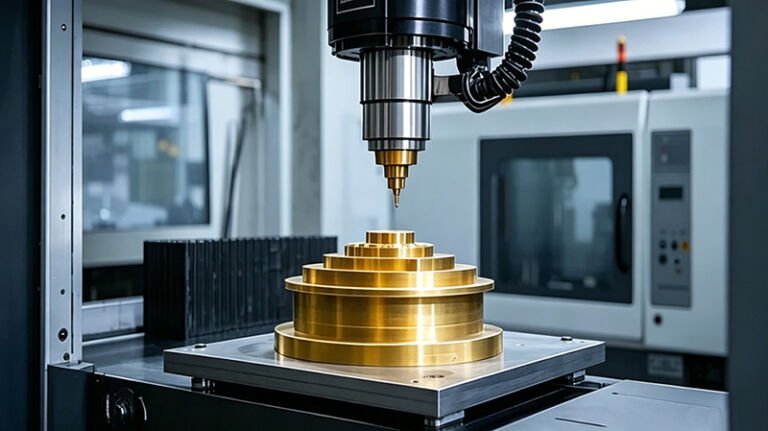
Bronze offers stable cutting performance with smooth chip evacuation and minimal deformation during processing, making it highly suitable for automated, high-speed CNC machining. Post-machining, it typically achieves consistent dimensional accuracy and a superior surface finish, thereby enhancing component assembly precision, reducing operational friction, and improving sealing performance.
Typical Applications: Bearings, bushings, gears, valve components.
4. Low Friction
When paired with steel or iron, bronze exhibits a low coefficient of friction and facilitates the formation of a lubricating film on contact surfaces; consequently, it is extensively utilized in mechanisms requiring sustained sliding contact.
Typical Applications:Sliding bearings, worm gear sets.
Ⅲ. Common Bronze Grades for CNC Machining
In the CNC machining of bronze, selecting the appropriate alloy grade often plays a more decisive role in determining a part’s performance and cost than merely optimizing cutting parameters. Different grades exhibit significant variations in wear resistance, self-lubricating properties, machinability, corrosion resistance, and strength. Below, we introduce the machining characteristics and typical applications of several common bronze grades, accompanied by a reference table. Whether your primary concern is ease of machining, wear resistance under heavy loads, or resistance to seawater corrosion, this guide will help you quickly identify the grade that best matches your specific requirements:
- Tin Bronze — C93200 (SAE 660)
C93200 is one of the most common leaded tin bronzes used in CNC machining. It possesses excellent wear resistance and self-lubricating properties, making it ideal for mechanical components subject to long-term sliding contact and high-friction operating conditions.
Machining Characteristics: Exhibits excellent cutting performance with stable chip evacuation and minimal deformation tendencies. It is well-suited for high-speed CNC turning and batch production, allowing for the relatively easy achievement of consistent dimensional accuracy and surface finishes.
Common Applications: Bearings, bushings, journal bearings, and wear plates.
- Phosphor Bronze — C51000
C51000 is a tin- and phosphorus-containing elastic bronze alloy characterized by high strength and exceptional elastic stability. It is suitable for mechanical components required to withstand repetitive loads and maintain precise elastic fits.
Machining Characteristics: The material possesses relatively high hardness and exhibits a tendency toward work hardening during processing. Machining requires the use of sharp cutting tools and stable cutting parameters to ensure both dimensional stability and the preservation of elastic properties.
Common Applications: Electrical connectors, springs, and precision elastic components.
- QSn6.5-0.1 (Chinese Grade)
QSn6.5-0.1 is a classic tin-phosphor bronze alloy known for its excellent wear resistance and electrical conductivity. It is suitable for mechanical components involving heavy-load sliding contact as well as those requiring electrical conduction.
Machining Characteristics: Offers good machinability and moderate hardness, making it easy to achieve consistent dimensions and smooth surface finishes.
Common Applications: Gears, worm gears, and electrical contact components.
4. Aluminum Bronze C95400
C95400 is a high-strength aluminum bronze that possesses a strength level comparable to certain steels, while also exhibiting excellent wear resistance and resistance to seawater corrosion. It is suitable for structural components subjected to heavy loads and harsh operating conditions.
Machining Characteristics: It presents relatively high cutting resistance, requiring machine tools with high rigidity and robust cutting tools; however, it retains its superior strength and wear resistance properties after machining.
Common Applications: Gears, worm gears, high-strength bearings, wear plates.
- Nickel Aluminum Bronze C95500
C95500 is a high-strength, corrosion-resistant aluminum bronze characterized by exceptional corrosion resistance and fatigue strength. It is well-suited for critical components used in marine environments and high-stress, corrosive conditions.
Machining Characteristics: Machining is moderately difficult and requires precise control of cutting parameters; however, the resulting components offer excellent corrosion resistance and high load-bearing capabilities.
Common Applications: Marine propellers, valves, high-stress bushings.
- Silicon Bronze C65500
C65500 is a typical silicon bronze known for its high ductility, good weldability, and excellent corrosion resistance. It is suitable for components requiring complex forming or corrosion-resistant joining.
Machining Characteristics: During machining, there is a tendency for the material to adhere to the cutting tool (tool adhesion); therefore, sharp cutting tools and adequate lubrication are required to ensure high-quality surface finishes.
Common Applications: Pump bodies, valves, marine fasteners, chemical industry connectors.
- High-Lead Tin Bronze — C93700
C93700 is a high-lead tin bronze featuring exceptional self-lubricating properties and high load-bearing capacity. It is ideal for friction components operating under high-speed, heavy-load, or boundary-lubrication conditions.
Machining Characteristics: It exhibits excellent machinability, allowing for smooth cutting operations with minimal tool wear; however, the material’s overall strength is relatively moderate, making it unsuitable for high-temperature applications.
Common Applications: High-speed, heavy-load bearings; compressor bushings; anti-friction components.
We have compiled a comparison chart to assist professionals involved in product design, procurement, and mechanical manufacturing in making quick and informed material selection decisions. If you remain unsure which type of bronze is best suited for your specific parts, please feel free to contact us directly for expert material selection advice.
| Requirements & Advantages | Preferred Grade | Processing Difficulty | Classic Applications |
|---|---|---|---|
General-Purpose Wear-Resistant Bearings / Bushings
(Easy to Machine + Self-Lubricating) |
C93200(SAE 660) |
Easy |
The Most Common Bronze Bearing Materials |
Flexible Electronic Components
(High Elasticity + Fatigue Resistance) |
C51000 |
Intermediate |
Precision Instruments, Electrical Contacts |
Commonly Used Economical Wear-Resistant Parts in China
(Balanced Overall Performance) |
QSN6.5-0.1 |
Intermediate |
Gears, Turbines |
High-Strength, Heavy-Duty, Seawater-Resistant
(High Strength + Corrosion Resistance) |
C95400/C95500 |
Upper Intermediate |
Construction Machinery Gears, Marine Components |
High toughness, corrosion-resistant, weldable
(Good ductility + corrosion resistance) |
C65500 |
Intermediate |
Pump and Valve Housings, Marine Fasteners |
High Speed, High Load, Anti-Friction
(Ultimate Self-Lubrication) |
C93700 |
Easy |
Compressor Journal Bearings and High-Speed Bearings |
Ⅳ. Achievable Tolerances and Surface Roughness for CNC-Machined Bronze
Due to its superior cutting and dimensional stability, bronze typically allows for the achievement of high machining precision during the CNC process. However, the specific bronze grade, part geometry, and machining method employed can influence the final tolerance capabilities. The following represents the typical tolerance ranges encountered in bronze CNC machining:
Tolerance Class (ISO 2768 / Specific Tolerance Values)
| Processing Tyype | Tolerance Grade | Typical Tolerance Values (mm) |
|---|---|---|
Roughing |
IT11~IT12 |
±0.10 ~ ±0.20 |
Standard Finishing |
IT8~IT9 |
±0.025 ~ ±0.05 |
Precision Machining |
IT6~IT7 |
±0.005 ~ ±0.015 |
Bronze materials offer stable cutting performance and are less prone to severe vibration. Certain free-machining bronze alloys allow for the relatively easy achievement of superior surface finishes. The following table outlines the typical surface roughness ranges attainable through CNC machining of bronze:
Surface Roughness (Ra, μm)
| Processing Type | Typical Roughness Ra (μm) |
|---|---|
Rough Milling / Rough Turning |
3.2 ~ 6.3 |
Precision Milling / Precision Turning |
0.8~1.6 |
Grinding |
0.2~0.4 |
Superfinishing (Polishing/Lapping) |
0.05~0.1 |
Ⅴ. Common CNC Machining Processes for Bronze
Bronze CNC machining commonly employs four primary processes: Milling, Turning, Drilling/Reaming, and Grinding.
These processes collectively cover the production of a wide range of parts, spanning the entire spectrum from rough machining to the creation of high-precision surfaces. Each process and its specific applications are detailed below:
- Milling: Used to machine flat surfaces, slots, cavities, and complex contoured surfaces within bronze parts.
→Common Applications:Bronze gears, cams, valve bodies, heat sinks, pump housings, and custom-shaped brackets.
- Turning: Used to machine cylindrical surfaces, conical surfaces, threads, and other features of rotational symmetry on bronze parts.
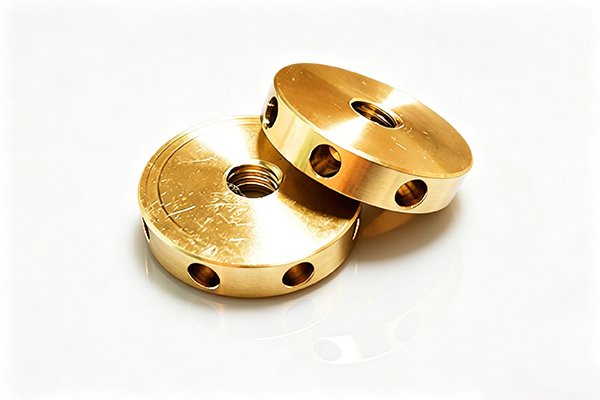
→Common Applications:Bronze bushings, sleeves, bearing housings, pipe fittings, discs, and threaded nuts.
- Drilling / Reaming: Used to create blind holes, through-holes, lubrication channels, and high-precision fit holes in bronze parts.
→Common Applications:Oil holes, bolt holes, bearing lubrication ports, locating holes, and precision reamed holes.
- Grinding: Used for the final, high-precision surface finishing of bronze parts, ensuring strict dimensional tolerances and specific surface roughness requirements are met.
→Common Applications:Precision bronze journals, inner bores of sliding bearings, sealing mating surfaces, and ultra-low roughness flat surfaces.
Ⅵ. Challenges and Solutions in Bronze CNC Machining
Although bronze CNC machining offers significant advantages, it also presents certain processing challenges; however, we have developed corresponding solutions to address them.
| Challenges | Solutions |
|---|---|
Tool Wear (High-strength grades—such as aluminum bronze—possess high hardness and poor thermal conductivity, while phosphor bronze undergoes work hardening; both factors accelerate tool wear.) |
Coated Carbide / CBN Tools
Separate Roughing and Finishing; Replace Tools Periodically |
Complex geometric features (poor accessibility, prone to tool deflection, vibration, or deformation) |
Multi-axis Simultaneous Machining + Specialized Long Tools
Optimized Toolpaths
Thin-wall Machining with Shallow Depth of Cut |
Long processing times (cutting speeds are lower than those for aluminum alloys, requiring control of heat and tool wear, and necessitating conservative feed rates). |
Optimized Roughing Parameters
High-Performance Cutting Tools
Multi-Station Fixtures |
Heating and Deformation (Uneven heat dissipation in the chip zone; low-conductivity bronzes—such as aluminum bronze—transfer heat into the workpiece, causing dimensional drift.) |
High-Pressure Cooling
Rough and Finish Machining Separation
Thorough Cooling Prior to Finish Machining |
Bronze possesses a combination of excellent mechanical properties, machinability, and corrosion resistance, making it widely utilized in CNC machining. Three common surface finishes are typically applied: the original machined finish, bead blasting, and chemical coating:
- As-machined
This finish is obtained directly from the machining process, retaining the original tool marks and texture of the bronze. It is suitable for internal components or cost-sensitive applications. However, it is prone to visible tool marks, and the bronze surface will naturally oxidize and darken over time.
- Bead Blasting
This process involves bombarding the bronze surface with glass beads or abrasive particles to create a uniform matte texture. It effectively eliminates tool marks while simultaneously removing the thin oxide layer present on the surface. This finish is ideal for aesthetic components, artistic bronze pieces, or applications requiring a uniform, aged patina effect. While it offers enhanced corrosion resistance, the process is time-consuming and entails higher costs.
- Chemical Coating
This involves applying a chemical conversion layer to the bronze surface—such as passivation coloring or an antique verdigris treatment—to significantly enhance both corrosion resistance and wear resistance. It is particularly well-suited for marine environments or industrial bronze components (e.g., valves and pump bodies), and can also be used to achieve an antique verdigris aesthetic. However, this process requires specialized equipment and incurs higher costs; furthermore, certain treatments may present associated chemical risks.
Ⅶ. CNC Machining: Bronze vs. Brass vs. Aluminum vs. Steel
Comparison Table
| Bronze | Brass | Aluminum | Steel | |
|---|---|---|---|---|
Strength |
Medium to High |
Medium Low |
Low to Medium |
High |
Corrosion Resistance |
Excellent |
Good |
Forms a natural oxide layer, but not resistant to strong alkalis |
Poor, requires surface treatment |
Machinability |
Good (Lead-containing grades are free-cutting; aluminum bronze is relatively hard) |
Excellent |
Good (Requires sharp tools to prevent built-up edge) |
Fair (Requires high rigidity of equipment) |
Applications |
Bearings, bushings, valves, marine components |
Joints, instrumentation, decorative parts, fasteners |
Heat sinks, housings, brackets, aerospace components |
Structural parts, shafts, gears, wheels |
Ⅷ. Factors Affecting Bronze CNC Machining Costs
Material Cost, Tool Wear, Part Complexity, and Batch Size
The cost of CNC machining for bronze parts is influenced by four key factors: material, tooling, part complexity, and batch size. Judicious material selection and process optimization can lead to significant cost reductions:
- Material Price:Costs vary significantly depending on the alloy grade; for instance, aluminum bronze is more expensive than leaded bronze.
→ Strategy:Select an economical grade (such as C93200) that meets the required performance specifications, and optimize material cutting plans to minimize scrap waste.
- Tool Wear:High-strength alloys or grades prone to work hardening (such as C95400 and C95500) accelerate tool wear.
→ Strategy:Utilize coated cutting tools, separate roughing and finishing operations, and ensure an ample supply of cutting fluid.
- Part Complexity: Features such as deep cavities, thin walls, and internal undercuts increase both programming and machining time.
→ Strategy: Simplify part features (e.g., by increasing fillet radii) or split the part into multiple components for separate machining followed by assembly.
- Batch Size: For small batches, the fixed costs amortized per unit are high; conversely, for large batches, these fixed costs are diluted across a greater number of units.
→ Strategy: For small batches, utilize standard fixtures; for large batches, employ multi-station fixtures and custom-designed cutting tools.
Ⅸ. When to Choose Bronze for CNC Machining?
- Highly Corrosive Environments
For applications such as marine vessels, chemical processing equipment, and water treatment systems, bronze components can be used directly after machining without the need for additional surface plating.
- High Wear Resistance, Low Friction, and Self-Lubrication
For continuously moving friction components—such as bearings, bushings, and worm gears—the lead- or phosphor-tin-rich structure of bronze enables self-lubrication, thereby eliminating the need for frequent oiling.
- Complex Geometries Requiring Dimensional Stability
For precision components like valve cores and hydraulic parts, bronze exhibits low machining stress and minimal thermal deformation, allowing for the achievement of tight tolerance grades ranging from IT6 to IT8.
- Excellent Thermal Conductivity and High-Temperature Performance
For applications such as heat sinks and engine valve guides, bronze strikes an optimal balance between thermal conductivity and mechanical strength, offering superior performance compared to standard steel.
Ⅹ. Conclusion
In summary, thanks to its favorable machinability, exceptional wear and corrosion resistance, and dimensional stability, bronze is an ideal material for high-performance mechanical components in CNC machining applications.
Different bronze grades exhibit distinct variations in strength, tribological properties, machinability, and corrosion resistance; therefore, prudent material selection (such as the cost-effective C93200 or the high-strength, wear-resistant C95400), the optimization of cutting parameters tailored to specific material characteristics (including spindle speed, feed rate, and cooling strategies), and structural designs aligned with operational requirements are all critical factors in controlling manufacturing costs and ensuring part quality.
If you are currently evaluating suitable bronze materials or seeking to further optimize your part machining strategies, please do not hesitate to contact us.
XI. FAQ
- Is CNC machining for bronze actually difficult? Is it easy for beginners to pick up?
It is not difficult. Leaded bronzes (such as C93200) offer smooth chip evacuation and dimensional stability, making them very easy to machine. Aluminum bronze and phosphor bronze are slightly more challenging, but their overall machinability is easier than that of stainless steel, though slightly more difficult than that of standard brass.
- What tolerance levels can be achieved with bronze CNC machining?
Standard machining typically achieves IT8–IT9 tolerances (±0.025–0.05 mm), while precision machining can reach IT6–IT7 (±0.005–0.015 mm). Free-cutting grades allow for even higher precision; however, for batch production, it is generally recommended to design parts to an IT8 tolerance.
- How long does it take to machine a single bronze part? What is the lead time for small-batch orders?
For small batches (10–50 pieces), the lead time is typically 3–7 days—or as fast as 3 days if the material is in stock. For large batches (500+ pieces), it takes approximately 2–3 weeks. The actual machining time for a single part ranges from a few minutes to several tens of minutes.