
Ⅰ. Introduction
CNC machining is often one of the most flexible manufacturing methods for PEEK parts requiring complex geometries, tight tolerances, or small-batch production. It eliminates the need for mold tooling, enables rapid prototyping and precision part manufacturing, and allows for the machining of holes, threads, thin walls, and other complex features according to design specifications.
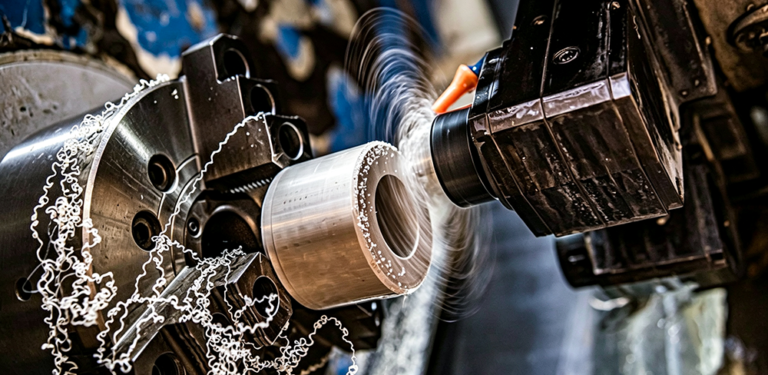
However, PEEK is not as easy to machine as standard plastics. Due to its high toughness and low thermal conductivity, the cutting process is prone to issues such as heat accumulation, material spring-back, dimensional distortion, burr formation, and inconsistent surface quality. Thin-walled parts, high-precision hole locations, and fiber-reinforced PEEK, in particular, place higher demands on tooling, cutting parameters, work-holding methods, and cooling conditions.
This article covers key aspects of PEEK CNC machining—including material grades, machining parameters, tolerance control, tool selection, surface finishing, and typical applications—to assist engineers and procurement professionals in developing optimal material and manufacturing strategies.
Ⅱ. What Is PEEK?
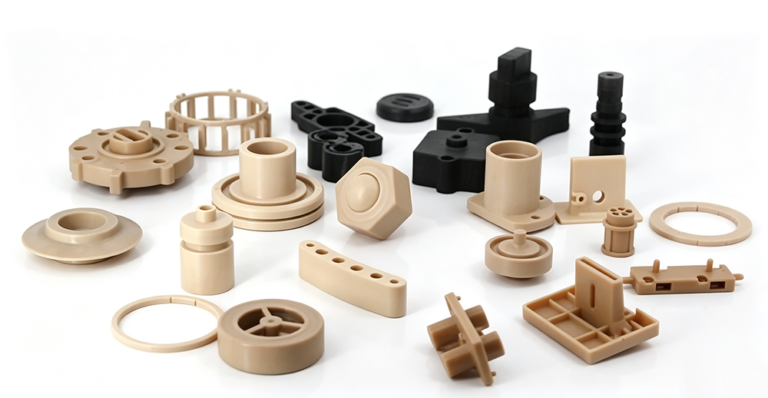
PEEK is a high-performance specialty engineering plastic with an excellent overall property profile. It is characterized by high-temperature resistance, high strength, chemical resistance, wear resistance, low friction, good dimensional stability, and superior electrical insulation, making it widely used in high-end manufacturing sectors such as aerospace, medical devices, semiconductors, and new energy vehicles.
Compared to conventional engineering plastics like nylon and POM, PEEK maintains relatively stable performance at higher temperatures and in more aggressive chemical environments. Depending on the specific grade and operating conditions, its continuous service temperature can reach approximately 240–260°C; consequently, it is frequently used for high-performance components in aerospace, medical devices, semiconductors, automotive applications, and industrial equipment.
PEEK can be processed via methods such as injection molding, extrusion, 3D printing, and CNC machining. Among these, CNC machining is particularly well-suited for prototypes, small-batch production, complex geometries, and PEEK components requiring tight dimensional tolerances and high surface quality.
PEEK Properties at a Glance
The table below summarizes typical property parameters for unreinforced industrial-grade PEEK, serving as a reference for material selection and preliminary design. Actual values may vary depending on the specific grade, crystallinity, material form, processing direction, and testing method. Significant differences in mechanical and thermal properties may exist among unreinforced, glass fiber-reinforced, and carbon fiber-reinforced PEEK.
| Indicator Items | Typical Industrial-Grade PEEK Value |
|---|---|
Density |
1.31 g/cm³ (only 48% of aluminum alloy and 17% of stainless steel) |
Appearance |
Light beige opaque solid |
Coefficient of Thermal Expansion |
4.7×10⁻⁵ /°C |
Tensile Strength |
95 MPa |
Elongation at Break |
30%~50% |
Coefficient of Friction |
Approx. 0.15–0.30, depending on grade, mating material and test conditions |
Creep Resistance |
Excellent |
Melting Point |
343℃ |
Long-Term Continuous Use Temperature |
Approx. 240–260°C, depending on grade, load and service environment |
Flame Retardant Rating |
UL 94 V-0 (without added flame retardants) |
Acid and Alkali Resistance |
Good resistance to most acids, alkalis, oils and organic solvents |
Oil / Solvent Resistance |
Excellent |
Hydrolysis Resistance |
Excellent |
Processability |
Excellent (CNC / Injection Molding / Extrusion / 3D Printing) |
Insulation Performance |
Excellent (Volume Resistivity 10¹⁶ Ω·cm) |
Why Choose PEEK Over Other Materials
The core advantage of PEEK lies not in excelling in just one specific property, but in its ability to simultaneously deliver high-temperature resistance, mechanical strength, chemical resistance, wear resistance, dimensional stability, lightweight characteristics, and electrical insulation. This comprehensive performance profile makes it suitable for applications where standard engineering plastics might soften, creep, or fail, and where metals present issues regarding weight, corrosion, or electrical insulation.
Compared to conventional engineering plastics such as nylon, POM, and PPS, PEEK offers distinct advantages in heat resistance, dimensional stability, wear resistance, and chemical resistance:
- Superior temperature resistance (2–3 times higher): Nylon has a long-term service limit of approximately 100°C, whereas PEEK can withstand up to 240°C.
- Superior dimensional stability (2–5 times better): POM begins to creep above 80°C, while PEEK retains its rigidity even at 200°C.
- Significantly stronger chemical resistance: Capable of withstanding highly corrosive media such as concentrated sulfuric acid and hydrofluoric acid.
Compared to metals like stainless steel and titanium alloys, PEEK also offers advantages in weight, inherent electrical insulation, electromagnetic properties, electrochemical corrosion resistance, and sliding friction performance:
- Weight reduction of 70%–85%: PEEK’s density is only about one-sixth that of stainless steel and one-third that of titanium alloys.
- Inherent electrical insulation: Requires no additional insulation treatment, making it suitable for electronics, semiconductors, and similar fields.
- Superior corrosion resistance: Resistant to seawater, steam, and most chemical media; immune to electrochemical corrosion issues.
However, PEEK’s rigidity, strength, and load-bearing limits remain lower than those of most structural metals; therefore, it cannot directly replace every stainless steel or titanium alloy part.
Determining its suitability for metal replacement requires evaluating factors such as load, temperature, tolerances, wear conditions, and long-term deformation requirements.
Overall, few materials can simultaneously offer high-temperature resistance, chemical resistance, wear resistance, dimensional stability, lightweight properties, and electrical insulation. For this reason, PEEK is frequently used in demanding applications such as high-temperature electrical components, semiconductor equipment parts, oil-free transmission components, medical devices, and corrosion-resistant chemical processing components. Victrex also characterizes the value of PEEK as a balanced combination of various key performance attributes, rather than a single performance advantage.
Ⅲ. PEEK Grade Selection
In addition to unfilled PEEK rods, the market offers various modified grades; these incorporate fillers such as glass fiber, carbon fiber, graphite, or PTFE to further enhance mechanical strength, rigidity, wear resistance, and dimensional stability. Selecting a PEEK grade involves a two-step process: first, choose the material type based on application requirements, and then select a brand based on project budget and supply chain preferences. Let us first examine how to determine the material type according to your needs.
| PEEK Type | Key Advantages | Typical Applications |
|---|---|---|
Virgin PEEK |
Retains the highest toughness, chemical resistance, electrical insulation and purity; good friction performance |
Semiconductor parts, medical devices, chemical seals, insulating components |
Glass Fiber Reinforced PEEK |
Higher rigidity, better dimensional stability and creep resistance, smaller deformation at high temperatures |
Valve components, pump parts, support parts, precision structural parts |
Carbon Fiber Reinforced PEEK |
Further improved strength, rigidity and wear resistance, better thermal conductivity, strong long-term load-bearing capacity |
High-load structural parts, semiconductor jigs, pump and valve parts, aerospace and automotive components |
Graphite Filled PEEK |
Usually added with carbon fiber, graphite and PTFE, it has lower friction coefficient, better wear resistance and heat dissipation capacity |
Bearings, bushings, gears, sealing rings, sliding parts |
PTFE Filled PEEK |
Lowest friction coefficient, excellent sliding performance, reduces stick-slip phenomenon |
Valve seats, seals, low-speed bearings, moving components |
Leading PEEK material brands currently on the market include Victrex, Mitsubishi, and Solvay; each brand has its own specific focus regarding product portfolios, performance characteristics, processing capabilities, and application areas. The following section outlines the characteristics of each brand and its key grades, and—by considering material properties, processing techniques, and typical applications—analyzes the suitability of different PEEK materials to help you select the raw material best suited to your project requirements.
| Brand | Grade | Characteristics | Performance | Application Scenarios |
|---|---|---|---|---|
Victrex |
450G |
General Purpose Grade |
Balanced comprehensive performance, easy to process |
Precision machining, electronics, medical |
Victrex |
450CA30 |
30% Carbon Fiber Reinforced |
High strength, high rigidity, low expansion |
Aerospace, mechanical structural parts |
Victrex |
450GL30 |
30% Glass Fiber Reinforced |
Dimensional stability, creep resistance |
Jigs, fixtures, pumps and valves |
Victrex |
150CA30 |
High Flow Carbon Fiber Grade |
Suitable for molding of complex parts |
Injection molded parts, precision components |
Mitsubishi |
KT-880 |
General Purpose Grade |
Excellent comprehensive performance |
Machining, electronic parts |
Mitsubishi |
KT-880 CF30 |
Carbon Fiber Reinforced |
High rigidity, fatigue resistance |
Automation, mechanical equipment |
Mitsubishi |
KT0880 GF30 |
Glass Fiber Reinforced |
High dimensional stability |
Industrial structural parts |
Solvay |
KetaSpire KT-820 |
General Purpose Grade |
High temperature resistance, chemical corrosion resistance |
Medical, Semiconductor |
Solvay |
KetaSpire KT-820 CF30 |
Carbon Fiber Reinforced |
High strength, thermal conductivity |
Aerospace, Automotive |
Solvay |
KetaSpire KT-820 GF30 |
Glass Fiber Reinforced |
High rigidity, dimensional stability |
Industrial Equipment |
Ⅳ. PEEK Machining:Tolerance
While PEEK offers high material stability and excellent mechanical properties, its low thermal conductivity, relatively high coefficient of thermal expansion, and the release of internal stresses during machining impose stricter requirements on dimensional control compared to metal materials. Particularly for precision parts, thin-walled structures, and high-temperature applications, ensuring compliance with design tolerances necessitates appropriate tool selection, optimization of cutting parameters, and rigorous control of the machining process. The following provides reference values for dimensional accuracy in PEEK CNC machining:
| Feature | Standard PEEK CNC Machining Tolerance | High-Precision PEEK Machining Tolerance |
|---|---|---|
General Dimensions |
±0.13 mm (Affected by material thermal expansion and machining stress) |
±0.05 mm |
Precision Dimensions |
±0.05~0.08 mm |
±0.025 mm (Requires optimization of tools, cooling and machining parameters) |
Hole Diameter |
±0.05~0.13 mm (Springback needs to be considered for deep holes and thin-walled parts) |
±0.025 mm can be achieved after reaming/finishing |
Flatness |
0.05~0.13 mm/25 mm (Affected by material internal stress and wall thickness) |
Determined according to the part size, thickness and structural design |
Ⅴ. PEEK Machining:Challenges & Solutions
As a high-performance engineering plastic, PEEK (polyether ether ketone) offers advantages such as high-temperature resistance, chemical corrosion resistance, and high strength; however, it is significantly more difficult to machine than standard engineering plastics. Below are common issues encountered during PEEK CNC machining and their corresponding solutions.
- Difficulty in controlling dimensional accuracy
PEEK has a high coefficient of thermal expansion and is susceptible to heat generated during cutting, which can lead to dimensional fluctuations. For parts requiring high precision, a temperature-controlled machining environment should be used to manage cutting heat. Additionally, natural aging or annealing treatments should be performed after rough machining and before finish machining to enhance dimensional stability.
- Part deformation
Large or thin-walled PEEK parts are prone to internal stress release during machining, resulting in insufficient rigidity and deformation. A multi-stage machining process is recommended: perform stress relief after rough machining before completing the finish machining. Simultaneously, optimize fixture design to minimize clamping stress on the part.
- Burrs and poor surface quality
Issues such as excessive burrs or poor edge quality are usually linked to tool wear or improper cutting parameters. It is advisable to replace tools promptly with sharp ones, optimize cutting parameters, and perform deburring and chamfering after machining to improve surface quality.
- Rapid tool wear
With filled PEEK materials—such as those reinforced with glass fiber or carbon fiber—the fillers accelerate tool wear. Using carbide or diamond tools is recommended, along with timely replacement based on wear levels, to ensure machining accuracy and efficiency.
- Difficulty in deep-hole machining
When machining long, deep holes, PEEK tends to generate built-up edges that hinder chip evacuation; this can lead to tool deflection and reduced hole diameter accuracy. A step-drilling approach is recommended to facilitate chip removal, supplemented by reaming or fine boring processes when necessary to achieve superior hole quality.
Ⅵ. PEEK Surface Finish and Post-Processing
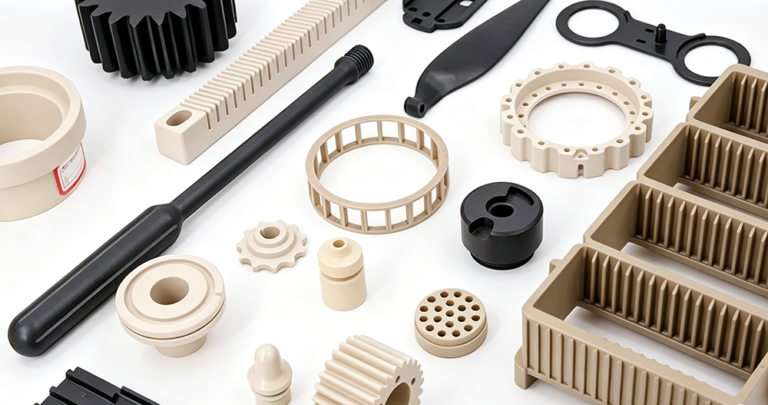
PEEK exhibits excellent chemical and high-temperature resistance; many parts can be used immediately after CNC machining without requiring additional surface treatment. However, in sectors such as medical, semiconductor, aerospace, and precision machinery, post-processing is often performed to meet specific requirements regarding surface roughness, cleanliness, frictional properties, bonding, or aesthetics.
Reference for surface roughness grades:
| Machining Method | Surface Roughness (Ra) | Description |
|---|---|---|
CNC Rough Machining |
Ra 3.2–6.3 μm |
Standard machined surface with visible tool marks |
CNC Finish Machining |
Ra 1.6–3.2 μm |
The most common industrial standard |
Precision Machining |
Ra 0.8–1.6 μm |
Suitable for high precision components |
Polishing |
Ra 0.2–0.8 μm |
Produces a smooth surface and reduces friction |
Mirror Polishing |
Ra ≤0.1 μm |
Used for medical, optical, and semiconductor applications |
Common post-processing techniques for PEEK currently include deburring, chamfering and radiusing, precision polishing, ultrasonic cleaning, stress relief, and dimensional inspection. As PEEK is a high-performance polymer with surface characteristics distinct from those of metals, many traditional metal surface treatment processes are unsuitable for it. For instance, PEEK is not compatible with anodizing, electroplating, conventional metal painting, or high-temperature coating processes; these methods typically rely on the electrical conductivity, oxide film formation, or high-temperature bonding mechanisms of metal substrates, making it difficult to achieve stable adhesion on PEEK surfaces.
To enhance coating adhesion, improve bonding performance, or impart specific functionalities to PEEK surfaces, methods such as plasma treatment, corona treatment, chemical etching, and laser surface activation can be employed to increase surface energy and strengthen interfacial bonding. Furthermore, depending on specific application requirements, PEEK can undergo mechanical polishing, texturing, or modification via fillers to optimize friction characteristics, sealing performance, and aesthetic quality.
Ⅶ. PEEK Machined Parts Applications
Thanks to its high-temperature resistance, chemical resistance, high strength, wear resistance, dimensional stability, lightweight nature, and excellent insulation properties, PEEK has increasingly become a key alternative to certain metals and traditional engineering plastics. Unlike ordinary plastics, PEEK maintains stable performance over the long term in environments characterized by high temperatures, high pressures, corrosive conditions, and the need for high precision; consequently, it is widely used in industries that demand high material reliability. The following outlines typical applications of PEEK across major industrial sectors, along with its material advantages:
| Industry | Typical Applications | Advantages of PEEK |
|---|---|---|
Medical |
Implantable devices, surgical instruments, medical equipment components |
Excellent biocompatibility, no metal ion release, and capable of withstanding repeated high-temperature sterilization |
Aerospace & UAVs |
Structural parts, connectors, bearings, insulating components |
High temperature resistance, lightweight, high strength |
New Energy Vehicles & Lithium Batteries |
Battery modules, insulating parts, connectors, seals |
High insulation, heat resistance, chemical corrosion resistance, adaptable to high temperature, high pressure and electrolyte environments |
Electronics & Semiconductor Precision Manufacturing |
Wafer clamps, vacuum equipment, insulating parts, test jigs |
High insulation, low outgassing, high temperature resistance, plasma corrosion resistance |
Ⅷ. PEEK Machining Cost Analysis
The cost of CNC machining PEEK depends not only on the unit price of the raw material but is also influenced by factors such as the material grade, blank specifications, part geometry, machining time, tool wear, production volume, and post-processing requirements. Although the initial material investment for PEEK is significantly higher than that for conventional metals, its long-term value in demanding applications—such as those requiring high-temperature resistance, corrosion resistance, electrical insulation, lightweight properties, and oil-free lubrication—may offset the higher upfront costs.
Raw Material Cost
The procurement cost of PEEK raw materials is significantly higher than that of conventional industrial metals such as carbon steel, aluminum alloys, and brass. Domestic virgin PEEK granules cost between 400 and 450 RMB/kg, while imported virgin PEEK costs double that amount; modified PEEK grades can be even more expensive. Viewed solely in terms of unit raw material price, it lacks a cost advantage.
However, thanks to unique properties—such as lightweight characteristics, electrical insulation, self-lubrication, high-temperature and corrosion resistance, and maintenance-free operation—it excels in high-value-added applications like high-precision transmission systems, high-temperature electrical components, and corrosion-resistant precision parts. In these contexts, the benefits of weight reduction, improved efficiency, reduced maintenance, and the avoidance of issues like metal corrosion and electrical conductivity defects can offset the high initial material costs, making it a specialty material characterized by high upfront investment but superior overall returns over its full lifecycle.
Machining Labor Cost
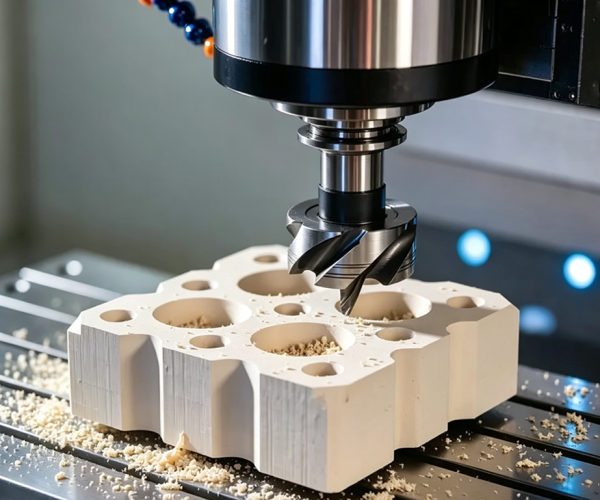
When considering CNC machining time alone, the processing speed for unfilled PEEK is slower than that of brass or aluminum alloys but far superior to that of ordinary carbon steel; however, machining efficiency drops significantly for filled/modified PEEK grades because the additives cause tool wear. Unlike metals, PEEK generally meets application requirements without the need for post-processing.
When factoring in “hidden costs”—such as tool wear, post-processing steps, and mold investment—PEEK offers a cost advantage in terms of total processing time for small-batch, high-variety, precision, and lightweight components; it is only for mass-produced, thick-walled standard parts that carbon steel, aluminum, and brass offer lower processing time costs.
Cost Reduction Plan
The unit price of PEEK raw material is significantly higher than that of carbon steel, aluminum, or brass, resulting in higher initial material costs. However, direct manufacturing costs can be reduced through four key approaches: substituting with domestically produced raw materials, implementing closed-loop scrap recycling, replacing CNC machining with high-volume injection molding, and utilizing lightweight integrated structures.
When combined with long-term, less obvious benefits—such as the elimination of surface treatments, energy savings from weight reduction, and maintenance-free corrosion resistance—PEEK often offers a superior total cost of ownership compared to conventional metal components in high-end applications requiring high-temperature resistance, wear resistance, corrosion resistance, and electrical insulation.
Engineering Tip:
PEEK is not intended to replace all metal materials; rather, it delivers exceptional value when conventional metals or standard engineering plastics struggle to simultaneously meet requirements for high-temperature resistance, corrosion resistance, wear resistance, electrical insulation, or light weighting. For standard structural components and high-volume, low-cost parts, carbon steel, aluminum alloys, and brass typically retain a clear cost advantage.
Conversely, in environments involving high temperatures, corrosive media, oil-free friction, high cleanliness standards, or strict weight-reduction mandates, PEEK can achieve better lifecycle economics by reducing the need for surface treatments, maintenance, and part replacements.
Therefore, when evaluating costs, engineers should look beyond the price per kilogram of material and comprehensively consider operating temperatures, load conditions, friction characteristics, chemical environments, production volumes, manufacturing complexity, maintenance intervals, and expected service life.
Selecting the specific PEEK grade best suited to the operating conditions is essential to achieving an optimal balance between material performance and total cost.
Ⅸ. Other PEEK Manufacturing Methods
CNC machining is ideal for prototypes, small batches, and tight-tolerance parts, but other processes may be more cost-effective depending on volume and geometry.
| Manufacturing Process | Principle | Advantages | Limitations | Applications |
|---|---|---|---|---|
Injection Molding |
Molten PEEK is injected into a mold and formed by cooling |
High efficiency, high precision, suitable for mass production |
High mold cost, long development cycle |
Precision parts, electronics, medical, automotive |
Compression Molding |
PEEK powder or preforms are placed into a mold and formed under heat and pressure. |
Good part performance, suitable for thick-walled and large parts |
Low production efficiency, limited shape |
Plates, thick-walled structural parts, aerospace |
3D Printing |
PEEK is formed layer by layer through melt extrusion based on a digital model |
No mold required, suitable for complex structures and customization |
Slow forming speed, high equipment cost |
Medical implants, aerospace components, prototyping, low-volume production. |
In general, choose injection molding for high-volume production, compression molding for large thick-walled structural parts, and 3D printing for complex geometries or one-off prototypes.
Ⅹ. PEEK vs. PEKK vs. PEK vs. PPS
PEKK, PEK, and PPS are all high-performance engineering plastics, yet they differ in market positioning and performance capabilities. PEKK is a premium material within the polyaryletherketone (PAEK) family; it offers superior high-temperature resistance and mechanical properties, making it ideal for extreme environments and high-end applications, albeit at the highest price point. PEK occupies a middle ground between PEEK and PEKK in terms of structure and performance; it sees relatively limited industrial application, often serving instead as a specialty or modified material. PPS, meanwhile, is a more cost-effective and easily processed high-temperature plastic; while it falls short of the other two in heat resistance and strength, it is widely used in automotive, electrical, and industrial components, offering an excellent balance of cost and performance. In summary, PEKK targets extreme performance, PEK serves as an intermediate option, and PPS prioritizes practicality and cost-efficiency.
| Application Requirements | Recommended Material | Selection Reasons |
|---|---|---|
Medical implants and advanced medical devices |
PEEK |
Excellent biocompatibility, mature long-term application |
Semiconductor and vacuum equipment |
PEEK |
Low outgassing, dimensional stability, chemical corrosion resistance |
Lightweight aerospace structures |
PEEK/PEKK |
High strength, high temperature resistance, and lightweight properties |
Complex parts produced by 3D printing |
PEKK |
Slower crystallization rate and a wider processing window for additive manufacturing |
Extreme high temperature environments |
PEK |
Higher melting point and heat resistance |
Cost-sensitive applications requiring chemical corrosion resistance |
PPS |
Low comprehensive cost, good processability |
If you’re unsure whether PEEK is the right material for your application, contact Keywin for a material comparison and DFM review.
XI. Summary
As a high-performance engineering plastic with exceptional all-around properties—including outstanding heat and corrosion resistance, high strength, low friction, and electrical insulation—PEEK is widely used in high-end sectors such as medical technology, aerospace, new energy vehicles, and electronics/semiconductors.
Compared to traditional metals, PEEK offers significant advantages in lightweighting and complex structural design, though its processing demands rigorous standards for equipment, techniques, and temperature control. Through strategic process selection, design optimization, and precision machining and post-processing, PEEK’s performance potential can be fully realized, enabling high-precision, highly reliable engineering applications. As the demand for advanced manufacturing grows, PEEK is emerging as a key material for replacing metals and conventional plastics.
If you are evaluating PEEK components for material selection or manufacturing feasibility—or require stable, precision manufacturing for demanding applications in sectors like semiconductors or aerospace—Keywin offers a comprehensive, one-stop solution. Our services range from material selection and DFM (Design for Manufacturability) optimization to CNC precision machining and inspection.
Contact us for technical consultation or a custom quote to ensure your project achieves the best possible performance and reliability with PEEK materials.
XII. FAQ
Q1: Is the processing efficiency of PEEK high?
A: Generally, the processing efficiency of PEEK is lower than that of standard engineering plastics. Due to the material’s high-temperature resistance and toughness—which place high demands on cutting tools, equipment, and processes—multi-stage machining is often employed to ensure quality, resulting in a relatively long production cycle.
Q2: Can PEEK completely replace metal materials?
A: PEEK cannot fully replace metal; however, in applications requiring lightweight properties, corrosion resistance, electrical insulation, and high-temperature tolerance, it can substitute for certain metals like aluminum and stainless steel. Metals retain irreplaceable advantages in scenarios involving extreme loads, high rigidity requirements, or ultra-high temperatures.
Q3: In which fields is PEEK used?
A: PEEK is widely used in sectors such as medical devices, aerospace, new energy vehicles, electronics and semiconductors, oil and gas, food processing, and industrial machinery. Thanks to its high-temperature and corrosion resistance, high strength, and excellent insulation properties, it meets the demands of long-term use under harsh operating conditions.
Q4: What are the cost implications of using PEEK?
A: PEEK has high material costs—with raw material prices far exceeding those of standard engineering plastics—and processing costs are also higher due to the need for specialized high-temperature equipment and lower processing efficiency. While the total cost of a part is often several times that of a metal or standard plastic equivalent, benefits such as weight reduction, corrosion resistance, and extended service life can help offset some of the overall costs.
Q5: How is cumulative error controlled for large PEEK parts?
A: Cumulative error is managed through segmented machining and the use of unified reference points. High-precision machine tools and stable fixtures are used to minimize repeated clamping, while machining allowances are maintained for secondary finishing.
Thermal deformation is controlled by maintaining a constant-temperature environment during processing, and segmented inspection and correction are applied when necessary to achieve closed-loop dimensional control.