Introduction
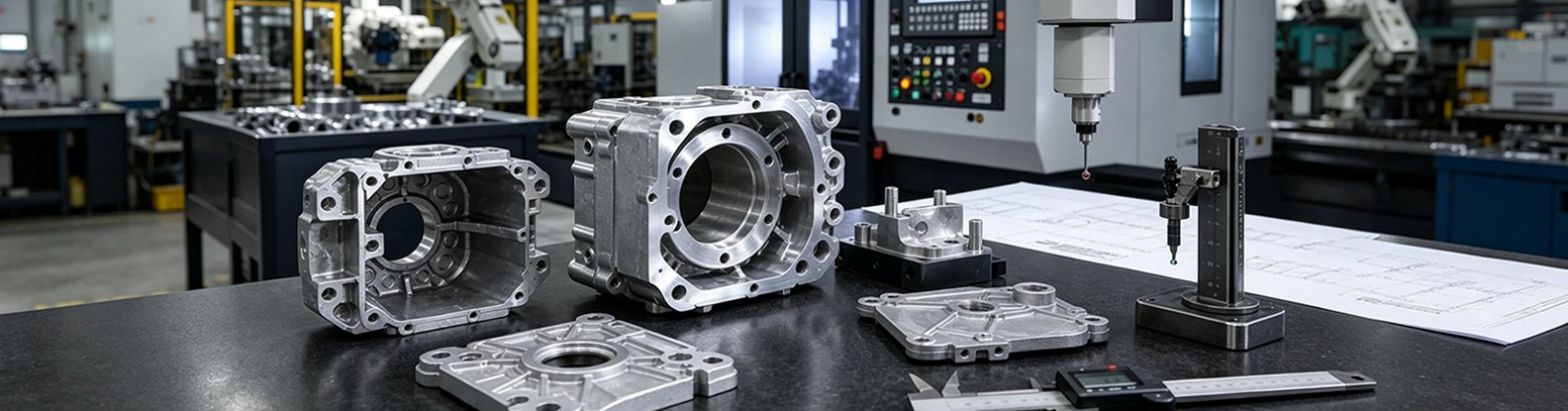
Cast aluminum is one of the most widely used processes for manufacturing complex, lightweight metal parts. By injecting molten aluminum alloy into a mold and allowing it to cool and solidify, this process enables the cost-effective production of parts featuring internal cavities, reinforcing ribs, and complex curved surfaces—geometries that are difficult to achieve efficiently through traditional CNC machining or forging.
Thanks to advantages such as low weight, excellent thermal conductivity, corrosion resistance, and suitability for mass production, cast aluminum is extensively used in automotive components, industrial equipment housings, electronic device casings, and structural heat-dissipation parts. However, different casting processes and alloy grades vary significantly in terms of strength, dimensional accuracy, surface quality, and machinability; furthermore, manufacturers must address common defects such as porosity, shrinkage, and deformation. This article outlines mainstream cast aluminum processes, common alloy grades, characteristics of CNC finishing, and surface treatment options, helping engineers and procurement professionals select the manufacturing solution best suited to their project requirements.
Ⅰ. What is Cast Aluminum?
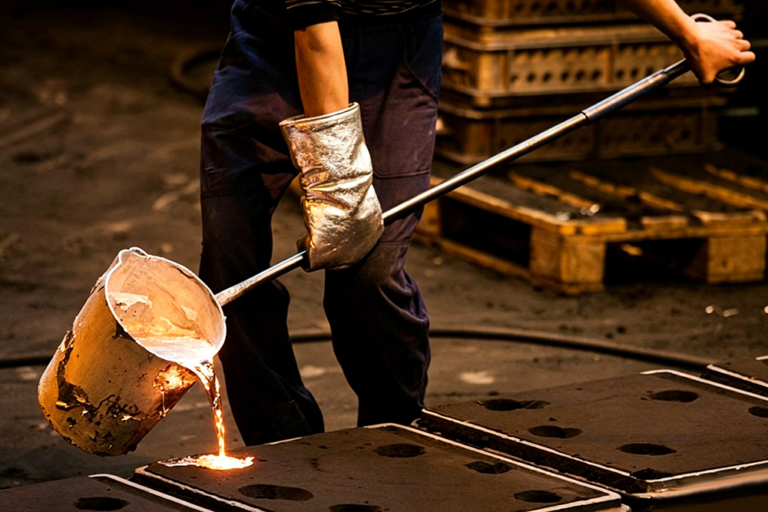
Cast aluminum refers to a manufacturing process in which molten aluminum alloy is poured into a mold and allowed to cool and solidify to form a part with the desired shape; the term can also refer to the aluminum components produced via this process. Compared to forging or CNC machining from solid aluminum blocks, casting enables the creation of structural features—such as hollow cavities, thin walls, reinforcing ribs, and complex curved surfaces—at a lower cost.
The primary advantage of cast aluminum lies in its cost-effectiveness for mass production. Once the mold is developed, large quantities of dimensionally consistent parts can be produced repeatedly; for complex structural components, the cost is typically far lower than machining from solid aluminum stock. Furthermore, aluminum alloys possess inherent qualities such as light weight, corrosion resistance, and excellent thermal conductivity, making cast aluminum a mainstream manufacturing solution that balances performance and cost.
Thanks to its design flexibility and scalability, cast aluminum is widely used in the manufacture of automotive parts, industrial equipment housings, electronic device casings, pump and valve components, and various other complex structural parts.
Ⅱ. Common Aluminum Casting Processes
1. Die Casting
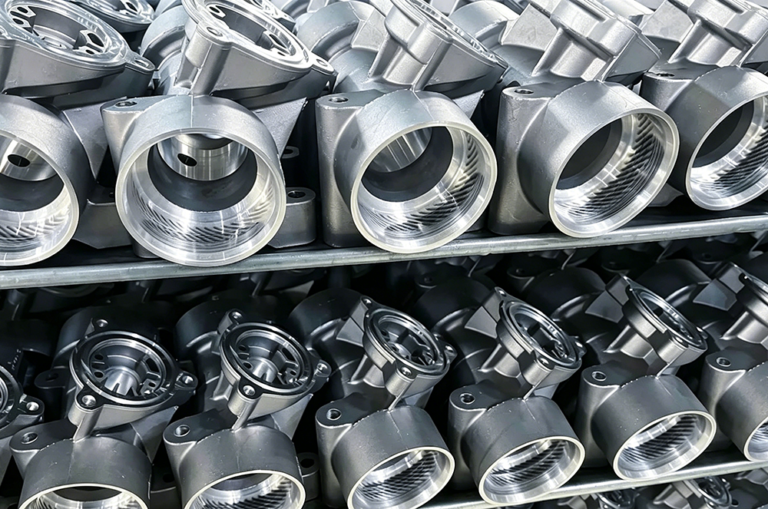
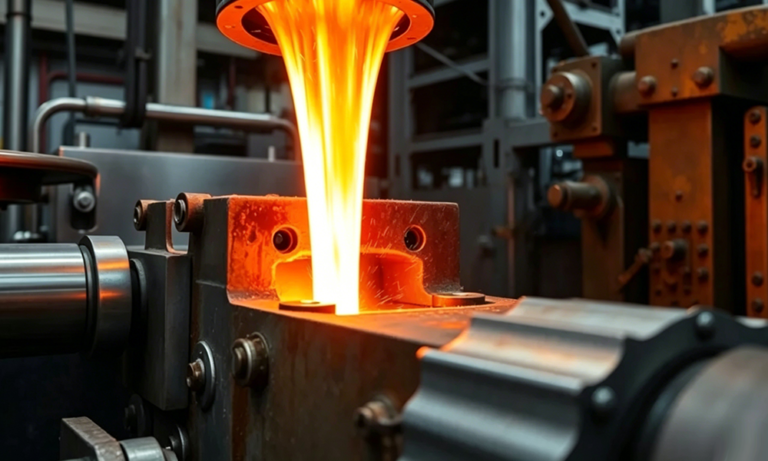
Die casting is a mainstream aluminum forming process in which molten aluminum alloy is injected into a precision steel mold under high pressure and high speed to cool and solidify. It offers the highest machining precision among the four major aluminum casting processes (sand casting, gravity casting, low-pressure casting, and die casting), achieving standard tolerances of ±0.1mm. Thanks to its high-pressure filling characteristics, it is ideal for the mass production of thin-walled parts with complex geometries; due to its high precision and cost-effectiveness in mass production, it is widely used for automotive structural components and consumer electronics housings.
2. Sand Casting
Sand casting utilizes specially formulated molding sand to create the mold, into which molten aluminum is poured. It is a flexible process with low entry barriers. Typical dimensional tolerances range from ±0.30mm to ±1.00mm, indicating relatively low precision. The surface texture is rough, with a roughness (Ra) of 12.5–50μm, and the minimum wall thickness is 2.5–4mm (limited by mold strength). It is primarily suited for small-to-medium batch production, featuring simple mold fabrication and low mold costs.
3. Investment Casting
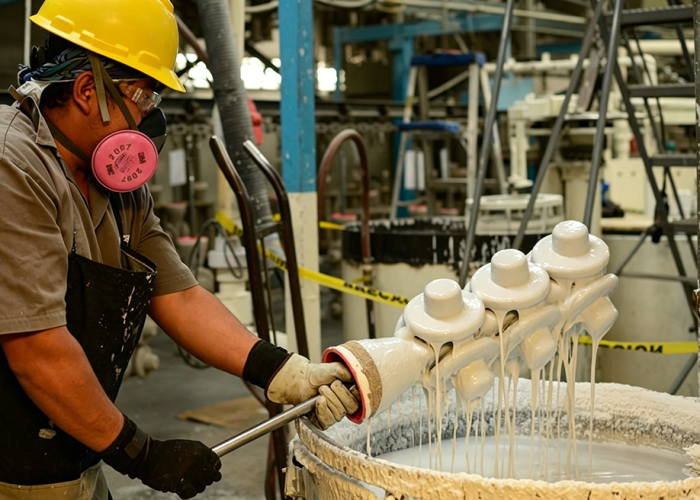
Investment casting (also known as lost-wax casting) involves creating a wax pattern, applying a refractory coating, removing the wax, and pouring in molten aluminum. It is suitable for high-end parts with complex structures that are difficult to machine, finding frequent application in the aerospace and medical device sectors. Typical tolerances are ±0.15–±0.40mm, surface roughness (Ra) is 3.2–12.5μm, and minimum wall thickness is 1.5–2.5mm. It is suitable for medium-to-large batch production and entails moderate-to-high mold costs.
4. Gravity Casting
Gravity casting relies on the weight of the molten aluminum to flow into a metal mold for forming. Typical tolerances range from ±0.20mm to ±0.50mm, surface roughness (Ra) is 6.3–12.5μm, and minimum wall thickness is 2.0–3.0mm. This process is suitable for medium-volume production and involves moderate tooling costs; the castings cool rapidly and exhibit excellent mechanical properties, making it an ideal choice for manufacturing high-strength, airtight, load-bearing components such as automotive wheels.
Ⅲ. Comparison Table of Properties for Various Aluminum Casting Processes
| Process Type | Typical Tolerance Range | Surface Roughness Ra (μm) | Minimum Wall Thickness (mm) | Economical Batch Size | Mold Cost |
|---|---|---|---|---|---|
Die Casting |
±0.05~±0.20mm |
0.8~3.2 |
0.8~1.5 |
Large batch (starting from 10,000 pcs) |
High |
Sand Casting |
±0.30~±1.00mm |
12.5~50 |
2.5~4 |
Small / Medium batch |
Low |
Low-pressure Casting |
±0.15~±0.40mm |
3.2~12.5 |
1.5~2.5 |
Medium / Large batch |
Medium-high |
Gravity Permanent Mold Casting |
±0.20~±0.50mm |
6.3~12.5 |
2.0~3.0 |
Medium Batch |
Medium |
Ⅳ. Cast Aluminum Alloys: How to Select the Right Grade?
During the early planning stages of an aluminum casting project, selecting the appropriate alloy grade is a critical step that determines the final product’s performance, cost, and manufacturing yield. Variations in the proportions of elements such as silicon, copper, and magnesium result in significant differences in casting fluidity, machinability, and surface finishing outcomes; an incorrect choice can lead to frequent tool chipping during subsequent CNC machining or defects like blackening and uneven discoloration during anodizing.
Below is a comparison of the key properties of three of the most widely used grades on the market: A380, A356, and ADC12.
| Alloy Grade | Suitable Casting Process | Tensile Strength (MPa) | Machinability | Anodizing Suitability | Typical Application Scenarios |
|---|---|---|---|---|---|
A380 |
Die Casting |
High (~310) |
Smooth cutting, good chip breaking, moderate tool wear |
Very poor; prone to blackening and mottling, cannot achieve high-quality anodizing |
Automotive engine components, engine housings, support brackets |
ADC12 |
Die Casting |
High (~310) |
Excellent machining performance, clean & smooth machined surface |
Poor; uneven oxide film, only compatible with simple blackening and coating/painting |
Consumer electronics frames, LED heat sinks, pneumatic tools |
A356(T6) |
Gravity / Sand Casting |
Medium (~230) |
Good cutting performance, high surface smoothness post-machining |
Excellent; supports natural-color & colored hard anodizing with uniform, attractive oxide layers |
Automotive wheels, aerospace hydraulic systems, pumps, structural parts |
Material Selection Recommendations:
For high-volume die-casting projects that do not require anodizing or high-end aesthetic finishes, A380 and ADC12 are typically the most cost-effective choices. These alloys offer good fluidity and stable casting characteristics, making them widely used for automotive components, electronic housings, and industrial structural parts.
If the parts require subsequent anodizing, or if there are higher demands regarding strength, elongation, and overall mechanical properties, A356 alloy combined with T6 heat treatment is recommended. Heat-treated A356 achieves superior strength and toughness while delivering excellent anodizing results, ensuring a uniform and aesthetically pleasing surface finish.
It should be noted that A380 and ADC12 have high silicon content. While this composition enhances casting performance, it compromises the appearance after anodizing—often leading to blackening, color inconsistency, or mottling—and is therefore generally not the preferred choice for projects requiring a high-quality anodized finish.
Ⅴ. Cast Aluminum vs. Forged Aluminum: When to Use?
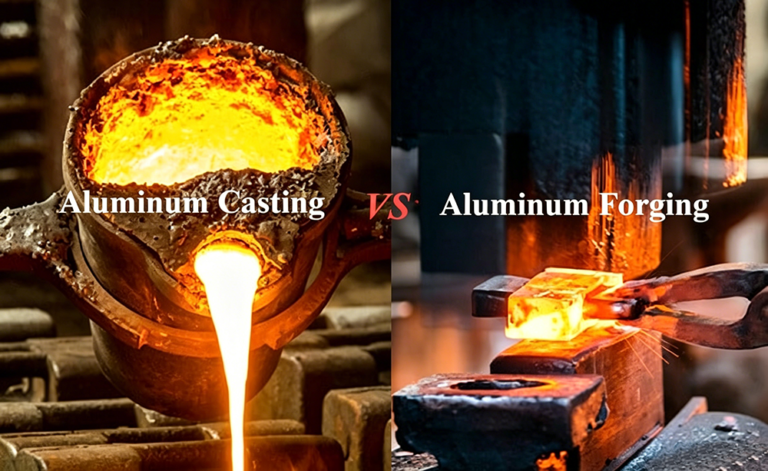
Cast aluminum and forged aluminum represent two manufacturing processes that engineers frequently compare when selecting materials for a project; their distinct forming methods directly determine the resulting parts’ performance characteristics. Cast aluminum is produced by melting the alloy and pouring it into a mold, offering high design flexibility and the ability to create complex internal cavities and curved surfaces; however, the internal grain structure is less uniform, potential micro-porosity may exist, and mechanical strength is relatively lower. In contrast, forged aluminum is created by extruding, rolling, or forging solid aluminum stock, resulting in a dense internal structure with superior strength and hardness, though it is limited to relatively simple shapes.
However, material performance is only one factor in the selection process. Production volume, geometric complexity, precision requirements, tooling budgets, and lead times are often the decisive factors in choosing between cast and forged aluminum. The following is a direct comparison from the perspective of procurement decision-making:
| Procurement Factor | Cast Aluminum | Forged Aluminum |
|---|---|---|
Production Volume |
Large batch (over several thousand pieces) |
Small/medium batches or prototypes |
Geometric Complexity |
Supports inner cavities, thin walls and complex curved surfaces |
Restricted by extruded profiles and CNC reachability |
Dimensional Accuracy |
Moderate; secondary CNC machining required for critical tolerance features |
High; micron-level precision directly achievable via CNC machining |
Upfront Tooling Cost |
High; steel molds demand substantial capital expenditure |
Low; only standard fixtures and cutting tools are needed |
Unit Cost |
Cost per part drops sharply with larger batch quantities |
Cost advantage weakens as batch size grows |
Production Lead Time |
Long (6–12 weeks, including mold development cycle) |
Short (1–3 weeks to commence production) |
Mechanical Properties |
Relatively inferior; internal porosity may exist |
Excellent; dense, void-free grain microstructure |
To decide between cast aluminum and forged aluminum, consider the following two points:
- If the part has a complex structure with numerous internal features and requires high-volume production, prioritize cast aluminum;
- If the part must withstand high loads, impacts, or long-term fatigue, prioritize forged aluminum.
In short: choose casting for complex structures, and forging for extreme performance.
Ⅵ. CNC machining of cast aluminum parts
Why Do Cast Aluminum Parts Need CNC Machining?
Combining casting with CNC machining is the industry-standard process in modern manufacturing for balancing high efficiency with high precision. While aluminum die casting can efficiently produce “near-net shape” metal blanks with complex geometries, typical tolerances range from ±0.3 mm to ±1 mm; the casting process alone cannot directly create precision mating surfaces, sealing grooves, or threaded holes. In contrast, actual assembly often requires mating surface precision within ±0.05 mm.
This significant discrepancy—often exceeding a tenfold difference in tolerance—must be bridged through secondary CNC finishing to achieve a perfect union of structural efficiency and absolute precision.
Specifically, CNC processing is required for cast aluminum parts in four main scenarios:
- Overcoming precision limitations
Upgrading the casting’s raw tolerance (±0.3–1 mm) to assembly-grade precision (within ±0.05 mm) through precision CNC milling. - Compensating for molding limitations
Efficiently machining features that casting cannot directly form—such as high-precision sealing grooves and ultra-thin slots—and performing precise internal threading. - Enhancing mechanical properties
Removing surface porosity and loose material layers to expose the dense base metal, thereby ensuring the airtightness and rigidity of critical mating surfaces. - Optimizing overall costs
Using “near-net shape” blanks to minimize machining allowances, thereby significantly reducing CNC cutting time and material waste.
Ⅶ. How Is Machining Cast Aluminum Different from Wrought Aluminum?
Cast aluminum and forged aluminum present different machining challenges. Cast aluminum often accelerates tool wear due to its higher silicon content, whereas forged aluminum—owing to its greater toughness—is prone to issues such as built-up edge (tool adhesion) and chip entanglement. Understanding these differences helps in the appropriate selection of cutting tools, cutting parameters, and machining strategies.
| Comparison Item | Cast Aluminum | Forged Aluminum |
|---|---|---|
Tool Wear |
High silicon content leads to severe abrasive wear on cutting tools. PCD polycrystalline diamond tools are recommended for machining high-silicon aluminum alloys. |
Excellent ductility causes built-up edge (tool adhesion) during cutting; coated carbide cutting tools are suggested. |
Cutting Parameters |
Slightly low spindle speed, moderate feed rate, and ample coolant supply are required. |
Higher spindle speeds and feed rates can be adopted for higher machining efficiency. |
Chip Morphology |
Fragmented chips, easy cleaning with smooth chip evacuation. |
Long ribbon-shaped chips that easily wrap around tools; chip breaking control is essential. |
Surface Finish |
Internal porosity and silicon particles make it difficult to achieve mirror finish. |
Uniform internal microstructure allows easy attainment of mirror-grade smooth surface. |
In general, the key to machining cast aluminum lies in managing tool wear caused by high silicon content, whereas for forged aluminum, the challenge is addressing built-up edge and chip entanglement.
Ⅷ. How to Control Tolerances on Cast Aluminum Parts?
The primary machining challenges for cast aluminum parts stem from uneven wall thickness and the resulting uneven distribution of residual stress, which cause deformation during machining. Significant wall thickness variations across the casting lead to slow solidification and stress concentration in thick-walled areas, while thin-walled areas suffer from low rigidity and susceptibility to deformation. Stress release during machining can result in part warping, dimensional shifts, and tolerance violations; therefore, precise control is required across three dimensions: stress release, fixture design, and machining processes.
- Managing stress release caused by uneven wall thickness: Uneven wall thickness leads to inconsistent cooling and the accumulation of significant internal residual stress. Cutting disrupts this balance, and the subsequent stress release causes severe part deformation. Common strategies include allowing the part to rest after rough machining or subjecting it to low-temperature aging treatment to enable natural stress relief before proceeding to finish machining.
- Fixture design tailored to deformation characteristics: Castings often lack rigidity and possess inherent raw-casting errors; excessive clamping force can cause immediate deformation. Fixtures should utilize multi-point support and incorporate flexible or floating clamping mechanisms while avoiding contact with thin-walled areas.
- Process strategy: Separating rough and finish machining to release stress in stages:
To address stress-induced deformation in cast aluminum, a staged machining approach—rough machining, stress relief, and finish machining—is essential; completing all machining operations in a single setup is prohibited. Rough machining is performed first to remove the bulk of the material and break the casting’s sealed surface structure, allowing for initial internal stress release. Finish machining is carried out only after deformation has stabilized, ensuring final dimensional accuracy.
Ⅸ. Surface Treatment Solutions for Cast Aluminum
Due to inherent casting characteristics such as microscopic porosity, parting lines, and compositional non-uniformity, cast aluminum parts often fail to meet protection and aesthetic requirements if used in their raw state. Below are three common surface treatment methods for cast aluminum and their respective applications:
- Sandblasting
Uses shot blasting or glass beads to remove parting lines and burrs, unify surface texture, and effectively mask minor porosity defects.
- Powder Coating
Forms a thick, protective layer on the part’s surface via electrostatic spraying. It offers excellent coverage, perfectly masking surface imperfections while providing superior corrosion and wear resistance.
- Chemical Conversion Coating
Creates a thin chemical conversion film (such as Alodine) on the aluminum surface. It is primarily used to enhance corrosion resistance and serves as an excellent base layer for subsequent painting or coating.
- Anodizing
Anodizing enhances corrosion resistance, wear resistance, and aesthetic quality; however, it is not suitable for all cast aluminum alloys. High-silicon die-casting alloys like A380 and ADC12 are prone to issues such as blackening, color variation, and surface mottling after anodizing due to their high silicon content. For projects requiring anodizing, low-silicon casting alloys (e.g., A356) or wrought aluminum alloys (e.g., 6061, 6063) are preferred.
Therefore, for aluminum components requiring anodizing, it is essential to select suitable alloys with low silicon and impurity levels. In casting applications, low-silicon alloys like A356 are preferred for their uniform film formation and consistent appearance, balancing casting advantages with anodizing performance.
For applications demanding superior aesthetics and anodizing results, wrought alloys such as 6061 and 6063 are ideal, offering stable quality and uniform color. If project constraints regarding cost or structural design necessitate the use of high-silicon die-casting aluminum alloys—such as A380 or ADC12—it is advisable to forgo anodizing in favor of more suitable surface treatment alternatives. Options such as sandblasting, spray coating, electrophoresis, and passivation can effectively mask surface defects and enhance corrosion and wear resistance.
These methods ensure a uniform, aesthetically pleasing finish that aligns with the material properties of high-silicon aluminum, thereby meeting the requirements for both mass production and end-use performance.
Ⅹ. Common Applications of Cast Aluminum
Automative Industry
Due to its excellent lightweight properties and high strength, cast aluminum is a key material for reducing vehicle weight and improving fuel efficiency in modern automobiles. It is commonly used in components such as engine blocks, transmission housings, clutch casings, and the “three core systems” of new energy vehicles (batteries, motors, and electronic control units). For instance, when machining automotive powertrain housings—where thin walls are prone to deformation—we utilized multi-point floating support fixtures to successfully control the coaxiality of bearing bores to within 0.015 mm.
Electronics and Telecommunications Industry
Cast aluminum offers excellent electromagnetic shielding and high thermal conductivity, making it widely used for heat dissipation and protection in high-density electronic devices. Common applications include 5G base station antenna housings, filter cavities, outdoor LED display cabinets, and heat sinks for high-power power supplies. For example, when machining cast aluminum housings for high-speed optical modules, the high silicon content caused rapid tool wear; by switching to diamond (PCD) tools, we significantly improved the pass rate for threaded hole gauge inspections.
Industrial Equipment and Machinery
In the industrial sector, cast aluminum is primarily used to manufacture lightweight components that feature complex geometries and are subject to frequent movement or high-speed operation. Applications include articulated arms for industrial robots, pneumatic tool housings, printing machine rollers, and various gear reducer housings. For instance, when customizing cast aluminum articulated arms for six-axis robots, we designed flexible hydraulic fixtures to prevent clamping deformation, ensuring the perpendicularity of multi-axis linkage assembly surfaces met a tolerance of 0.02 mm.
Consumer Goods Industry
Consumer products often favor cast aluminum for its design flexibility and the premium visual texture achieved through post-processing. It is frequently used in high-end smart door lock housings, internal laptop frames, drone airframe structures, and the bases of high-end cookware. A typical machining case involved cast aluminum panels for smart door locks; to ensure compatibility with the subsequent powder coating process, we precisely controlled the depth of machining marks, ensuring that parting lines and porosity marks were completely eliminated from the surface after coating.
XI. FAQ
Q1: Does cast aluminum rust?
A: Cast aluminum does not develop “red rust” like iron does; however, in specific environments—such as those involving high humidity, acidic or alkaline conditions, or salt spray—it can undergo electrochemical corrosion, resulting in a layer of white powdery oxide on the surface. Consequently, cast aluminum parts often undergo surface treatments like sandblasting, powder coating, or micro-arc oxidation to prevent oxidation and whitening.
Q2: How strong is cast aluminum? Can it bear loads?
A: While cast aluminum may not match the strength of cast iron or structural steel, its tensile strength can be significantly enhanced by adding alloying elements (such as silicon, magnesium, or copper) and applying heat treatments (like T6 aging). It is fully capable of handling moderate loads, making it ideal for structural components—such as automotive housings and robotic joints—that require both weight reduction and sufficient strength.
Q3: What is the difference between cast aluminum and cast iron? How should I choose?
A: There are fundamental differences in their properties and applications. Key distinctions include: cast aluminum is much lighter than cast iron, with a density only about one-third that of iron. Cast aluminum offers higher toughness and far superior thermal and electrical conductivity. Cast iron is more cost-effective and suitable for massive, heavy-duty bases, whereas cast aluminum is better suited for high-value, lightweight components with complex geometries that require precision CNC machining.
Q4: Why is cast aluminum prone to edge chipping or tool breakage during machining?
A: This is primarily due to the material’s microstructure. To improve fluidity during casting, aluminum alloys (such as A380 and A356) typically contain a large number of hard silicon particles. During CNC machining, these particles act like tiny grains of sand, causing intense abrasion and impact on the cutting tool, which leads to rapid wear or even chipping of the cutting edge. Machining such materials usually requires specialized carbide or polycrystalline diamond (PCD) tools.
Q5: What is the difference between die-cast aluminum and sand-cast aluminum?
A: These represent two distinct casting processes:
Die Casting: Molten aluminum is injected into a precision metal mold under high pressure. The resulting products feature excellent surface finish, thin walls, and high dimensional accuracy, making the process ideal for mass-producing items like automotive parts; however, the internal structure often contains tiny gas pores, making it unsuitable for high-temperature heat treatment.
Sand Casting: Sand molds are used for this process. It is cost-effective and suitable for manufacturing very large parts or small-batch custom components. Drawbacks include a rougher surface finish and a relatively porous internal structure, requiring a larger machining allowance for subsequent CNC processing.
Q6: Can cast aluminum parts be welded?
A: Yes, they can be welded, though the process is challenging. Cast aluminum often contains internal micro-pores and sand inclusions. Furthermore, a refractory aluminum oxide film (with a melting point of 2,000°C, compared to 660°C for aluminum itself) easily forms on the surface at high temperatures, making the weld prone to porosity, cracking, or lack of fusion. Specialized aluminum welding wire is typically required, along with rigorous surface cleaning and preheating prior to welding.
XII. Summary
Overall, thanks to advantages such as the ability to form complex shapes, light weight, and low production costs, aluminum casting has become a key manufacturing solution for sectors including automotive, electronics, industrial machinery, and heat dissipation components. For projects requiring complex geometries and mass production, aluminum casting typically strikes an optimal balance between performance and cost.
However, aluminum casting does present challenges regarding porosity, deformation, dimensional stability, and surface treatment compatibility. Consequently, during CNC finishing, careful attention must be paid to machining allowance planning, workholding methods, cutting parameters, and the selection of post-processing techniques to ensure dimensional accuracy, surface quality, and end-use performance.
Keywin offers one-stop manufacturing services ranging from CNC finishing of castings to surface treatment. If your project involves the machining of aluminum castings, please feel free to submit your drawings to receive a quote and manufacturing recommendations.