Ⅰ. Introduction
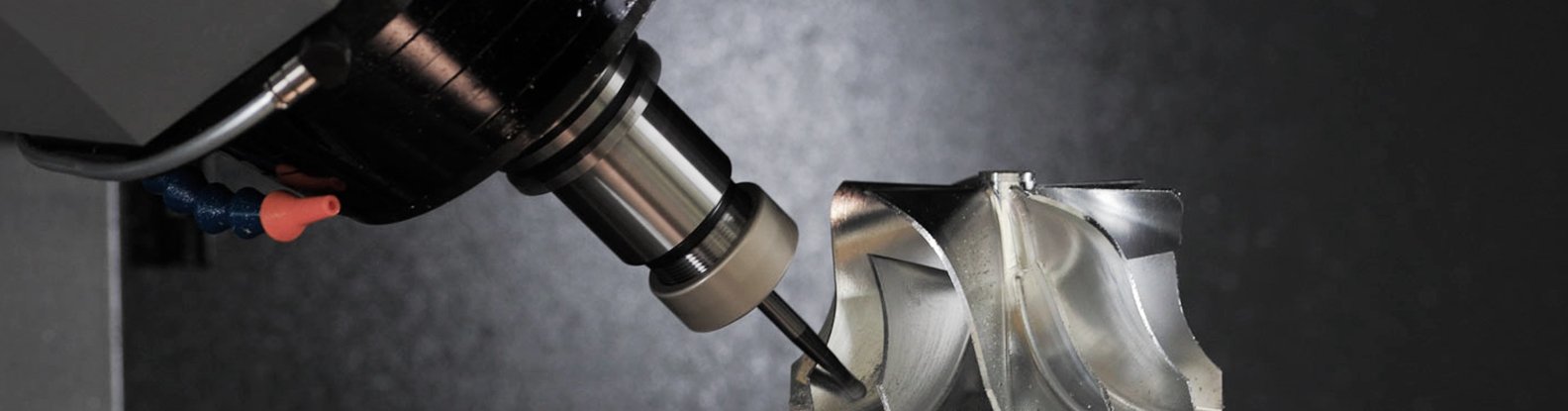
5-axis CNC machining is a high-precision cutting technology featuring multi-axis simultaneous control. It offers the advantages of high accuracy and efficiency, particularly suited for processing complex curved surfaces and irregularly shaped parts. This core manufacturing process is indispensable in fields such as aerospace, medical devices, and automotive manufacturing. This article will systematically explore the working principles, core advantages, and application limitations of 5 axis machining to help you grasp the essential characteristics of this advanced manufacturing technology.
Ⅱ. What is a 5 Axis CNC Machine?
A 5-axis CNC machine is a CNC machining device equipped with five numerically controlled axes of motion. Its core feature lies in adding two rotary axes to the traditional 3-axis machine (which has X/Y/Z linear axes), enabling coordinated control of the tool and workpiece across five axes. This multi-axis coordination capability enables the machine to complete multi-angle machining of complex surfaces in a single setup, delivering high-precision, all-around machining. It represents a critical process for high-end precision mechanical manufacturing.
Ⅲ. What are the 5 Axes of a CNC Machine ?
The 5-axis system consists of 3 linear axes and 2 rotary axes. The linear axes form the foundation of the 5-axis system: the X-axis, Y-axis, and Z-axis. The X-axis moves the tool left and right along the machine, the Y-axis moves it forward and backward, and the Z-axis moves it up and down. The two rotary axes form the core of the 5-axis system, referring to any combination of two rotary axes from the A/B/C axes. These rotary axes enable tool cutting without dead zones. The A-axis rotates along the X-axis, the B-axis rotates along the Y-axis, and the C-axis rotates along the Z-axis. Common 5-axis configurations include X, Y, Z, A, C or X, Y, Z, B, C, though the configuration is not fixed.
Five-axis machining consists of three linear axes and two rotary axes. The three linear axes form the foundation of 5-axis machining: X, Y, and Z.
- The X-axis moves left and right along the machine.
- The Y-axis moves forward and backward.
- The Z-axis moves up and down.
The two rotary axes are the core of 5-axis capability. They refer to any two rotational axes selected from A, B, and C. These rotary axes allow the tool to approach the workpiece from multiple angles, enabling complex, multi-sided machining without repositioning.
- The A-axis rotates around the X-axis.
- The B-axis rotates around the Y-axis.
- The C-axis rotates around the Z-axis.
Common 5-axis configurations include X, Y, Z, A, C or X, Y, Z, B, C, although the specific arrangement is not fixed and may vary depending on machine design.
Ⅳ. How does a Five-Axis Machining Center Work?
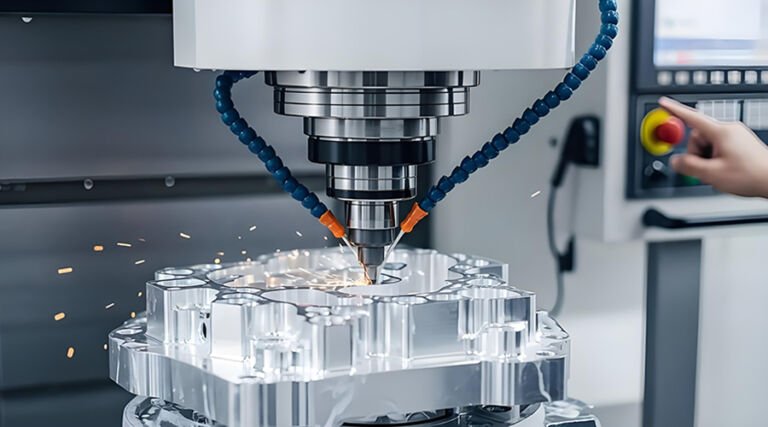
The core principle of a five-axis machining center involves coordinating the control of three linear axes (X/Y/Z) with any two of the rotary axes (A/B/C). This allows the tool to cut the workpiece from any angle, enabling the machining of complex curved surfaces while enhancing efficiency and precision.Two common operating modes exist:
- Five-face machining (3+2): Rotate the tool to a specific angle, then perform three-axis machining with non-interactive rotary axes. Suitable for box-shaped components and multi-surface drilling.
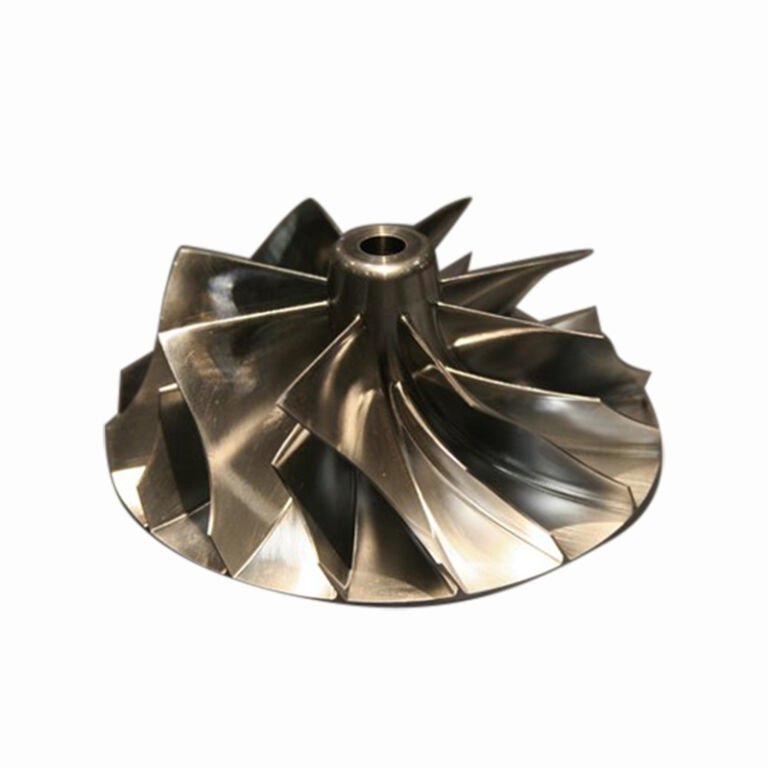
- Five-axis simultaneous machining: The tool moves in five directions simultaneously during machining, with its orientation continuously adjusted. This is suitable for complex surfaces like blades and propellers.
Ⅴ. Advantages of Five-Axis Machining
Single-setup and excellent precision
Complex surfaces are machined in a single setup. Without stopping to reposition, this significantly increases workpiece accuracy and avoids friction caused by clamping.
Greater Geometric Freedom
Tool positioning via rotary axes enables access to spatial depths unreachable by three-axis systems, expanding machining boundaries;
Higher Efficiency
Streamlines production cycles through multi-step operations, boosting productivity;
Better Surface Quality
Real-time cutting posture adjustments reduce friction and tool stress, achieving smoother surface finishes.
Ⅵ. Limitations of Five-Axis CNC Machining
High equipment and operational costs
Five-axis machines carry significantly higher purchase costs than three-axis equipment. Supporting components incur substantial maintenance expenses, and specialized CAD/CAM processing programs along with advanced operators are required, leading to markedly increased labor costs;
Complex programming and debugging
Programming requires analyzing tool orientation and rotational axis trajectories, demanding high expertise from programmers; new machines necessitate repeated trajectory verification, resulting in substantial debugging costs;
Limited applicability
Five-axis machining excels primarily in complex curved surfaces and multi-faceted precision components. For simple flat or straight surfaces, its cost-effectiveness falls significantly below three-axis machining, often leading to low efficiency and resource wastage.
Ⅶ. Applications of Five-Axis Machining
Aerospace Industry
Suitable for aircraft components such as blades, impellers, and aerospace structural parts—most of which feature complex spatial surfaces. Five-axis machining enables high-precision processing in a single setup, meeting the aerospace industry’s stringent demands for performance and accuracy.
Precision Mold Industry
Suitable for plastic molds, cavities, and electrode machining. Efficiently processes deep cavity surfaces and inclined holes—areas difficult to reach with three-axis machines—enhancing surface quality and shortening production/R&D cycles.
Medical Device Industry
Ideal for custom parts like artificial joints and precision surgical instruments, which often feature unique curved surfaces. Five-axis machining ensures consistency and accuracy, meeting small-batch and multi-variety production demands.
Automotive Manufacturing
Suitable for machining impellers, gears, and complex structural components—particularly in high-end new energy vehicle parts. Enables integrated processing of intricate components, boosting production efficiency while meeting automotive demands for high precision and mass production.
Rail Transportation
Suitable for machining precision rail components. Capable of processing large or heavy complex surfaces, reducing clamping frequency and minimizing accuracy errors to ensure stable equipment operation.
Ⅷ. Summary
Five-axis CNC machining represents a core technology that transcends traditional processing boundaries to achieve precision manufacturing of high-end complex components. By leveraging multi-axis coordination and single-setup capabilities, it resolves precision and efficiency challenges in machining irregular shapes, finding extensive application in aerospace, medical devices, automotive manufacturing, and other sectors. With technological evolution, five-axis machining continues advancing toward intelligent solutions, driving the widespread adoption and deepening of high-end customized production.
Ⅸ. Frequently Asked Questions (FAQ)
Q: Is five-axis machining suitable for small-batch parts?
A: It primarily depends on the part’s complexity and precision requirements. For complex geometries requiring multi-surface machining in a single setup, five-axis machining can reduce operations and improve efficiency, making it a good choice.
Q: Does five-axis machining demand higher programming skills?
A: Yes, five-axis programming is highly specialized. It requires handling complex issues like multi-axis coordination and tool orientation optimization, along with deep familiarity with the machine’s motion characteristics.
Q: What types of parts are best suited for five-axis machining?
A: Five-axis machining excels at producing complex spatial surfaces, multi-faceted irregular structures, and precision components with stringent accuracy requirements—such as aerospace turbine blades, artificial joints, and precision mold cavities.
Q: What are the primary drawbacks of five-axis machining?
A: High equipment costs, complex programming and debugging processes, and demanding technical requirements for operators.