Ⅰ. Introduction
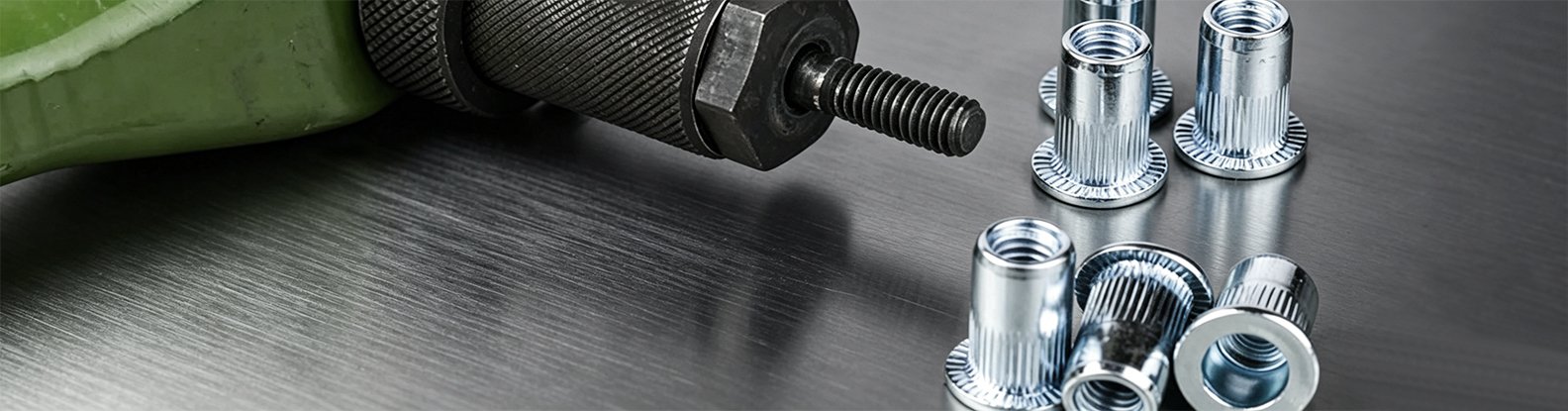
A rivet is a mechanical fastener that achieves a permanent, secure connection between components through its own plastic deformation. It serves as a core foundational fastener for ensuring the safe operation of various industrial structures. Thanks to its ease of installation and excellent resistance to vibration and loosening, it has become an indispensable basic fastener in industrial manufacturing, widely used in fields such as aerospace, rail transportation, automotive manufacturing, and construction.This article will analyze rivets from the perspectives of their working principles, common types, and application scenarios, helping you gain a more systematic understanding of their core characteristics.
Ⅱ. What Is a Rivet?
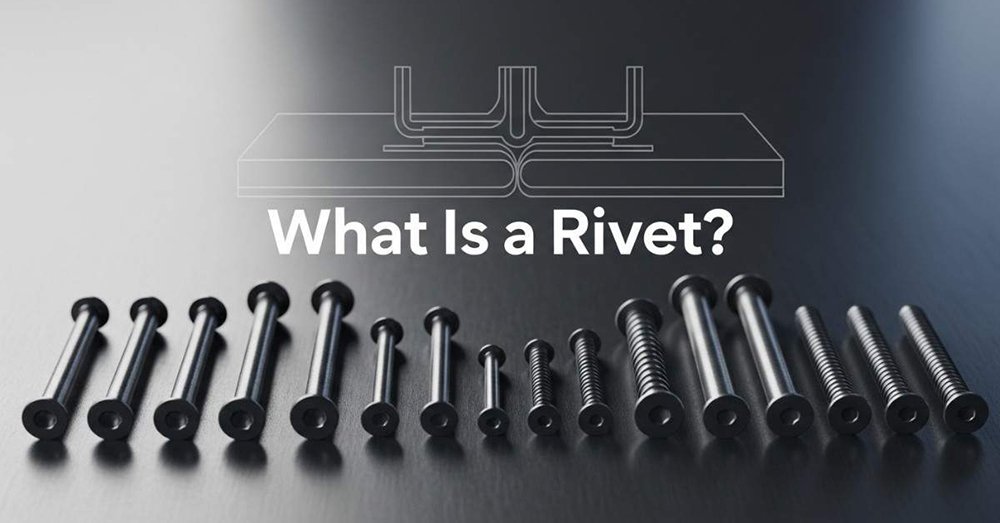
A rivet is a permanent mechanical fastener. Simply put, it is a metal rod with a “head” at one end. It is a rod-shaped fastener that achieves permanent fixation through deformation, making it stronger and more vibration-resistant than screws. Rivets are widely used in applications requiring permanent fastened connections, such as in metalwork, sheet metal fabrication, and construction equipment.
Ⅲ. How Do Rivets Work?
The working principle of rivets consists of four steps:
- Drilling: First, drill a hole in the workpiece that is slightly larger than the rivet;
- Inserting the rivet: Insert the rivet from one side, ensuring that the head of the rivet lies flush against the surface;
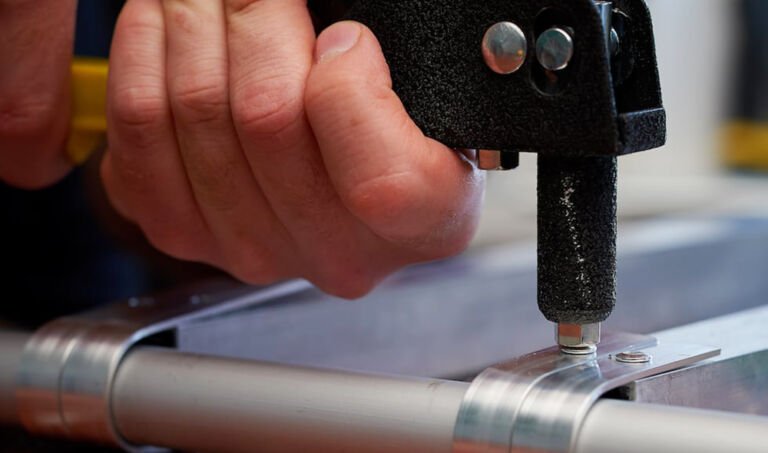
- Deformation and Locking: For solid rivets, strike the tail of the rivet using traditional hot or cold riveting methods; for hollow rivets, use a rivet gun to extract the core, causing the sleeve to expand, allowing installation from a single side;
- Permanent Fixation: After the component cools and sets, it firmly clamps the connected parts, ultimately achieving a permanently secure structural joint.
Ⅳ. Different Types of Rivets
Rivets are commonly classified into the following four types:
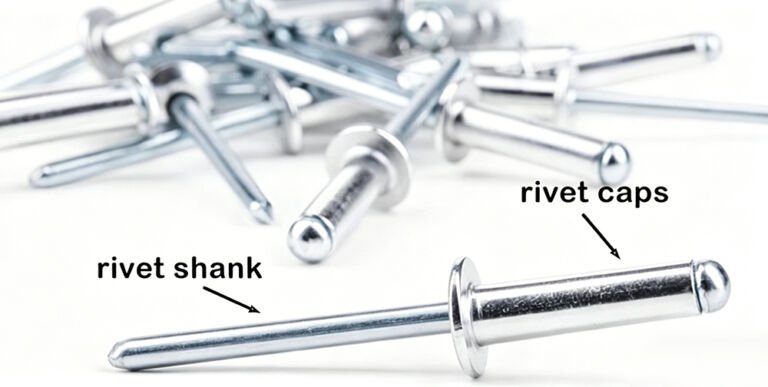
- Blind rivets (most common): Also known as blind rivets, these can be set using a single rivet gun and are suitable for DIY projects. They are commonly used in outdoor billboards, refrigerators, furniture, and single-sided installations;
- Solid Rivets: This is the oldest and strongest type, requiring hammering from both sides. They are commonly used in bridges, ships, and heavy-duty structures;
- Expanding Rivets: Designed for single-sided installation, these feature an internal mandrel that expands when struck. They are commonly used for outdoor repairs and temporary fastening on construction sites;
- Tubular (Hollow) Rivets: Hollow at the tail end, these are secured by gently pressing the flange. They are commonly used in leather goods, apparel, and lightweight plastics;
Ⅴ. Common Materials for Rivets
Depending on the application, there are five common materials to choose from, each with its own suitable environments, advantages, and disadvantages:
- Aluminum alloy: Lightweight, inexpensive, and highly corrosion-resistant
- Stainless steel (304/306): Offers the best rust resistance and an attractive finish; ideal for outdoor and humid environments
- Carbon Steel/Iron: High strength, low cost, and excellent value for money; however, it is prone to rust and must be treated with galvanization or similar methods to prevent corrosion
- Brass: Conductive and aesthetically pleasing; commonly used in signage, electrical appliances, and leather goods
- Nylon/Plastic: Insulating, rust-free, and capable of absorbing shock and reducing noise.
Ⅵ. Advantages of Using Rivets
- Reliable & Non-Loosening Joints
Rivets create permanent joints that do not loosen after installation, unlike screws. They are secured by deformation, making them resistant to loosening even under machine vibrations or vehicle jolts. This is crucial for equipment subject to continuous vibration, such as aircraft, automobiles, and bridges;
- Simple Installation & Single-Side Operation
For types such as pop rivets and drive-in rivets, installation requires operation from only one side. The tools needed are simple—just a rivet gun—making them highly practical for enclosed structures like pipes, enclosures, and aircraft skins;
- No Material Damage & High Quality
Rivets are cold-formed, so there is no high heat involved. This prevents deformation and avoids burning the material’s coating, resulting in a smoother, more aesthetically pleasing surface. They are particularly suitable for joining thin sheets, coated panels, plastics, and similar applications;
- Low cost & High efficiency
The rivets themselves are inexpensive, as are the tools. The riveting process is fast and does not require subsequent grinding or finishing steps, saving labor. This makes them particularly suitable for high-volume automated production, such as in the assembly of automobiles, home appliances, and doors and windows.
Ⅶ. Disadvantages of Using Rivets
- Permanent connection and cannot be repeatedly disassembled
Once installed, standard rivets cannot be removed without destructive removal (drilling out or cutting through). Unlike screws, they cannot be repeatedly loosened and tightened, making them unsuitable for structures that require frequent disassembly and maintenance;
- High installation requirements and heavy reliance on tools
High precision is required for drilling; holes that are too large can cause loosening, while holes that are too small prevent the rivet from passing through. For solid rivets, installation requires operation from both sides using specialized riveting tools, which demands high technical skill. For pop rivets, although installation can be performed from one side, insufficient riveting force may cause the rivet to tear through the sheet metal, making the process difficult;
- Poor sealing performance and not waterproof or leak-proof
Standard pop rivets leave small holes where the pin breaks, failing to prevent gas or liquid leakage, requiring additional sealant or the use of sealed rivets
- High maintenance costs and difficult repairs
Internal defects in the rivet structure are difficult to detect. Once loosening or failure occurs, they cannot be directly tightened and repaired like screws; instead, the panel must be re-drilled and the rivet replaced, making the process relatively complex and repairs quite difficult.
Ⅷ. Applications of Rivets
Due to their reliable connections, vibration resistance, and ease of installation, rivets have indispensable applications across multiple industries:
- Aerospace: Rivets offer reliable connections, resistance to high-frequency vibrations, and lightweight properties, and are commonly used in internal structural components such as aircraft fuselages, wings, and skins;
- Automotive and Rail Transportation: Blind rivets are used for sheet metal joining and interior trim fastening, commonly found in automotive floor panels, brake pads, and high-speed rail aluminum alloy profile connections;
- Construction and Structural Engineering: Rivets offer greater resistance to loosening than screws. Since building structures must withstand wind loads, vibrations, and temperature fluctuations, rivets are commonly used in bridges, structural engineering, ventilation ducts, and high-rise steel structures.
- Marine and Offshore Engineering: Rivets provide anti-loosening properties, are suitable for use in humid environments, and offer corrosion resistance and resistance to wave impact, making them common in ship hulls, decks, and offshore platforms.
- Electronics and Home Appliances: Rivets are used to join enclosures; they eliminate the need for welding and provide a clean, neat appearance, making them common in cabinets, office furniture, and luggage.
Ⅸ. Frequently Asked Questions
Q: What is the essential difference between rivets and screws?
A:Rivets form a non-removable joint, whereas screws can be removed and reused.
Q: Can rivets be used in situations that require waterproofing or sealing?
A:Ordinary blind rivets cannot seal, but closed-end blind rivets can prevent liquid or gas leakage under certain pressure, suitable for situations where waterproofing requirements are not extreme.
Q: What are the usual causes if a rivet rotates or becomes loose after installation?
A:Possible reasons include: the drilled hole being too large, the rivet length being insufficient, the gap between the joined parts being too large, or the rivet not being properly deformed, causing rotation or looseness after installation.